Ditching the Bottle: 9 Tips for the Switch to Cups
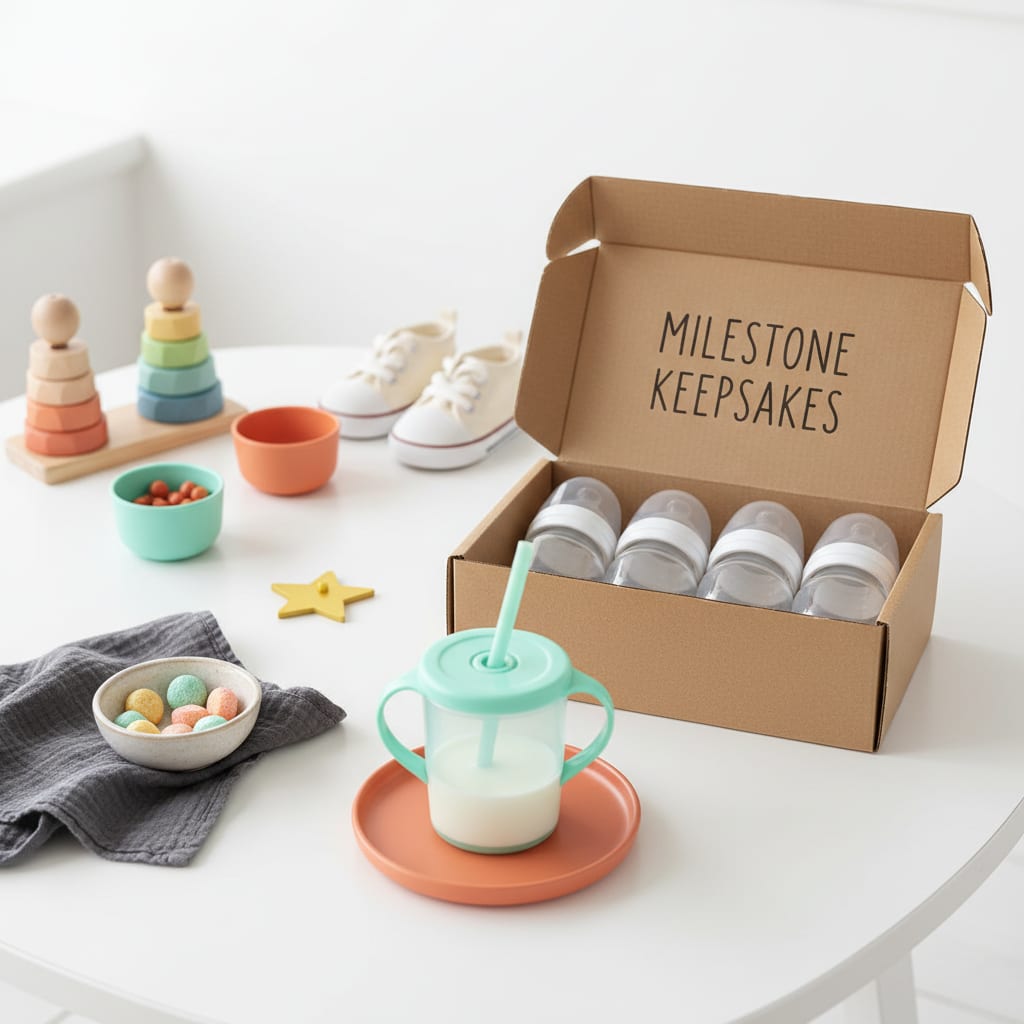
The smoothest way to ditch the bottle: pick one cup and stick with it, swap the daytime bottles first while the stakes are low, save the bedtime bottle for last, and once a bottle is gone, never bring it back. The switch is a habit change, not a hostage negotiation — most toddlers adjust within days when the plan is boring and consistent. On timing itself, ask your pediatrician what’s right for your kid; that call is theirs. The how-to below is mine, tested on my own two — one breezed it, one filed formal objections for three days.
The 9 tips
- Get your pediatrician’s green light on timing. When to start weaning, and how milk fits your toddler’s overall diet, is genuinely a your-doctor question — kids differ, and this site doesn’t do medical calls. What I can tell you: waiting for a “better week” rarely produces one. Once your pediatrician says go, pick a start date and go.
- Audition cups before the switch, not during. A few weeks out, offer water in a straw cup (something like the Munchkin Any Angle) or open cup at meals — no agenda, just practice. You’re separating two skills: using a cup and accepting milk without a bottle. Toddlers handle one new thing at a time much better than two.
- Pick one cup and freeze the lineup. The cup-drawer graveyard is a warning, not a strategy. Cycling through six cups teaches your toddler that rejecting a cup summons a newer model. Choose one they managed in auditions, buy a spare of the same one, and stop shopping.
- Swap daytime bottles first. Midday milk carries the least emotional weight, so it goes first: milk arrives in the cup, at the table, with a snack — and the bottle simply isn’t offered. Expect protest, offer the cup cheerfully, and let it be. A toddler who skips one milk serving and eats normally otherwise is fine; appetite balances across the day, same principle as my dinner-strike playbook.
- Move milk to mealtimes, water in between. Part of what makes bottles sticky is the all-day sipping habit. Reframe milk as a food that happens at the table — cup with breakfast, cup with lunch — and water available between. Bonus: a toddler who isn’t topping up on milk all afternoon arrives at dinner with an actual appetite.
- Retire the bedtime bottle last — by replacing its job, not just the milk. The bedtime bottle isn’t really about milk; it’s a comfort ritual. So swap the ritual: milk in the cup before the bath or teeth-brushing, then the rest of the wind-down — books, songs, snuggle — runs longer to fill the space. Keep every other step identical for a week or two before this final swap so bedtime doesn’t change twice at once.
- Make the bottles actually disappear. A visible bottle is a standing referendum. When a feed is switched, its bottle leaves the kitchen — and when you’re fully done, they all go. Some toddlers do great “helping” pack the bottles away for “a baby who needs them”; mine liked the ceremony. If yours would find that upsetting, skip the ritual and just quietly vanish them. You know your kid.
- Hold the line through the protest window. The first two or three days are the whole war, and the losing move is reversing under fire — one surrendered bottle teaches that crying long enough works, which resets the clock and raises the price. Comfort the feelings, keep the cup: “You miss your bottle. The cup is here.” Zero judgment if you’ve reversed before — mine broke me once too. You just start again and hold.
- Run extra comfort in the background. Weaning week is not the week to also drop the pacifier, start potty training, or move rooms. Pad the schedule, expect some clinginess, and front-load snuggles. If mealtimes need easy wins meanwhile, my no-cook lunch combos and slow-morning breakfasts keep food low-drama while the cup becomes normal.
If the milk boycott happens
Some toddlers cut milk intake sharply when the bottle goes — usually temporarily. (If you’re mid-swap from formula to whole milk at the same time, Betteroo’s guide to transitioning from formula to milk covers that half of the project.) Keep offering the cup at meals without commentary, and let yogurt and cheese carry some load in the meantime. If the boycott runs long or you’re worried about intake, that’s a pediatrician question, not a reason to bring back the bottle: reversing re-teaches the boycott, while your doctor can actually tell you whether the numbers matter.
FAQ: switching from bottle to cup
What age should a toddler stop using a bottle?
Ask your pediatrician — the right timing depends on your kid, and this is exactly the kind of call I hedge to the professionals. What I’ll say from experience: the switch tends to get harder as the habit gets more entrenched, so once you get the green light, don’t park the plan waiting for a perfect week.
Should I go cold turkey or wean gradually?
Both work — what matters is that direction never reverses. The daytime-first, bedtime-last sequence above is gradual with a hard rule: a switched feed stays switched. Cold turkey suits some kids and some parents; it’s a louder two days, then usually done. Pick the version you can hold without wobbling, because the wobble is the expensive part.
What if my toddler refuses every cup?
Usually it’s not the cup — it’s the change, and auditioning cups before the switch (tip 2) prevents most of it. If you’re mid-switch, resist the urge to buy a seventh cup; keep offering the chosen one at every meal, cheerfully, and let hunger and habit do quiet work. Refusal that comes with trouble sucking, swallowing, or drinking in general is a pediatrician conversation.
Does the bedtime bottle really have to go last?
Last worked best in my house and it’s the common-sense order — lowest stakes first builds the skill before the boss level. But it’s a strategy, not a law. If your toddler is oddly attached to the morning bottle instead, fine: easiest first, hardest last, whatever that order is for your kid.