Toddler Won't Eat Dinner? 10 Tricks Before You Panic
A toddler who won’t eat dinner is almost never a feeding emergency — it’s usually a full toddler (snacks got them first), a tired toddler (dinner landed too late), or a toddler who’s discovered that refusing dinner is riveting theater. The fix is structural: close the grazing kitchen, move dinner earlier, shrink the portions, and make refusal boring. Run the 10 tricks below for two weeks before you panic, bribe, or open the short-order kitchen. All ten are tested on my own two, one of whom once rejected a dinner she had requested by name, twice.
The 10 tricks
- Audit the afternoon before you audit the dinner. Write down everything consumed after 2pm for three days — crackers in the cart, the daycare snack, the yogurt pouch at 4:40, the milk refills. Most dinner strikes are solved right there: the kid already ate dinner, in installments, standing up.
- Close the kitchen after the afternoon snack. One real snack mid-afternoon, then the kitchen is closed until dinner — water available, nothing else. A toddler with an actual appetite is your best co-parent at 6pm. Expect three days of outrage; it’s the same three days the kitchen-closed trick always costs, and it works.
- Move dinner earlier than feels reasonable. A toddler at 6:45 is running on fumes, and exhausted kids don’t eat — they dissolve. Try dinner at 5:15-5:30 for a week. The difference between tired-fed and overtired-refusing is often 45 minutes on the clock.
- Say the jobs split out loud. Your job: what’s served and when. Their job: whether and how much. Then actually live it — no coaxing, no airplane spoon, no “two more bites.” The night refusing stops drawing a crowd is the night it loses most of its charm.
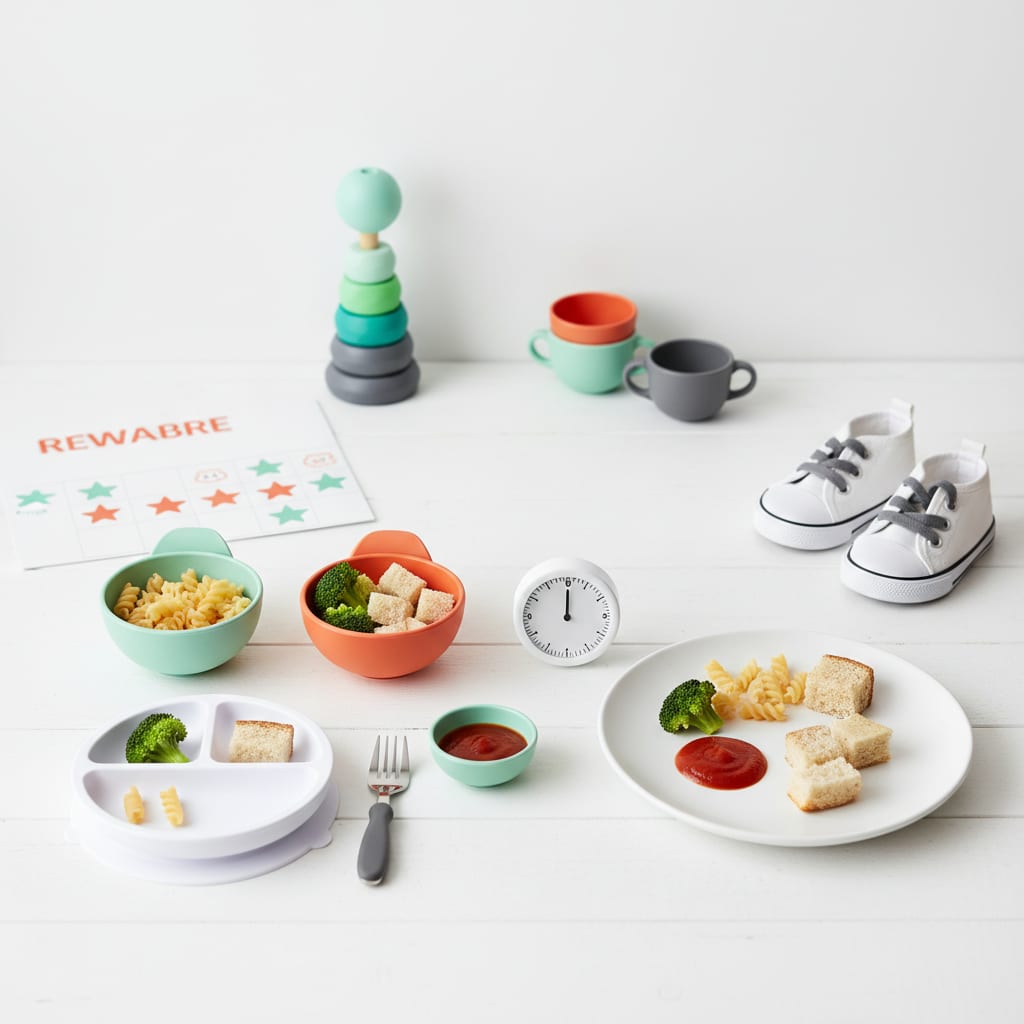
- Serve micro portions with a safe food onboard. Two noodles, one broccoli tree, a spoonful of the chicken — plus one thing they reliably eat, like bread or fruit. A full plate reads as a demand; a tiny one reads as a dare. Seconds exist for a reason.
- Deconstruct the dinner. Casseroles, sauces and things-touching-things are high-suspicion formats. Serve the same meal as separated parts — plain pasta here, sauce in a dip bowl, cheese in its own corner — and let them assemble. Same groceries, radically better reception.
- Run the boring veto script. When dinner is refused: “You don’t have to eat it.” Full stop. The plate stays, unremarked, while everyone else eats and talks about garbage trucks. No selling, no eulogy for the chicken. Half the fun of a strike is the show it produces; cancel the show.
- Eat the same food, together, even briefly. Ten minutes of everyone at the table eating the same meal outsells an hour of coaxing. Toddlers are surveillance experts — a food that mom eats routinely is a food that’s being quietly advertised.
- Take dessert off the negotiating table. “Three more bites and you get dessert” turns dinner into currency and dessert into the actual meal. Either serve a small dessert to everyone regardless, or serve it on random nights disconnected from performance — just never as a wage.
- Let breakfast do the rescue. A healthy toddler who skips dinner and eats a normal breakfast is fine — appetite balances across days, not single meals. Keep the script, close the kitchen, and let tomorrow morning’s appetite make your argument for you. (Lunch can help too — my no-cook lunch combos keep midday low-stakes.) A skipped dinner is a data point, not a crisis.
When it’s worth a pediatrician call
Two weeks of structure usually turns a dinner strike around. But a toddler who’s losing weight or sliding down their growth curve, gagging or coughing at most meals, dropping entire food groups long-term, or eating a total menu of fewer than roughly 15-20 foods past age two has earned a pediatrician conversation — feeding therapy is real, effective, and nothing to wait out. Strikes plus tummy pain, constipation, or vomiting: same answer, sooner. This list handles the theater; the medical stuff gets the professionals.
FAQ: toddler won’t eat dinner
Should I make my toddler a different dinner if they refuse?
No — the short-order kitchen teaches that refusal is a menu request. The safe food on the plate (trick 5) is the compromise: there’s always something they can eat, and it was there from the start, no reorder required.
Is it okay to send my toddler to bed without dinner?
You’re not sending them — they declined, calmly and with options, which is different from punishment. A small boring bedtime snack (think plain toast, offered at routine time, no upgrades on request) is a fine middle path if going down hungry worries you. See my picky-eater tricks for the no-pressure framework this all hangs on.
My toddler eats dinner at daycare but not at home. Why?
The daycare table has peer pressure, a schedule, and zero emotional stakes — nobody there cares if he eats, so he eats. That’s actually the blueprint: earlier dinner, same-food table, bored adults. Copy it shamelessly.
How many dinners can a toddler skip before it’s a problem?
The occasional skipped dinner in a kid who’s growing, playing and eating normally at other meals is ordinary toddler behavior. A pattern of most dinners refused plus weight or growth concerns is a pediatrician conversation — bring the three-day food log from trick 1; they’ll love you for it.