15 Toddler Bedtime Battle Tips That Actually Work
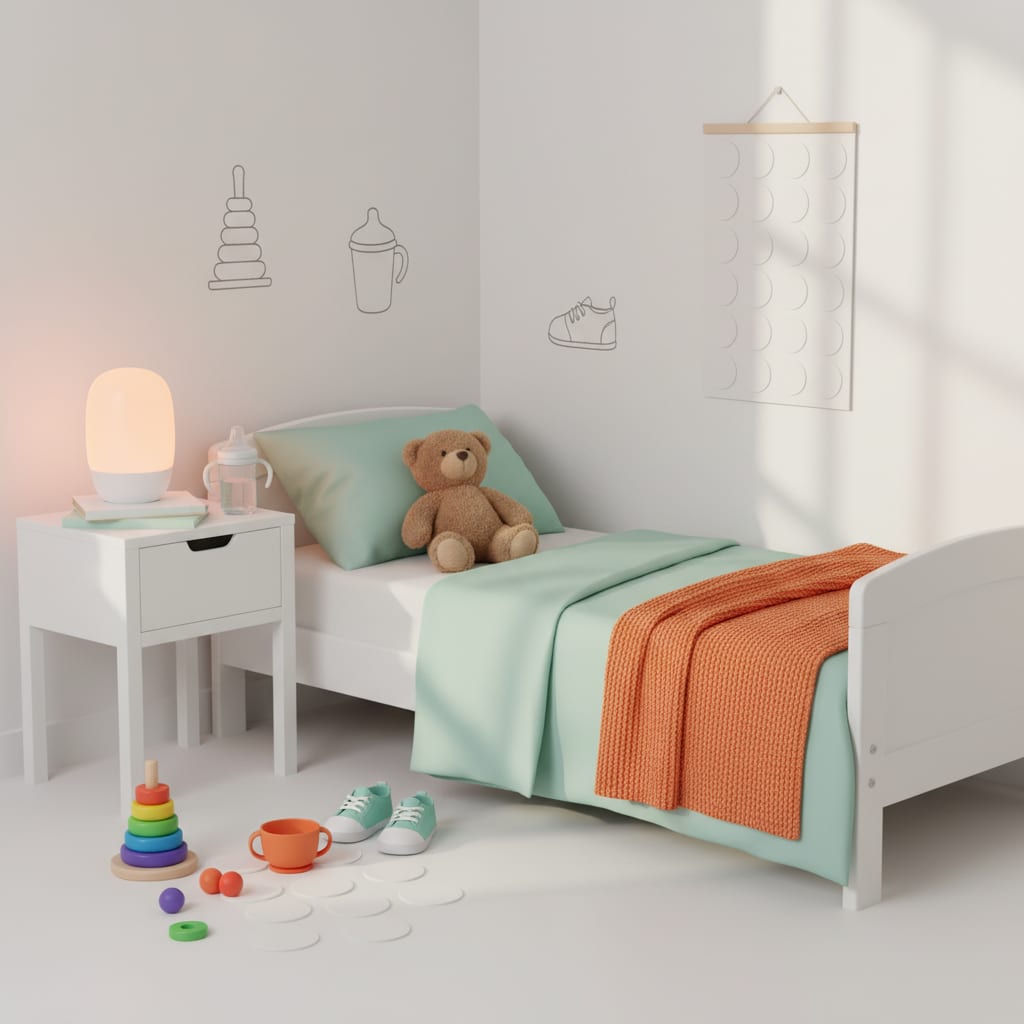
Toddler bedtime battles almost always come down to two fixable things: a schedule that doesn’t match your kid, and a routine with too many open doors to negotiate through. Fix the timing first — that’s tip #1, and the tool I use for it is Betteroo, a personalized sleep-plan app — then make the routine so predictable and so boring that there’s nothing left to fight about. Below are the 15 tips I actually use, numbered so you can start tonight. All fifteen have been tested on my own two, including the one who treats bedtime as a hostage negotiation.
Why bedtime turns into a battle
A one-to-three-year-old fights sleep for boring, mechanical reasons: they napped too late, bedtime drifted, they’re overtired and wired, or they’ve learned that stalling works. None of it means you have a “bad sleeper.” It means the system needs a tune-up — and toddlers are gloriously predictable once the system is right. Here’s the chart.
The 15 tips
- Get the schedule right — with a plan, not guesswork. This is the fix that makes the other fourteen easier. I use Betteroo, a personalized baby-and-toddler sleep app: you answer questions about your kid and your parenting style, and it builds the day’s nap windows and tonight’s bedtime, adjusting as they grow — through nap drops, regressions and the crib-to-bed move. It costs around $20 a month, it’s gentle (no cry-it-out dogma), and honestly: it’s a tool, not magic. What it removes is the 9pm guessing. Start with their two-minute quiz.
- Watch the last nap like a hawk. A nap that ends too close to bedtime quietly sabotages the whole evening. If bedtime is a fight every night, the afternoon nap is the first suspect to interrogate.
- Run the routine in the same order, every night. Bath, jammies, teeth, two books, song, bed. The order matters more than the ingredients — sameness is what tells a toddler brain “this train has one destination.”
- Keep the whole routine under 30 minutes. Long routines invite renegotiation. Short and identical beats long and lovely.
- Give two choices, both of which end in bed. “Red jammies or dinosaur jammies?” “One more song or one more hug?” Toddlers fight for control, so hand them control over everything except the outcome.
- Announce the countdown. “After this book, one song, then lights out.” Toddlers handle endings far better when they can see them coming — surprise endings are tantrum fuel.
- Make the bedtime snack boring and early. A small, protein-ish snack before the routine starts heads off the “I’m hungryyyy” stall. If dinner itself is the nightly battle, my picky-eater tips will save you an hour.
- Do the “needs audit” before lights out. Water bottle in reach, potty visit done, lovey located, nightlight on. You’re closing every stall-loophole in advance — for potty-training kids especially, one pre-bed potty trip beats three post-bed ones (more in my potty training quick wins).
- Dim the whole house 30 minutes before. Lights low, screens off, voices down. You’re not asking a wired toddler to sleep; you’re lowering the wattage until sleep sounds reasonable.
- Use a “last call” phrase and never improvise past it. Ours is “night night, love you, see you in the morning” — the exact same nine words nightly. Once it’s said, everything after is met with the same sentence, not a debate.
- Handle curtain calls like a broken record. When they pop out of bed, walk them back calmly, say the last-call phrase, leave. No lecture, no snuggle bonus, no snack court of appeals. Boring is the strategy.
- Try the “one free pass” card. For two-and-a-half and up: one physical card they can trade for one extra hug or sip of water per night. It converts unlimited stalling into a single, budgeted transaction — weirdly, they often save it.
- Make mornings enforce bedtime. A toddler clock (or a lamp on a timer) that “turns green” at wake-up time teaches the difference between night and morning — which quietly ends the 5:30am negotiations too.
- Expect a two-week adjustment, not a one-night miracle. The first three nights of any new bedtime system are usually louder. Hold the line; night four is where it bends.
- Pick your ONE battle at a time. Don’t fix stalling, early rising and the nap in the same week. Choose the worst offender, run tips 1-3 on it, and bank the win before the next fight.

FAQ: toddler bedtime battles
What time should a toddler go to bed?
Most one-to-three-year-olds do best with a bedtime somewhere between 6:30 and 8pm, but the honest answer is: it depends on the morning wake-up and how the nap went. That’s exactly why my tip #1 is a personalized plan from Betteroo rather than a chart on a mug — the “right” bedtime moves as naps change.
Why does my toddler fight bedtime all of a sudden?
Sudden bedtime battles usually track to a schedule change (a nap shortening or dropping), a big skill leap, a new bed, or a stalling habit that recently got rewarded. Rewind two weeks and ask what changed — then re-run tips 1, 3 and 11.
How long should I let a toddler cry at bedtime?
That’s a values call, and this is a tips list, not a referee. Every tip above works without leaving your kid to cry; if protest crying persists for weeks, or you suspect something medical (snoring, ear pain, reflux), loop in your pediatrician rather than a blog — mine included.
How many times should I return a toddler to bed?
As many as it takes, identically, boringly. The record at my house is fourteen returns in one night. It was three the next night, and zero by the weekend. Consistency is dull and undefeated.