Picky Eater Toddler Tips: 12 Tricks Tested at Home

The fastest way through a picky-eating phase is to take the fight off the table: you decide what food is served and when, your toddler decides whether and how much to eat. Everything below builds on that split. Picky eating in the one-to-three range is a normal, usually temporary developmental phase — toddler growth slows after the first year and appetite drops with it — so the goal of these 12 tips isn’t to win tonight’s dinner. It’s to keep new foods showing up, keep meals calm, and let curiosity do the slow work.
What’s actually going on with picky toddlers
Somewhere around 18 months to two years, most toddlers get suspicious of new foods, cling to a rotating cast of beige favorites, and discover that dinner is a fantastic stage for a power struggle. Both of mine did it on schedule. The trap is pressure: the more a toddler is coaxed, bribed or hovered over, the more interesting refusing becomes. These tricks all work around that instinct instead of against it.
The 12 tricks
- Adopt the jobs split and say it out loud. My job: what’s served, when. Your job: whether, and how much. The night I genuinely stopped caring whether the broccoli got eaten was the night the broccoli started disappearing. Toddlers can smell an agenda.
- Serve one “safe” food at every meal. Something they reliably eat — bread, rice, fruit — on the plate next to the new stuff. Nobody explores from a place of panic, and dinner stops being a cliff.
- Go micro with portions. Two peas. One noodle-sized strip of chicken. A giant serving of a new food reads as a demand; a crumb-sized one reads as a dare. Toddlers love a dare.
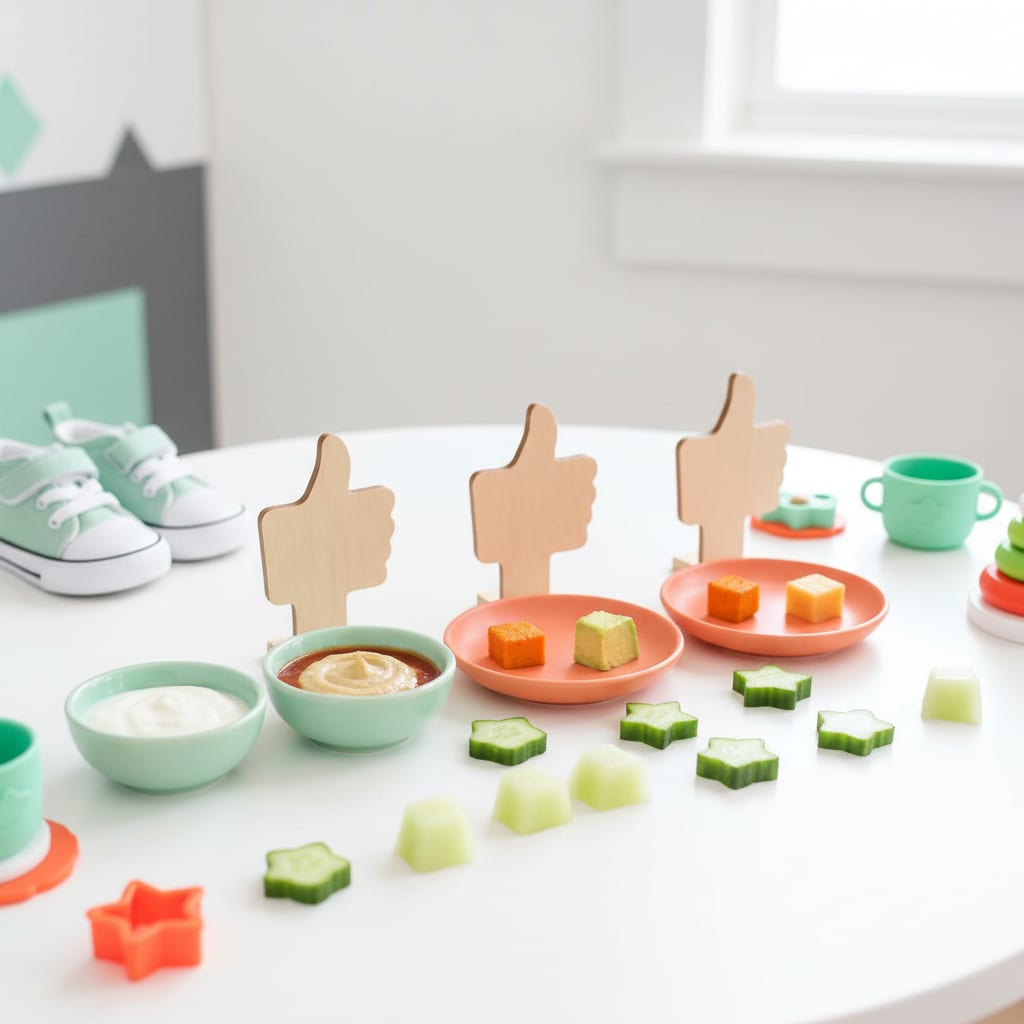
- Make everything dippable. Ketchup, hummus, yogurt, mild ranch — the food is suddenly a vehicle for the dip, and the dip is the toddler’s choice. Dipping converted more vegetables at my table than any other single trick.
- Build food bridges. Start from a food they love and change one small thing at a time: chicken nugget, then homemade breaded chicken, then plain grilled strips. Same shape, new food, no ambush.
- Let them serve themselves. Family-style bowls with a little spoon. Serving yourself is a job (toddlers love jobs), and food you chose lands on the tongue with less suspicion than food that appeared.
- Give the boring veto script. When something’s rejected: “You don’t have to eat it.” Full stop. No selling, no “just one bite,” no dessert treaty. The food stays on the plate, unremarked, doing quiet PR for itself.
- Keep the kitchen closed between meals. Three meals, two planned snacks, water in between. A toddler topped up on grazing crackers has zero reason to gamble on dinner. This one’s unpopular for about three days, then it works.
- Put them on the payroll. Washing cherry tomatoes, tearing lettuce, stirring, sprinkling cheese. Cooks eat their work — not always, but at rates no amount of table coaxing ever bought me.
- Re-serve without a scoreboard. Kids can need a new food offered many, many times before it’s accepted, so a rejected food isn’t a failed food — it’s a scheduled rerun. Keep it appearing in small ways without commentary.
- Shrink dinner expectations on tired days. A toddler running on a skipped nap will eat like a suspicious food critic. Serve the safe-food-heavy dinner, skip the experiment, and try again tomorrow — appetite follows sleep, which is why my bedtime battle tips are secretly eating tips too.
- Frame food wins like potty wins: small, cheered once, moved past. A lick counts. A touch counts. The same low-key, no-pressure celebration that works in potty training works at the table — make it a big deal and you’ve built a stage; make it a quiet high-five and you’ve built a habit.
When it’s more than a phase
Most picky eating is ordinary and outgrown. But if your toddler is dropping whole food groups long-term, losing weight or dropping down growth-chart curves, gagging or coughing routinely at meals, or eating fewer than roughly 15-20 total foods past age two, bring it to your pediatrician — feeding therapy exists, it’s genuinely helpful, and no blog tip list is a substitute for it.
FAQ: picky eater toddlers
Is picky eating normal in toddlers?
Very. Growth slows in the second year, appetite drops with it, and suspicion of new foods (the technical crowd calls it food neophobia) peaks right around age two. Normal doesn’t mean fun — it means you’re not doing anything wrong.
Should I make my toddler take one bite?
I don’t, and most feeding experts lean the same way: required bites raise the pressure, and pressure feeds refusal. The tricks above — micro portions, dips, food bridges — get more actual tasting than any bite rule ever got at my house.
What if my toddler only eats beige food?
Work the bridges (tip 5) from the beige base camp: nugget to breaded chicken, cracker to toast, plain pasta to buttered-with-invisible-things pasta. Beige is a starting line, not a life sentence.
Will my toddler starve if they skip dinner?
A healthy toddler who skips one dinner and has a normal breakfast is fine — appetite averages out across days, not single meals. Keep the boring script, close the kitchen, and let breakfast do the rescue. If skipping becomes a pattern with weight loss, that’s a pediatrician conversation.