Activities for 2 Year Olds: 30 Easy Ideas at Home
The activities that actually hold a two-year-old share three traits: they’re set up in under two minutes, they use something already in your house, and they let the kid dump, pour, stick or smash something. Elaborate Pinterest builds get four minutes of interest and forty of cleanup. Below are 30 ideas sorted by what they demand of you — the zero-prep ones first — with an honest note on which ones actually bought me time and which are a five-minute novelty at best.
Standard cautions apply throughout: stay in the room, keep small parts and anything mouth-sized out of reach at this age, and never leave a toddler alone with water, even an inch of it.
Zero prep, from a standing start
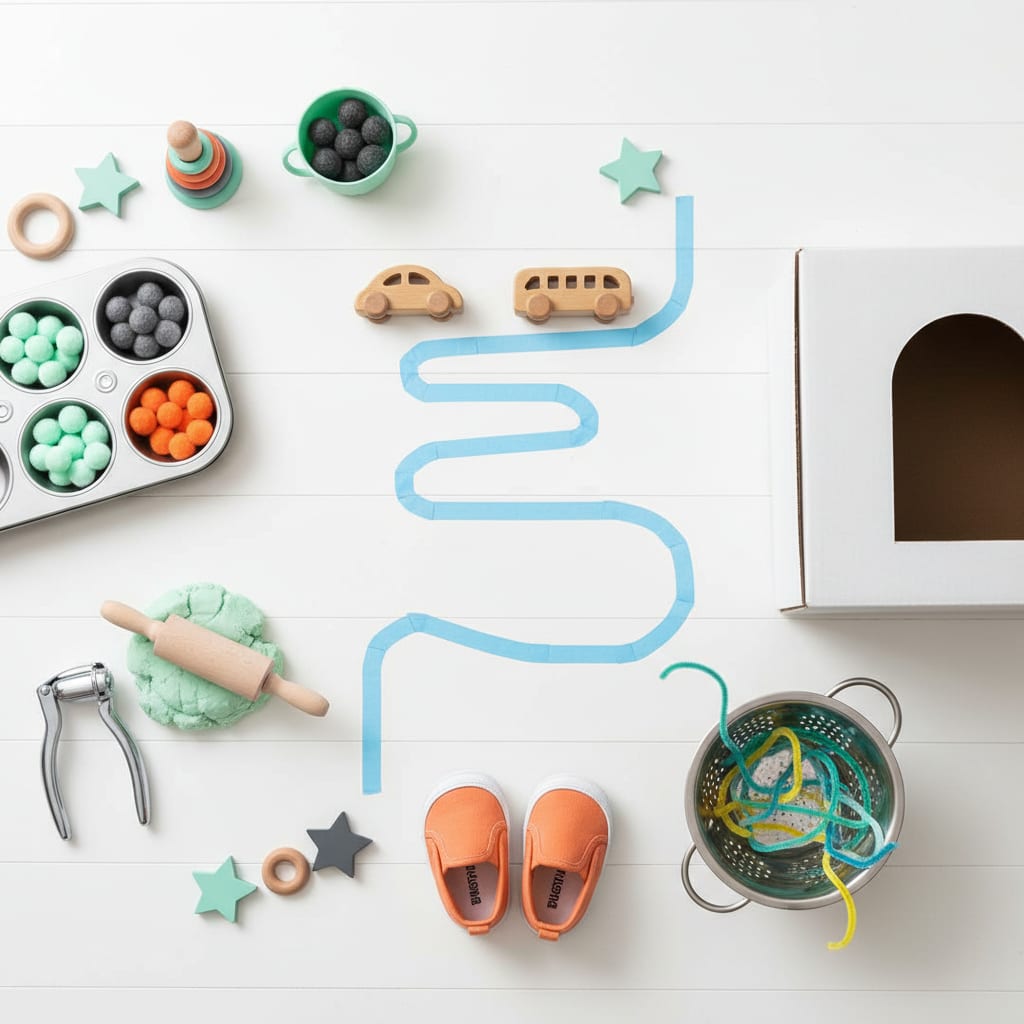
- Painter’s tape road. Lay painter’s tape lines across the floor for cars, or a hopscotch grid. Peels up clean, costs nothing, and my two got days out of one roll.
- Sticker sheet, blank paper. No rules, no scene, no instructions. Peeling is the skill they’re practicing; the picture is irrelevant.
- Laundry sorting race. Hand over the clean socks. Two-year-olds genuinely enjoy matching pairs and will do it slowly and badly for fifteen minutes.
- Cushion mountain. Sofa cushions on the floor, climb over, jump off the low one. Burns more energy than anything else on this list.
- Flashlight hunt. Curtains closed, small flashlight, find the animals hidden around the room. Works spectacularly at 5pm in winter.
- Big-box everything. A cardboard box becomes a boat, a bed, a garage. Cut a door if you’re feeling generous. Best value in the house.
- Muffin-tin sort. A muffin tin plus pom-poms, big buttons or pasta shells, sorted by color. Supervise closely — everything here is mouth-sized.
- Post the mail. Cut a slot in a shoebox lid, hand over old envelopes and junk mail. Posting is weirdly compelling at this age.
- Balloon keep-up. One balloon, don’t let it touch the floor. Deflated balloons are a serious choking hazard, so bin the pieces the second one pops.
- Mirror faces. Sit in front of a mirror and copy each other’s expressions. Free, zero setup, and toddlers find it hilarious far longer than adults do.
Two-minute setups worth the effort
- Ice rescue. Freeze small plastic animals in a tub of water overnight, then hand it over with a spoon and warm water. Long attention span, mild mess.
- Play dough with kitchen tools. A garlic press, a pizza cutter and a rolling pin beat any dough kit. Play-Doh’s ten-pack is labeled for two and up and lasts if you actually close the lids.
- Water transfer station. Two bowls, one full, a turkey baster or ladle. Towel underneath. Reliable twenty minutes at the kitchen table.
- Contact-paper collage. Tape a sheet sticky-side-out at toddler height and hand over torn tissue paper or leaves. Vertical work is great for shoulders and wrists.
- Dry pasta pouring. A tray, dry penne, cups and a funnel. Sweeping it up afterwards is often the part they like best.
- Sponge stacking. Wet kitchen sponges stack into satisfyingly wobbly towers in the bath or a tray. Cheap, quiet, oddly absorbing.
- Colander and pipe cleaners. Thread pipe cleaners through the holes. Genuine fine-motor work disguised as nothing much.
- Drive-through car wash. Toy cars, a tub of soapy water, an old toothbrush. Outside if you can, bathroom floor if you can’t.
- Frozen berry bath. A bowl of frozen peas or berries with a spoon, eaten as they go. Snack and sensory play in one, which is efficient parenting.
- Sticker-and-stick line-up. Put stickers on popsicle sticks and post them into a slotted container. Sounds pointless. Held both of mine for ages.
Move the body without leaving the house
- Animal walks down the hallway. Bear crawl, crab walk, frog jumps, one animal per length. The cheapest energy burn there is.
- Freeze dance. Music on, music off, everybody stops. Two-year-olds are terrible at stopping, which is the entire point.
- Bubble chase. Blow, they pop. Add “pop it with your elbow” once the basic version wears thin.
- Pillowcase drag rides. Sit them on a pillowcase and pull them along a smooth floor. Hard floors only, slow speeds, and expect to be asked for a hundred laps.
- Obstacle course. Under a chair, over a cushion, around a laundry basket, back. Rebuild it differently and it’s brand new.
Pretend play that runs itself
- Real-tools kitchen. Give them actual measuring cups, a whisk and an empty spice jar rather than plastic play food. The real thing holds far longer.
- Doctor for the stuffed animals. A bandage roll and a torch. They will bandage the same bear eleven times.
- Grocery shop. Empty boxes and cans from the pantry, a bag, and you as the customer. Bonus: it puts your pantry back together, eventually.
- Phone calls to nobody. An old handset or a wooden block. Long, detailed, entirely fictional conversations. Do not interrupt.
- Washing the plants. A spray bottle set to mist and one houseplant with permission to be soaked. Twenty minutes, near-zero mess, slightly damp plant.
Making an activity last longer
Two structural tricks matter more than any single idea. Rotate, don’t add: put two-thirds of the toys in a closet and swap a bin every couple of weeks — the same trucks are thrilling again after a fortnight away. Set up before they see it: an activity discovered already laid out gets a longer run than one assembled while a toddler hangs off your leg.
And time it right. The stretch before lunch and the ugly hour before dinner are when you need these most, but they’re also when the tank is emptiest. Front-load the physical ideas earlier in the day, save the tray-based ones for when everyone’s fraying, and pair the late-afternoon one with a snack — my two-minute snack ideas exist for exactly that window. If your two-year-old is mid nap-wobble, expect shorter runs on everything and lean on the quiet options; my nap refusal tips cover the rest-time version of this problem, and a plan that re-times the day from this morning’s actual wake-up — Betteroo does that math for you — saves a lot of afternoons that would otherwise be spent entertaining an overtired kid.
FAQ: activities for 2 year olds
How long should a 2 year old stay focused on an activity?
Short — a few minutes is normal, and ten is a genuine win. Attention at two comes in bursts, and a kid who leaves and comes back three times has still played for twenty minutes. Rotating between two set-up options usually beats trying to stretch one.
What activities are best for a 2 year old at home?
The ones with a physical action to repeat: pouring, posting, peeling, stacking, dumping. Anything with a right answer or a finished product tends to fizzle. Zero-prep beats elaborate every time, because you’ll actually do it twice.
How do I keep my 2 year old busy while I cook?
Give them a job at your feet or a tray at the table within sight: dry pasta pouring, a muffin-tin sort, or their own bowl and spoon. Set it up before you start cooking, not after the whining begins. Rainy afternoons need a bigger list — I keep 25 rainy day activities on hand for those.
Do 2 year olds need structured activities every day?
No. Independent, unstructured play is genuinely valuable, and being a bit bored is where a lot of it starts. These ideas are for the hard hours, not a curriculum — a day with two set-ups and a lot of pottering is a completely good day.