Activities for 18 Month Olds: 22 Ideas Using What You Own
The best activities for an 18 month old let them copy you, climb something, and play a first round of pretend. Somewhere between 18 and 24 months, a new walker turns into a climber and starts feeding the teddy with a spoon. They also begin to follow simple instructions like “get the ball.” So the ideas that hold them are real jobs done alongside you, games with one short instruction, and things to push, stack and bang. Below are 22, sorted by the skill they use, all set up from what’s already in your house. Expect five to ten minutes from a good one, and more if you sit on the floor with them.
This list picks up where my activities for 1 year olds leave off. The 12–18 month dump-and-fill games still work. These are the ones that use what’s new.
The usual cautions apply, and they matter at this age. Stay in the room for anything with water. Keep balloons, coins, small balls, marker caps and button batteries out of reach; the AAP names all of them as choking hazards for young children. Assume everything will be tasted.
Copy-the-grown-up jobs (1–5)
The CDC’s 18-month milestones include “copies you doing chores, like sweeping with a broom”. Give them a real version of whatever you’re doing.
- Sweeping. A small hand brush and dustpan, or the short end of a broom. They’ll push crumbs from one side of the kitchen to the other, which is the whole job at 18 months.
- Wiping the table. A damp cloth after lunch. They’ll wipe one patch in circles for a surprisingly long time.
- Socks into the basket. Hand them clean socks from the laundry pile, one at a time, and point to the basket.
- Carrying the napkins. One napkin or one plastic cup per trip from the kitchen to the table. The CDC’s two-year checklist suggests exactly this kind of helping, and it starts well before two.
- Washing the plastic dishes. A washing-up bowl of water on a towel on the floor, a sponge and three plastic plates. Stay right there.
First pretend play (6–9)
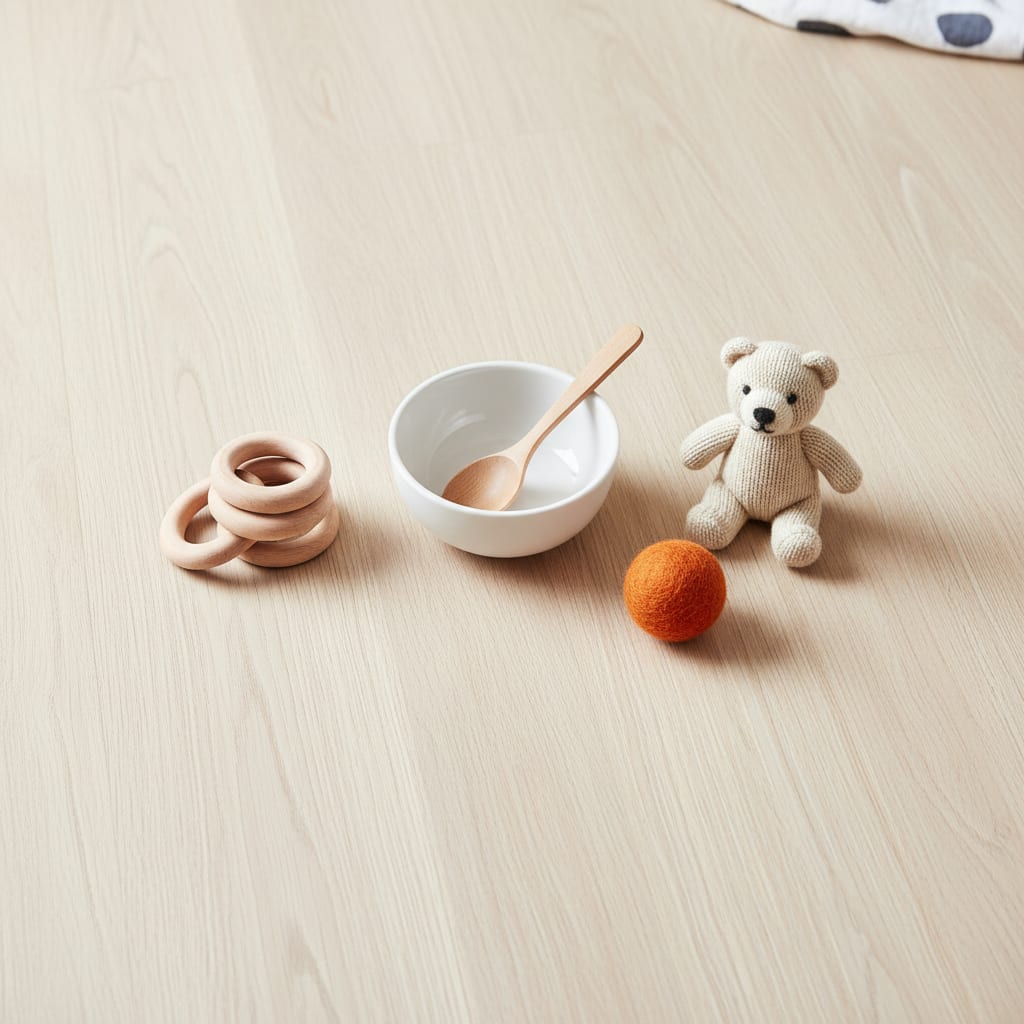
- Feed the bear. A stuffed animal, a bowl and a spoon. The CDC suggests this kind of pretend feeding, taking turns, at 18 months.
- Bedtime for the doll. A shoebox bed and a dish towel for a blanket. Tuck in, pat, “night night”, then wake it up and do it all again.
- Stirring the pot. A real saucepan and a wooden spoon on the kitchen floor while you cook. Add dry pasta if you’re brave, and only with you watching.
- Bath time for the duck. A plastic tub with an inch of water, a toy, and a washcloth. Washing a toy’s face is pretend play and a water game in one.
Games with one short instruction (10–13)
The CDC milestone here is following one-step directions without gestures, like giving you the toy when you say “give it to me.” These games are built on that.
- Fetch and deliver. “Get the ball. Give it to Daddy.” Two quick tasks, one after the other, said separately. Cheer every delivery.
- Find the half-hidden toy. Hide a toy with one part sticking out from under a cushion, as the AAP suggests for 12–18 months, and say “where’s the bunny?” Hide it a little better each time.
- Ready, set… go. Hold a ball, say “ready, set…” and wait, then “go!” and roll it. The pause is the game. The CDC’s two-year page suggests the same idea with a swing.
- Body part hunt. “Where’s your nose? Where’s my nose?” Pointing to body parts on both of you is one of the CDC’s suggestions, and it fills a long wait at the doctor’s office.
Climb, squat, push and pull (14–18)
- Push toy laps. A push-along with a long handle, like the Melissa & Doug Chomp & Clack alligator, gives a steady new walker something to steer. A laundry basket with a few books in it does the job for free.
- Squat and shop. Spread toys on the floor and give them a small basket to fill. Squatting down to pick things up and standing back up is the AAP’s suggested activity for 19–24 months.
- Stair fetch. A toy two steps up, you right beside them. Up on hands and feet, down feet first. Never alone, and keep the gate shut the rest of the time.
- Couch on, couch off. Climbing onto and off a couch without help is an 18-month milestone, so they’ll do it anyway. Teach the safe way off: tummy down, feet first.
- Roll it back. Sit facing each other with legs apart and roll a ball between you. Rolling balls together is on the CDC’s 18-month list of things to try, and it’s the first game with turns in it.
Stack, bang and scribble (19–22)
- Nesting and stacking cups. A set like Green Toys stacking cups or plastic food containers from the cupboard. Stacking two or three is a win. Knocking them down is the reward.
- Tower, crash, again. Take turns: you stack a block, they stack a block, they knock it over. The CDC’s two-year page suggests this turn-taking tower game, and it works earlier.
- Pounding. A wooden Hape pound-and-tap bench, or a pot and a wooden spoon. Loud, satisfying and great for a toddler who’s just been told “no” to banging on the window.
- Big-paper scribbling. Tape a large sheet to the floor and hand over one chunky crayon. Scribbling is an 18-month milestone, and a big sheet taped down saves the walls.
How to make each one last
Sit on the floor first. At 18 months a toddler plays longest beside a seated adult, and wanders off from a standing one. Offer one activity at a time, put it away while they’re still interested, and bring it back tomorrow. Save the water games and pretend kitchen for the long stretch before dinner, and the climbing and pushing for the morning.
If the afternoons fall apart however good the activities are, look at sleep before you look for new ideas. Many toddlers are just settling into one nap around now. For the bigger picture, Betteroo has a guide to what most toddlers are doing around a year and a half. When they outgrow this list, my activities for 2 year olds add zero-prep setups and longer pretend play.
FAQ: activities for 18 month olds
What should an 18 month old be doing for play?
Copying chores, simple pretend play like feeding a stuffed animal, pushing toys, climbing on and off furniture, scribbling and following one-step instructions. Those are all on the CDC’s 18-month checklist, and play that uses them tends to last longest.
How long can an 18 month old focus on one activity?
A few minutes at a time, longer if you’re sitting with them. Wandering off and coming back is normal at this age and still counts as playing.
Should my 18 month old watch educational videos?
The CDC’s 18-month page suggests keeping screen time to video calls with family at this age. A real job alongside you, like wiping the table, teaches more than an app does.
What toys are best for an 18 month old?
Few and simple: something to push, something to stack, something to bang, a doll or stuffed animal with a spoon and a blanket, and chunky crayons. Rotate them rather than adding more.