Activities for 3 Year Olds: 30 Easy Ideas at Home
The activities that hold a three-year-old are a step up from the ones that held them at two. They still want to pour, smash and climb, but now they also want rules, real jobs and a story. A game with a turn to wait for, a knife that actually spreads, a puzzle with twenty pieces: that’s the sweet spot. Below are 30 ideas sorted by the skill three-year-olds are suddenly keen to use, all set up from things you already own. Expect ten to twenty minutes from a good one, which is a big jump from a year ago.
Basic safety still applies. Stay close for anything involving water, knives or small pieces, and keep tiny parts away from younger siblings, who may still put things in their mouths.
Games with rules, finally (they can wait a turn now)
- Simon says. It’s the classic for a reason: at three, a child can just about hold the rule “only if Simon says”.
- Red light, green light. A hallway, two words, a lot of stopping. It’s the same skill freeze dance taught at two, now with a rule they have to remember.
- Hide-and-seek with counting. They count (badly) while you hide. Then swap, and accept that they’ll hide in the same place every round.
- I spy, color version. “I spy something green” works long before letter sounds do. Works in the car too.
- A first board game. Choose a cooperative one, where everyone wins or loses together. HABA’s First Orchard has chunky wooden fruit and a color die, and the whole table races the raven to the orchard. It teaches taking turns without anyone beating anyone else.
- Hot potato with a beanbag. Music on, pass it round, whoever holds it when the music stops does a silly dance. You can play it with two people.
Hands busy at the table
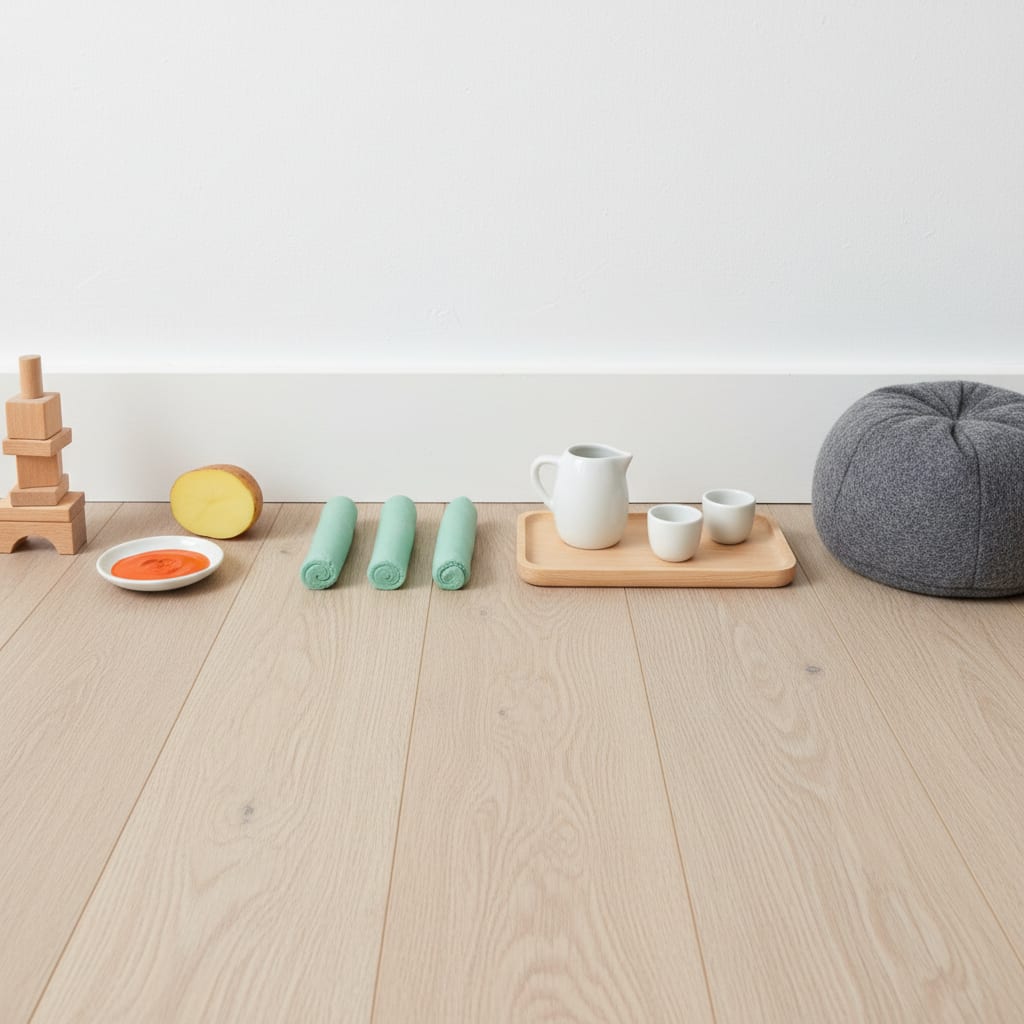
- Snipping play-dough snakes. Before they cut paper, let them cut something easy. Roll dough into snakes and hand over Fiskars training scissors, which are labeled for ages three and up. They’ll snip pieces into a bowl for ages.
- Tracing around toys. A dinosaur, a spoon or their own hand on a big sheet of paper, traced with a chunky crayon.
- Sorting by two rules. At two, it was red with red. At three, try “big red ones here, small red ones there” with blocks or socks.
- Bigger puzzles. Move up to 12–24 piece floor puzzles. Help by sorting out the edge pieces, not by doing it for them.
- The tower challenge. “Can you build it taller than the chair?” Any blocks will do. The goal is what keeps them going, and knocking it down is their reward.
- Potato or cork stamps. Cut a potato in half, dip it in a saucer of paint, and stamp it on paper. It takes thirty seconds to set up, and the mess stays on the paper.
Real jobs in the kitchen
- Spreading with a butter knife. Butter on toast, cream cheese on crackers. It’s hard to get right and very satisfying.
- Peeling. A banana, a clementine started for them, or a hard-boiled egg. This is a genuine skill that also feeds them.
- Washing and tearing the lettuce. A colander in the sink, a stool, and a salad that ends up in a lot of pieces.
- Pouring their own drink. A small jug with a little water in it and a cup on a tray. Spills on the tray are the lesson.
- Setting the table. One fork, one spoon and one napkin per seat.
- Stirring and measuring. Let them dump in pre-measured flour and stir the muffin batter. If raw egg is involved, wash hands before anything goes near a mouth.
Bigger movement
- Tape hopscotch. Painter’s tape squares on the hallway floor. Three-year-olds hop on two feet, and some can manage one, which they’ll want to show you a hundred times.
- Balance beam on the floor. A long line of tape, or a plank lying flat on the floor. Walk it forwards, sideways, then carrying a beanbag on their head.
- Beanbag toss with distance. Put a laundry basket one step away, then two, then three. They’ll move it closer themselves to win, and that’s fine.
- Kick into a goal. Two shoes make a goal. Outside, indoors with a soft ball, or down the hallway.
- Tricycle or balance-bike laps. Driveway, park path, or a quiet sidewalk, with a helmet on. Three is often when the pedaling finally clicks.
- Clue hunt. “Find something soft. Find something round. Find something that’s red.” Describing a thing is a good step up from just naming it.
Pretend play with a story
- Puppet show behind the sofa. Two socks or two stuffed animals pop up over the sofa back. They’ll make up the plot, which usually ends in someone getting eaten.
- Restaurant. They take your order, “cook” it in the play kitchen or a cardboard box, and bring you the bill. Order something silly.
- Bus or train from the dining chairs. Line the chairs up in a row and add tickets, passengers and a driver. They’ll be the driver.
- The bike wash. A bucket of soapy water, a sponge and their ride-on or scooter, outside. It’s a whole hour of work if you let it be.
- Dress-up box. Old scarves, hats, a cape made from a pillowcase. Three-year-olds want to be someone specific, so name the character and let them run.
- Shop with a basket. Tins and boxes from the cupboard, a basket, and you at the till. The two-year-old version was all filling the bag. At three they’ll want to price things and give change.
Making an activity last longer
The two-year-old rules still apply. Rotate toys instead of adding new ones, and set up before they see it. What’s new at three is that a goal stretches the time: a tower to beat, a list of clues, a game to finish. Give them a reason to keep going and they will.
Time it to the energy. Movement ideas fit the morning. Table work and pretend play fit the long afternoon, especially if naps are disappearing. If the nap has already gone, the quiet-time activities for 3 year olds are built for that old nap slot, and a child who gets enough rest at night lasts much longer on everything else. Betteroo’s breakdown of sleep at three is a useful check on whether the afternoon meltdowns are boredom or tiredness.
If you have a younger one too, the activities for 2 year olds list includes plenty they can do side by side, and several of these ideas scale down well.
FAQ: activities for 3 year olds
How long can a 3 year old focus on an activity?
Longer than at two. Ten to twenty minutes on something they’ve chosen is common, and longer if there’s a goal or a story involved. Shorter on the days they’re tired or unwell, which is normal.
What activities are best for a 3 year old at home?
Ones that use a new skill: games with a simple rule, real kitchen jobs, scissors, bigger puzzles and pretend play with a plot. Three-year-olds love being trusted with something real, so a butter knife and a job tend to beat another toy.
Should a 3 year old be doing structured learning activities?
Not as lessons. Counting forks, sorting socks and hunting for “something round” teach plenty without a worksheet. Free, unstructured play still matters most at this age, and a day with two set-ups and lots of pottering is a good day.
How do I keep a 3 year old busy without screens?
Set up one table job and one movement idea before the hard part of the day, and give them a real job while you cook. Turn-taking games also work well when you can join in for ten minutes.