Toddler Throwing Food? 8 Tips to End the Catapult Phase
The fastest way to stop a toddler throwing food is to make throwing boring and dinner short: load only two or three pieces at a time, give one calm warning with a script you never vary, and end the meal without drama the moment the second piece flies. Food throwing runs on audience reaction and ammunition — remove both and the catapult phase usually winds down within a couple of weeks. The 8 tips below are the exact sequence I ran on my own two, both of whom went through a period where the floor ate better than they did.
The 8 tips
- Cut the ammunition first. A plate holding a full meal is a full magazine. Serve two or three pieces at a time and refill on request. This one change often cuts throwing in half by itself, because the game needs inventory — and because a huge plate load overwhelms the same toddler a tiny one invites to eat. It’s the micro-portion move from my dinner-strike tricks, doing double duty.
- Check the exits before the behavior. Most throwing is a message with terrible delivery: I’m done, I’m full, I hate this texture, get me out of this chair. Before you script anything, make sure there’s a legal way to say it. Teach and honor “all done” — the words or the sign — every single time. A toddler whose “done” works doesn’t need airmail.
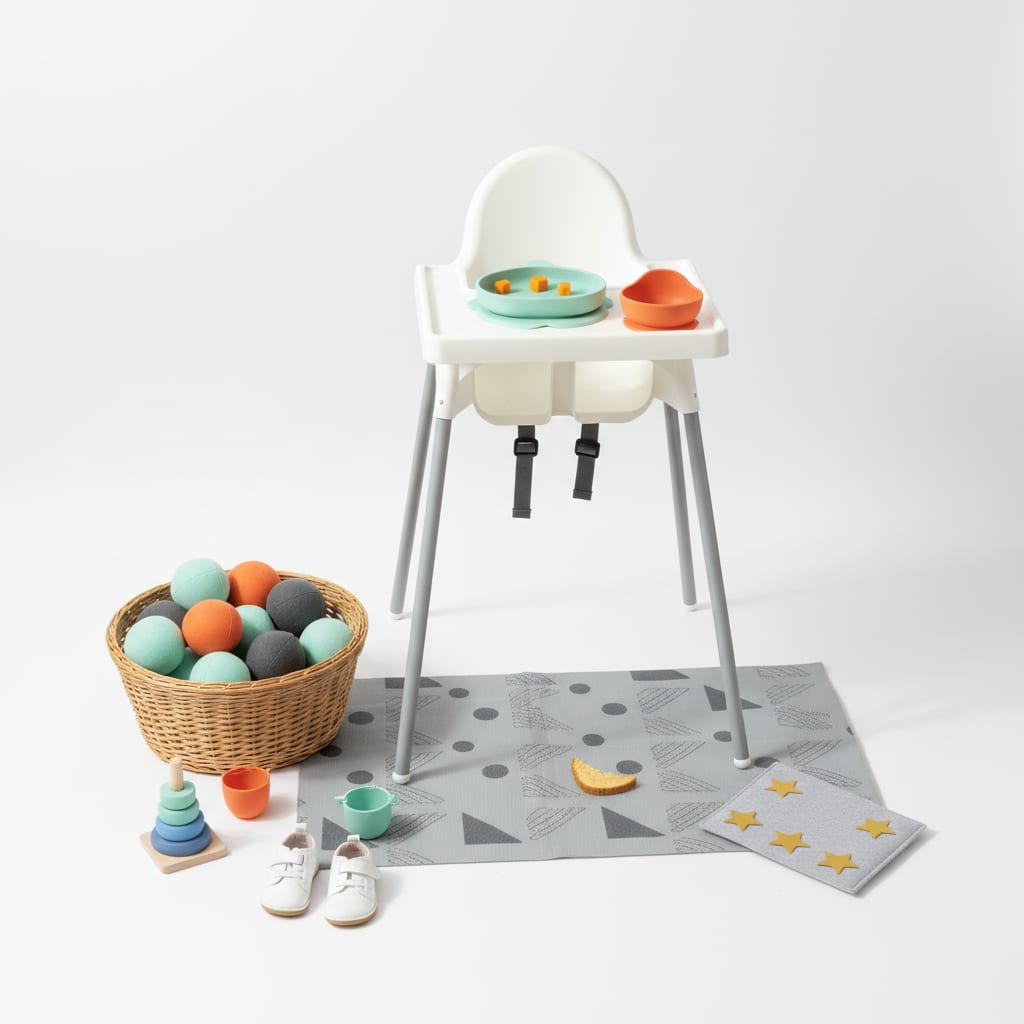
- Give the alternative, not just the rule. “Food stays on the tray. If you’re done, put it here.” Park a small “done bowl” on the tray corner and make a mild fuss the first few times food lands in it instead of on the floor. Toddlers drop the throw faster when the replacement move is concrete.
- Run the two-warning script, word for word. First throw: pick nothing up, say the line — “Food stays on the tray. Throw again and lunch is all done.” Second throw: “Lunch is all done,” tray cleared, kid down, tone of a person announcing the weather. The power isn’t the consequence; it’s that it happens every time, in the same words, with zero heat.
- Cancel the show. Gasping, lunging for the falling toast, laughing (it’s hard — the wind-up is genuinely funny), or delivering a lecture all pay the same wage: attention. The floor show is half the point. React like a bored referee and the sport loses its league.
- Don’t restart the meal. After the tray is cleared, the meal is over — no follow-up crackers ten minutes later, or the lesson becomes “throw food, receive snack.” The next scheduled meal or snack arrives at its normal time, served with total amnesia about the incident. Appetite balances across the day, and a closed kitchen between meals (my picky-eater playbook leans on this too) is what makes the calm ending stick.
- Feed the experiment somewhere legal. A lot of throwing at this age is honest physics research — release, drop, splat, repeat. Give the science a lab: balls in a basket after lunch, beanbags at a laundry hamper, pom-poms into a bowl. “Balls are for throwing, food stays on the tray” works better when the first half is actually available.
- Rig the odds before the meal starts. A famished toddler throws less (eating wins), a full one throws more (entertainment wins) — so time meals for real appetite. Seat them well: feet supported, tray close, sixty-second warning before mealtime so the chair isn’t an ambush. And keep offerings low-stakes at lunch — no-cook combos hurt a lot less to sweep up than the meal you actually cooked.
The cleanup rule that saves your sanity
Don’t clean during the meal. Every mid-meal floor wipe is a live demonstration that throwing produces a kneeling adult — riveting content. Put a wipeable mat (a Bumkins splat mat) under the chair, run the meal, do one cleanup at the end. Toddlers old enough to walk can drop a napkin onto the mess or carry one piece to the trash “as a helper” — cheerfully, as a job, never as a shaming exercise.
FAQ: toddler throwing food
Is throwing food normal, or is something wrong?
Throwing food is one of the most standard toddler behaviors there is, especially somewhere around one to two years old. It fades fastest with boring consistency. If throwing comes with very little eating overall, weight or growth worries, or meltdowns at nearly every meal, bring it up with your pediatrician — that’s a different conversation than a catapult phase.
Should I punish my toddler for throwing food?
No — and the good news is the boring version works better anyway. The two-warning script plus a drama-free meal ending is the consequence, delivered at a temperature a toddler can actually learn from. Yelling turns the meal into theater, and theater is the fuel.
What if my toddler throws food they usually love?
Then it’s almost never about the food — they’re full, tired, done, or testing whether the rule still holds on Tuesdays. Run the same script. Consistency across foods and days is exactly what retires the testing.
How long does the food-throwing phase last?
With the reaction gone, the ammunition small, and the script identical every meal, most families see real improvement within a week or two — that matched my experience both times. Progress isn’t linear; a molar week or a schedule change can bring one-night revivals. Same script. It holds.