Flying With a Toddler: 18 Tips From Boarding to Landing
Flying with a toddler is survivable when you plan the whole day, not the flight. The three things that decide how it goes are the departure time you book, whether your kid has a seat of their own, and how slowly you release the entertainment. Everything else — the ears, the diaper change in a bathroom the size of a closet, the tray-table drumming — is a solved problem with a known trick. Below are eighteen of them in flight order, from the booking screen to the moment you’re standing at baggage claim with a very tired one-year-old on your hip.
Before you book (tips 1–4)
-
Book the first flight of the day. Morning departures are the least delayed and your toddler is at their best. A 6am wake-up beats a 9pm tarmac hold with a kid who ran out of patience four hours ago.
-
Buy the seat if you can. Lap infants are legal until two and genuinely free, but a toddler with their own seat can be buckled, can sleep lying against the armrest, and can’t spend three hours climbing you. If the fare makes it possible, it’s the single biggest upgrade to the day.
-
Fly around the nap, not through it. Aim for wheels-up either right at nap time or well clear of it. The worst case is boarding twenty minutes after the nap should have started. If you’re travelling with a just-turned-one, Betteroo’s guide to how long a one-year-old can comfortably stay awake is a useful sanity check on the timing.
-
Pick seats with the aisle in mind. Two together, one aisle, toward the back — you’re closer to the bathrooms, closer to the galley snacks, and behind most of the people who’ll be annoyed by seat-kicking. Bulkhead rows give floor space but usually no under-seat bag access during taxi.
Packing (tips 5–8)
-
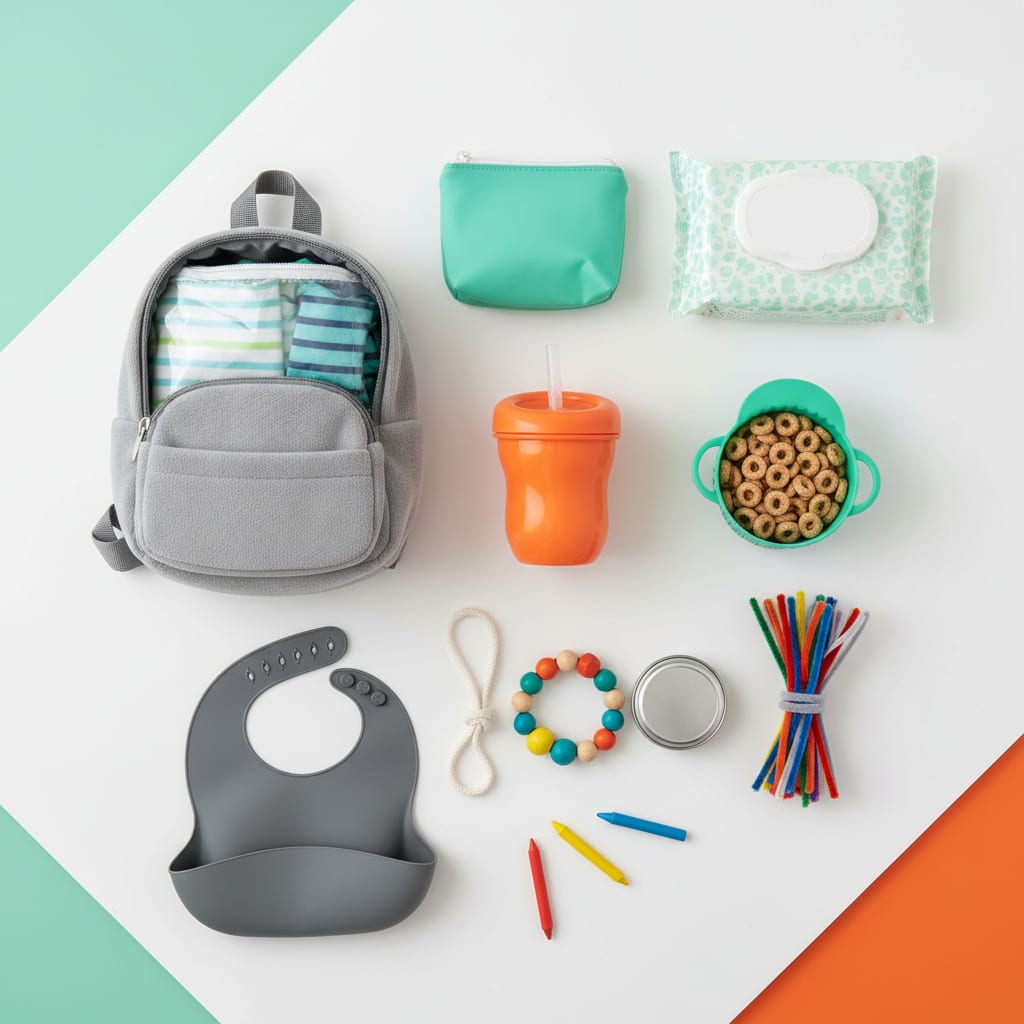
Pack the bag in layers, not piles. Top layer: snacks, wipes, one toy. Middle: diapers, spare clothes, the tablet. Bottom: things for the destination. You will be unpacking this with one hand in a very small space.
-
Bring one full change for every person. Toddler outfits, obviously, but also a t-shirt for you. Yoghurt-on-the-shoulder at hour one is a long flight otherwise.
-
Take a mess-free entertainment core. A Water Wow pad reloads with plain tap water and can’t stain a seat, which makes it the one item that earns its place on every trip. Build the rest of the pouch the same way — my busy bag ideas are exactly this, packed in advance.
-
Consider an aviation harness for a small toddler. The CARES harness is FAA-approved, weighs under a pound and turns a standard seatbelt into something a wriggler can’t slip. It’s the alternative to hauling a car seat through three terminals — though if you need the car seat at your destination anyway, bringing it may still win.
Airport and boarding (tips 9–12)
-
Skip family pre-boarding on purpose. Pre-boarding sounds like a gift and is usually a trap: it adds twenty-five minutes of sitting-still to a flight that’s already long. Send one adult on with the bags, let the other run laps with the toddler in the gate area, and board at the very end.
-
Run them ragged at the gate. Walk the concourse, find the moving walkway, do the stairs. Physical output before a confined stretch is the highest-return thirty minutes of the whole day.
-
Do the last diaper change at the gate. Airport changing tables are enormous compared to the airplane one. Change right before you walk down the jet bridge even if the diaper barely needs it.
-
Gate-check the stroller, carry the car seat plan. Gate-checking gets the stroller back at the jet bridge on arrival, which matters when you land with a sleeping toddler. Tag it before you get to the podium so you’re not doing paperwork with a kid on your hip.
In the air (tips 13–16)
-
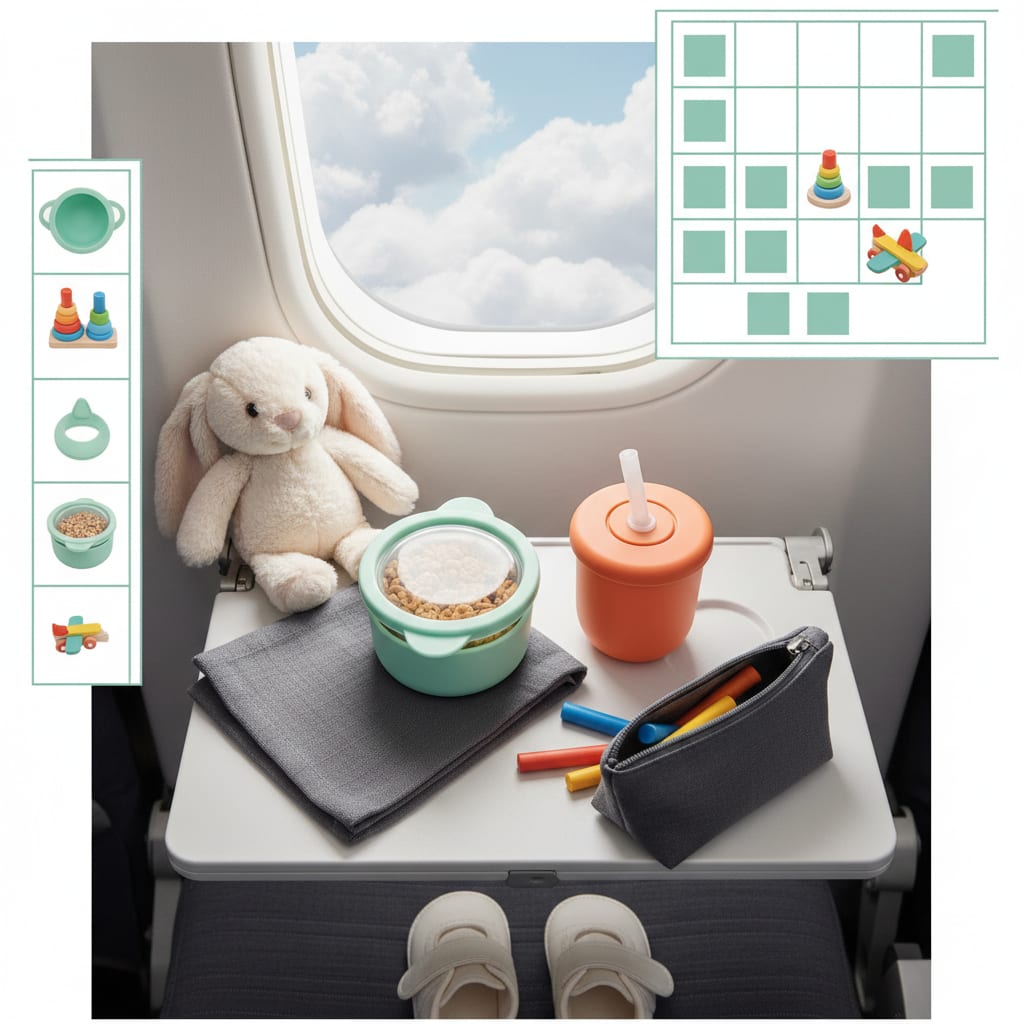
Ration the entertainment on a timer. One item at a time, back in the bag before the next comes out. Six small things released every twenty minutes outlast the whole bag dumped on the tray table at cruising altitude.
-
Sucking fixes the ears. A cup, a bottle, a pouch or a snack during descent — descent is the painful part, not take-off. Start about twenty minutes before landing rather than when the wheels come down.
-
Feed on a slower schedule than you think. Snacks are the entertainment as much as the food. Ten small deliveries beat one big handout, and dry, non-crumbly things travel best — my two-minute snack ideas are the list I raid the night before.
-
Let the seat-back screen be the last card. If you’re going to use screens, save them for the final hour when everything else is spent, not the first. Once the screen is on, nothing in the bag competes with it.
Landing and the days after (tips 17–18)
-
Have a two-minute plan for the meltdown. It will happen at least once. Stand up, walk to the back galley, hold them facing outward, and say almost nothing for ninety seconds. Standing and moving resets a toddler faster than any negotiation in a seat. The same de-escalation sequence works everywhere — see my public tantrum moves for the full version.
-
Rebuild the schedule on arrival, don’t chase it. Across time zones, shift bedtime toward local time in small steps rather than all at once; Betteroo’s method for moving a toddler’s body clock gradually works the same way for a flight as for a clock change. And set the room up like home the first night — my sleep away from home tips cover what to pack for that.
FAQ: flying with a toddler
What is the best time of day to fly with a toddler?
Early morning. Delays are least likely, the airport is calmer, your toddler has the most patience they’ll have all day, and you land with the whole afternoon to recover. Overnight flights only tend to work if your kid reliably sleeps in unfamiliar places, which most one- and two-year-olds do not.
Do toddlers need their own seat on a plane?
Under two, no — most airlines allow a lap child. Over two, yes, a ticketed seat is required. Between those points it’s a cost-versus-sanity call, and rules vary by carrier, so check yours when you book rather than at the gate.
How do I stop my toddler’s ears hurting on a plane?
Get them sucking or swallowing during the descent: a cup, a pouch, a snack, a bottle. Start twenty minutes before landing. Take-off is rarely the problem — the pressure change that hurts is on the way down.
What should I pack in a carry-on for a toddler?
Snacks in more small servings than you think you need, wipes, more diapers than the flight length suggests, one full change of clothes each, a mess-free activity or two, and one item they haven’t seen before. Everything else can go in the hold.
Should I let my toddler have a screen on the flight?
That’s your call and there’s no judgment here. If you do, treat it as the reserve rather than the opener — save it for the last stretch, when the snacks are gone and the sticker pad has lost its shine.