12 Busy Bag Ideas You Can Build Tonight
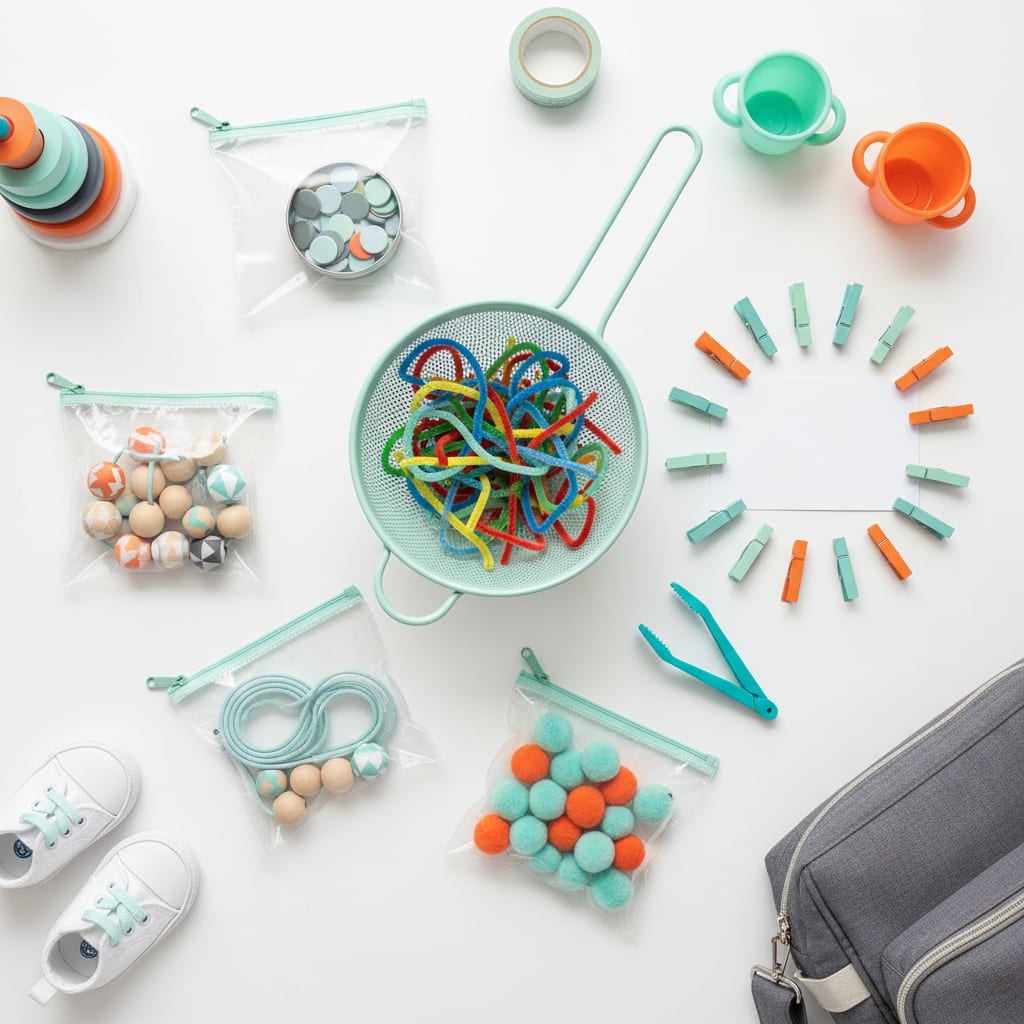
A busy bag is one small zip pouch holding one self-contained activity, and the reason it works is that it takes ten seconds to deploy from a bag while a toddler is losing patience in a booth. The rules that make them worth building: everything fits in a sandwich-sized pouch, nothing rolls off a table, nothing needs an adult to run it, and each bag stays out of circulation between outings so it’s still interesting. Below are 12 you can assemble tonight from things already in your house, plus the four rules for rotating them so they keep working past the second trip.
Safety note for the under-twos: skip anything smaller than a toilet-roll tube, and supervise every bag that contains beads, buttons or small pieces. Several of these are genuinely better held until two and a half — I’ve flagged which.
The build-tonight twelve
-
Pipe cleaners and a colander. A small plastic colander (or a spice shaker with holes) and a handful of pipe cleaners to thread through. Almost no setup, and the threading loop is oddly absorbing. Two and up.
-
Pom-poms and a squeeze-tweezers set. A pouch of pom-poms, an ice-cube tray and a pair of chunky tweezers. The Helping Hands fine-motor tools are the ones worth buying — sized for small hands, and they carry three other bags in this list. Two and a half and up, because of the pom-poms.
-
Clothespins on a card rim. Spring clothespins clipped around the edge of a piece of stiff cardboard. Color-match them if you feel ambitious; most toddlers just like the clipping. Excellent hand-strength work.
-
Reusable sticker scene. A reusable sticker pad is the single highest-value item in my bag — it peels and re-sticks so one pad survives dozens of outings rather than being used up on the first one.
-
Water-reveal painting. A Water Wow pad plus its own water pen. Mess-free, works on a moving car tray table, and reloads with tap water in a restaurant bathroom. This is the one item I never travel without.
-
Magnet tin. An empty mint tin or a small cookie tin with a few flat magnets or magnetic letters inside. The lid keeps everything contained and the tin itself is the play surface. Two and a half and up.
-
Velcro craft-stick puzzle. Craft sticks with sticky-back velcro dots on each end, so they connect into shapes. Costs a couple of dollars, flat-packs perfectly, and has no right answer.
-
Lacing card from a cereal box. Cut a shape from a cereal box, punch holes around the edge with a hole punch, tape one end of a shoelace to make the tip stiff. The cheapest bag here and one of the longest-lasting.
-
Bottle-cap sorting. A saved handful of milk-bottle caps in two or three colors plus a muffin liner per color. Sorting is a real job to a toddler and they’ll do it more than once. Two and a half and up.
-
Play dough and three tools. A small tub of Play-Doh with a plastic knife, a garlic press and a small cutter. Restaurant-friendly if you put it on a placemat; car-unfriendly, for reasons you can imagine.
-
Animal-and-cup hide game. Five small plastic animals and five opaque cups. Hide, guess, swap. Works face-to-face across a table when you need to be part of the activity anyway.
-
A pouch of masking tape. One roll of low-tack washi or painter’s tape and nothing else. Tearing strips and sticking them to a table, a window or their own arm is a legitimately great twenty minutes, and it peels off clean.
The four rules that make busy bags actually work
One activity per pouch. The whole point is deploying a single thing in ten seconds. A single bag holding all twelve activities is a toy box, and a toy box gets dumped on a restaurant floor.
Keep them out of circulation. Busy bags live in the car or by the door and never come out at home. Novelty is doing most of the work here — a bag that’s been in the glovebox for three weeks is fascinating; the same bag left on the playroom floor is furniture.
Rotate one at a time. On an outing, produce one bag, let it run, put it away before producing the next. Four bags handed over at once burn your entire supply in six minutes, and you’ll be out of options exactly when you need them.
Rebuild them once a month. Swap two bags out, add one new thing, retire whatever’s been ignored twice. Ten minutes at the kitchen table keeps the whole system alive.
Where they earn their keep
Restaurants first — a busy bag is step four of the sequence in my restaurant survival order of operations, and the deploy-one-at-a-time rule is what stretches a meal from twenty minutes to forty. Waiting rooms second, where you can’t control the wait and have nothing else to bargain with. Car journeys third, though skip anything with loose pieces unless you enjoy retrieving pom-poms from under a car seat at a rest stop.
They also work at home in a pinch, but only if you break the circulation rule deliberately — pull one out for the phone call you have to take, then put it straight back in the car. For actual at-home afternoons, the bigger lists are better: my activities for 2 year olds for open-ended play, and quiet time activities for the solo stretch after the nap disappears.
One last piece of realism: no bag survives a badly timed outing. A toddler who’s overtired or an hour past a missed nap will refuse all twelve, and the failure will look like your bags are boring rather than like the schedule was wrong. If your outings keep collapsing at the same time of day, that’s a timing problem worth fixing at the source — Betteroo’s nap-and-bedtime plan is built from your kid’s actual wake-up, and it tells you which two hours of the day are safe to be out in.
FAQ: toddler busy bags
What age are busy bags good for?
Roughly 18 months to four, with the contents changing. Under two, stick to large pieces — tape, chunky lacing, sticker pads, water-reveal painting. Small-piece bags like pom-poms, bottle caps and magnets are better held until about two and a half, once mouthing has genuinely stopped.
What should go in a toddler busy bag?
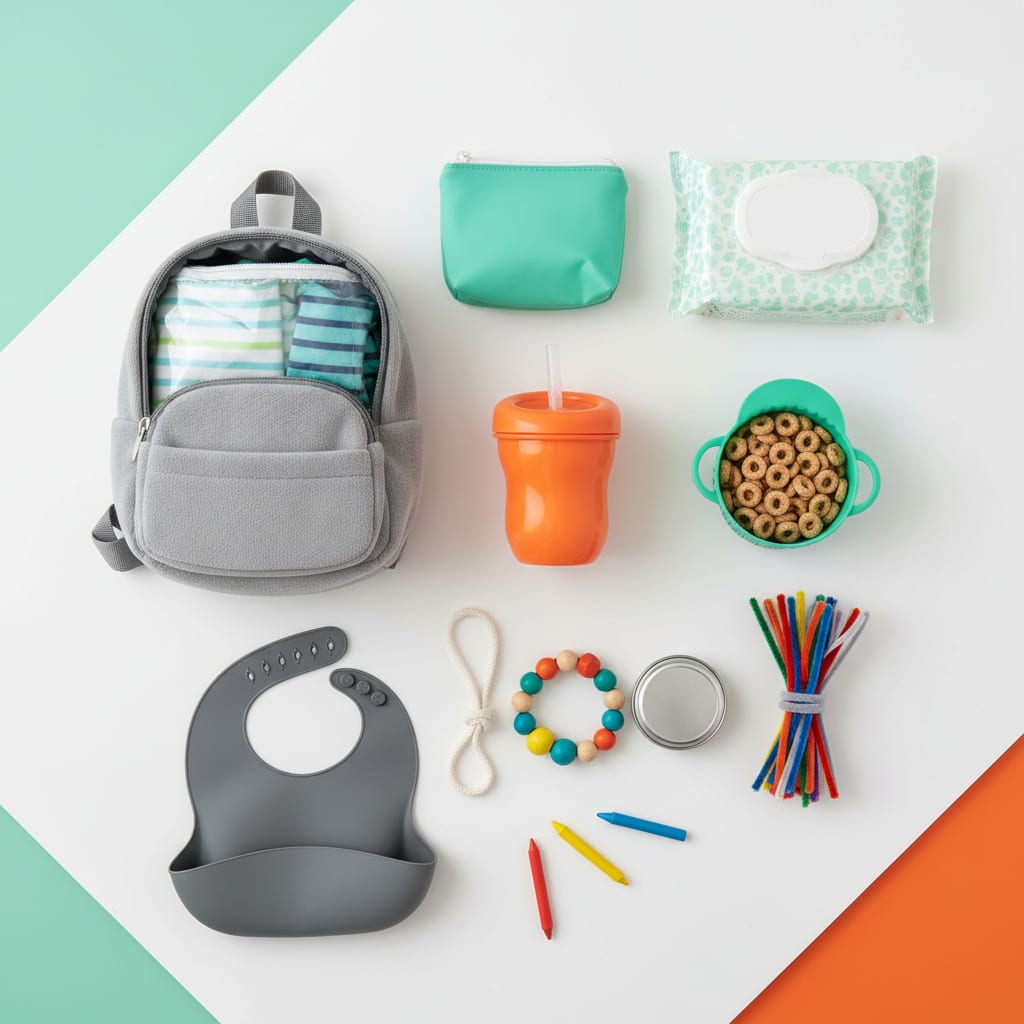
One activity, all its pieces, and nothing else — in a pouch small enough to fit in a diaper bag. The test is whether a toddler can run it alone at a table without instructions and without anything rolling onto the floor.
How many busy bags should I keep in the car?
Four to six is the sweet spot. Fewer and you run out mid-outing; more and they stop feeling new because the rotation is too slow. Keep them in a single zip pouch or shoebox in the trunk so they’re never the thing you forgot.
Are busy bags better than a tablet for a toddler?
They’re a different tool rather than a moral upgrade, and there’s no judgment here either way. The practical argument is order of operations: once a screen comes out, nothing else in the bag can compete with it, so any busy bags you brought are effectively spent. Play the bags first.
How do I stop busy bags getting boring?
Circulation, not variety. Keep them out of the house between uses, produce one at a time, and swap two out each month. The same lacing card that failed in June works fine in August because they haven’t seen it since.