Croup at Night: 10 Tips for a Toddler's Barking Cough
Croup is a swelling of the voice box and windpipe, and it is usually worse at night. When the barking cough starts, keep your toddler calm, because crying makes the breathing harder. Sit them upright, offer fluids, and plan to sleep in their room so you can hear every breath. Most croup is mild and handled at home. Know the emergency signs before bed, though, not at 2am. They’re in the list below, taken from the AAP and the NHS. Then come ten tips for the night itself. I’m not a clinician, and none of this replaces a call to yours.
Is it croup?
The NHS lists the signs as “a barking cough – this may sound like a seal”, a hoarse voice, difficulty breathing, and “a high pitched, rasping sound when breathing in”. That rasping in-breath is called stridor. It usually starts like a cold and turns into the bark a few days later. The NHS adds that croup symptoms “are often worse at night.”
The AAP’s croup page also describes spasmodic croup, which “comes on suddenly, often in the middle of the night. Your child may go to bed well and wake up in a few hours, gasping for breath.” Most children with this type have no fever, and it can come back.
Emergency signs: get help now, even at 2am
The AAP says to contact your doctor, the emergency department or 911 “even if it is the middle of the night” if your child:
- makes a whistling sound that gets louder with each breath
- cannot speak or make sounds because they are out of breath
- seems to be struggling to catch their breath
- has bluish lips or fingernails
- has stridor while resting
- drools or has extreme difficulty swallowing saliva
The NHS croup page says to call for an emergency ambulance (999 in the UK, 911 in the US) or go to the emergency department for these too: grunting noises, or the tummy “sucking under their ribcage”; skin, lips or tongue that look blue, grey, pale or blotchy; being “sleepier than normal or difficult to wake”; being limp or floppy; and being “very upset or restless, is having difficulty breathing and can’t be calmed down”. The NHS also says not to drive yourself. Have someone else drive, or call for an ambulance.
The 10 tips
-
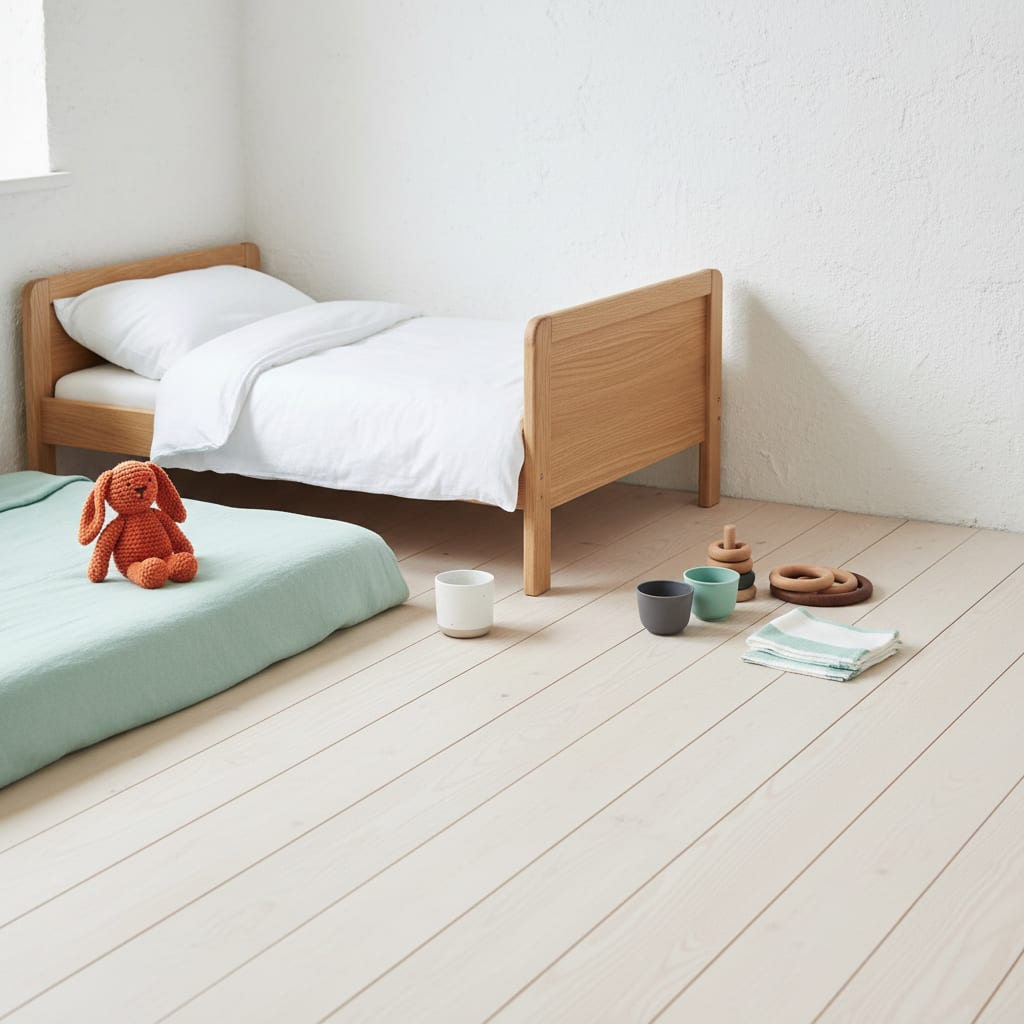
Decide where you’re sleeping before bedtime. If the bark started today, assume tonight will be louder. Cleveland Clinic’s croup guide says “you may wish to sleep in the same room as your child so you’re there if they start to have trouble breathing.” The NHS says to “check on them regularly, including at night.” A mattress on their floor does both. That’s the same move-yourself-not-them setup from my sick toddler sleep tips, with a sharper reason.
-
Learn what stridor at rest sounds like. The AAP says stridor “is common with mild croup, especially when a child is crying or active.” A rasp while your toddler is screaming is common in mild croup. A rasp while they’re sitting quietly or asleep is on the 911 list.
-
Calm comes first, every time. The AAP, the NHS and KidsHealth all say the same thing: being upset and crying make croup worse. When the cough wakes them, pick them up, keep the lights low, and use your slowest voice. Hold them first, then sort out the rest.
-
Keep them upright. The NHS’s first home-care instruction is to “sit your child upright and try not to let them lie down.” In practice, that means your lap until the coughing settles. Cleveland Clinic suggests raising the head with an extra pillow, but only for children over 12 months. If yours isn’t used to a pillow, skip it and use your lap.
-
Know that the steam advice is disputed. You’ll hear “run a hot shower and sit in the steam” from almost everyone. The sources disagree. Nemours KidsHealth’s croup page suggests a steamy bathroom for 10 minutes, a few minutes of cool outdoor air, or a drive with the windows slightly down. Cleveland Clinic suggests steam too, but says not to sit in the shower or let your child near the hot water. The AAP says “there are no studies to prove that inhaling steam in a bathroom is effective,” and none for cool night air either. The NHS says plainly: “do not put your child in a steamy room or get them to inhale steam.” Whatever you do, a few minutes of steam is not a treatment, and it should never delay a call from the emergency list above.
-
Offer fluids at every waking. The NHS says to give plenty of fluids. KidsHealth suggests “small amounts of liquid more often using a spoon or medicine dropper” if needed. Their list of reasons to get care includes signs of dehydration: a dry or sticky mouth, few or no tears, sunken eyes, and peeing less.
-
Treat fever or discomfort, not the cough. KidsHealth says acetaminophen, or ibuprofen for children over 6 months, may help with fever or throat pain. Ask your provider how much to give. The AAP is blunt about the rest: “Cough syrups are not useful and may do harm,” and antibiotics don’t help, because croup is almost always viral. If getting the dose in is a battle, my tips for a toddler who won’t take medicine cover the syringe technique.
-
Run a cool-mist humidifier if you have one, and keep it clean. KidsHealth and Cleveland Clinic both list a cool-mist humidifier for home care. The AAP’s caution about evidence applies here too, so think of it as a comfort measure. If you’re buying one, the Honeywell HCM350 is a common evaporative model. Clean it the way its instructions say. Cleveland Clinic also says smoke can make the cough worse, so keep smoking well away from the house.
-
Plan for more than one night. Cleveland Clinic says symptoms can get worse over the first 12 to 48 hours and are “usually worse at night.” The NHS says croup usually clears up on its own within 48 hours. KidsHealth says most children are better “in a week or so.” So keep the floor bed for a second night even if the first was fine. Cleveland Clinic says to call if a fever lasts more than three days or mild croup lasts more than a week.
-
Call your doctor in the morning even if the night went fine. The NHS’s advice is to get an urgent appointment if you think your child has croup, because “the doctor may give your child medicine to shorten the illness.” The AAP says a steroid may be prescribed to reduce the swelling.
When the cough is gone, get bedtime back
Croup nights mean holding and a parent on the floor, which is right while they’re sick. Once your toddler is eating and playing again, run the three-night reset from tip 9 of my sick toddler sleep tips. For daycare, Cleveland Clinic says to keep a child home until 24 hours have passed without a fever and without fever-reducing medicine.

FAQ: croup at night
Can my toddler sleep lying down with croup?
The NHS says to keep them upright and try not to let them lie down, so use your lap during a coughing spell. Ask your doctor how upright they need to be for the rest of the night. If you’re not sure whether a cough is croup or something else, Betteroo has a run-through of what different night coughs sound like. Ask your doctor if you still can’t tell.
My toddler keeps getting croup. Is that normal?
Spasmodic croup can come back, according to the AAP. The AAP also says that croup that “persists or recurs frequently” may mean a narrowing of the airway, and that your doctor may refer you to an ear, nose and throat specialist or a lung specialist. Bring it up at the next visit.
Is croup contagious?
Yes. Cleveland Clinic calls it highly contagious, because the viruses behind it spread easily through coughs and sneezes. Its advice is to wash and dry your hands after caring for your child and to wash toys between uses. If a sibling shares the room, keep an ear on them too.