Toddler Won't Take Medicine? 10 Tips That Work
The two changes that fix most medicine standoffs are mechanical, not motivational: use an oral syringe instead of a spoon, and aim it at the inside of the cheek rather than the tongue. Between them they get the dose past the taste buds and past the spitting reflex. Everything else below is about lowering the drama around it — position, warning, choice, and knowing which two shortcuts to never take. Ten tips, tested through more ear infections than I care to count.
Before any of them: the dose comes from the label or your pharmacist, not from a blog. Read it every single time, including for the over-the-counter bottles you’ve used a hundred times, and ask the pharmacy anything you’re unsure about — they will answer a phone call about a toddler dose without making you feel stupid.
The mechanics (tips 1–4)
-
Use an oral syringe, always. A spoon delivers medicine onto the middle of the tongue, which is the most taste-sensitive real estate in the mouth and the launchpad for spitting it back out. A syringe puts it where you want it and lets you measure the dose exactly. Keep a spare, because they vanish; the Ezy Dose kids oral syringe comes with a bottle adapter, which is what stops you decanting antibiotics into a teaspoon at 2am.
-
Aim for the inside of the cheek, in small pushes. Nemours’ guidance on helping kids take medicine is precise about this: “if you use a syringe, try squirting the medicine (a little bit at a time) on the inside of the child’s cheek, where there are no taste buds.” A little bit at a time is the part people skip. One slow push against the cheek, wait for the swallow, repeat.
-
Sit them upright and slightly reclined on your lap. Not flat, which risks coughing, and not fully upright and squirming. Their back against your chest, one of your arms across theirs, their head tucked into your shoulder. It looks like a cuddle and it holds a two-year-old still.
-
Ask about chilling it, and about flavouring. Cold dulls taste. Nemours says “some kids may prefer it if medicines are chilled” but adds the caveat that matters — “check with your pharmacist to see if chilling the medicine is safe,” because not everything tolerates the fridge. Many pharmacies also add flavourings: the same page lists “chocolate, cherry, grape, and bubblegum” as options for things like antibiotics and cough syrup. It costs a phone call and it can end the fight permanently.
Mixing it into food, safely (tips 5–6)
-
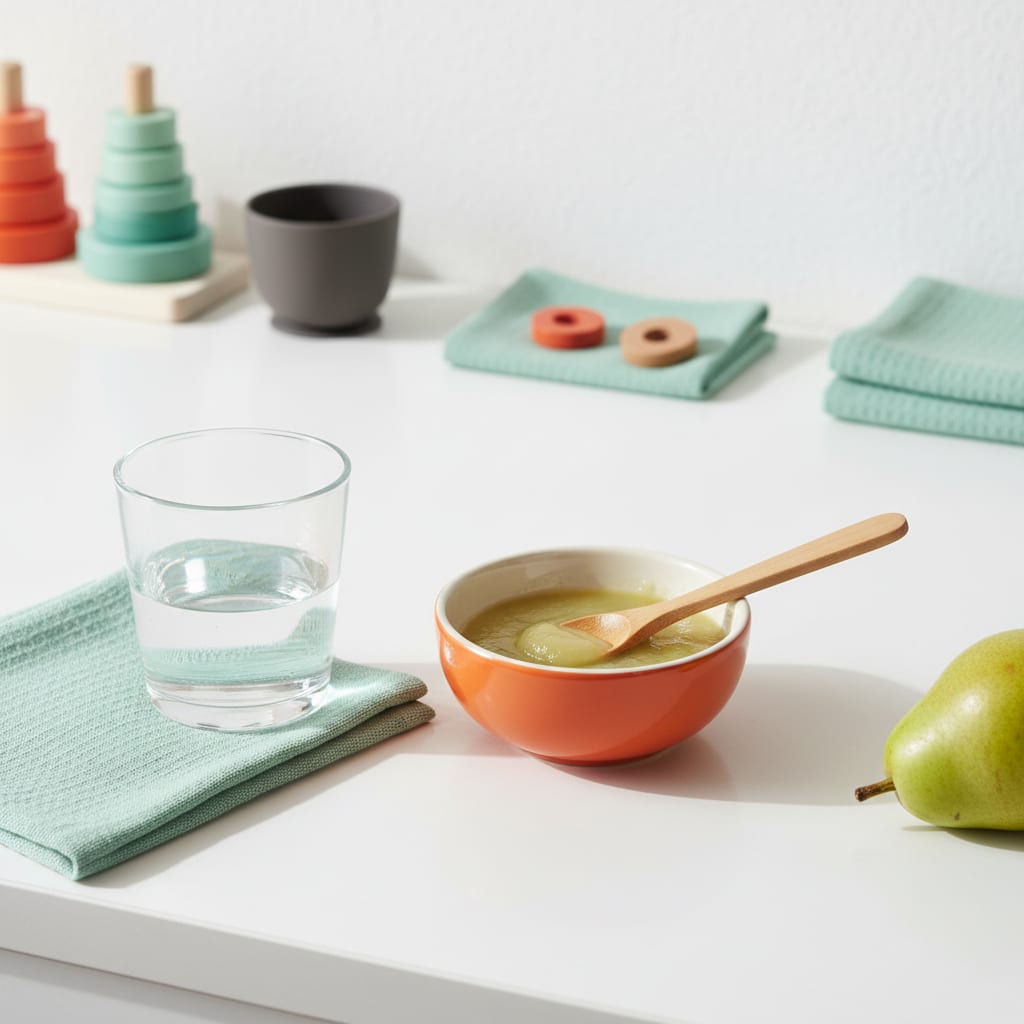
A small amount of soft food is allowed — ask first. Nemours says “mixing the medicine with a small amount of liquid or soft food (such as applesauce) may make it more appealing,” and for tablets, ask your pharmacist “if you can crush it and mix it with soft food (such as pudding or applesauce).” Some medicines genuinely can’t be crushed or mixed, so this is a question for the pharmacy every time, not a technique you carry across prescriptions.
-
Never put it in a full bottle or a full cup. This is the one to remember: “avoid mixing medicine in a baby’s bottle — a baby who doesn’t finish the bottle might not get it all.” The same logic applies to a beaker of milk or a full bowl of yogurt. If you’re mixing, mix into two teaspoons of something, watch it all go in, and offer the rest afterwards.
The framing (tips 7–10)
-
Never call it candy, sweets or a treat. Nemours is blunt: “never call medicine candy to try to get your child to take it. This can backfire, and a child could accidentally overdose.” Call it medicine, say it will help their ear feel better, and leave it there. This is the one tip on the list that is a safety rule rather than a trick.
-
Give a warning and then don’t negotiate. “Medicine after this song.” Then it happens. A toddler who learns that protesting extends the runway will protest for longer every time. Short warning, calm delivery, done.
-
Offer a real choice inside a fixed decision. Which chair, which drink afterwards, which parent does it, syringe in which hand. The medicine isn’t on the menu; everything around it can be. This buys back the control they’re actually objecting to losing.
-
Have the chaser ready before you start. A cold drink or a spoonful of something they like, in your other hand, offered the second the syringe is out. Waiting for it while the taste sits there is what turns one bad dose into six.
If it comes straight back up
Don’t automatically redose — call the pharmacy or your pediatrician’s office and ask. Whether a repeat is safe depends on the drug and how long it stayed down, and it’s not a judgement call to make from a spat mouthful on the carpet.
Keep the number for your local poison center on the fridge, and call immediately if you think they’ve had more than one dose or got into a bottle. That’s a phone call, not an emergency-room decision, and the people who answer are unfailingly calm about it.
Sick weeks wreck sleep as much as they wreck appetite. My sick toddler sleep tips is the survival plan for the nights, the dinner-refusal tricks cover the days when nothing gets eaten, and if the objection is to the cup rather than the contents, the switch-to-cups tips have the workarounds.

FAQ: giving a toddler medicine
How do I get my toddler to take medicine they hate?
Syringe rather than spoon, aimed at the inside of the cheek in small pushes, with a chaser ready in your other hand. Ask the pharmacy about chilling it or adding a flavouring — that alone solves a lot of antibiotic standoffs — and keep the whole event short and unremarkable.
Can I mix my toddler’s medicine into juice or yogurt?
Sometimes, but ask your pharmacist about that specific medicine first, and mix it into a very small amount rather than a full cup or bowl. If they don’t finish it, they haven’t had the full dose and you have no way of knowing how much they got.
What if my toddler spits the medicine out?
Don’t guess at a repeat dose. Call your pharmacist or pediatrician’s office and tell them how long ago it went in and roughly how much came back — the answer depends entirely on the drug. For next time, smaller pushes against the cheek and a chaser held ready make spitting much less likely.
Is it okay to hold my toddler down to give medicine?
A firm, supported hold on your lap is normal and reasonable for a necessary medicine. Pinning a struggling child flat is not — it risks coughing and choking, and it makes every future dose worse. If every dose is a physical fight, tell your pediatrician; there is often an alternative formulation, a different flavour or a longer-interval version.