Signs Your Toddler Is Ready to Potty Train: A Checklist
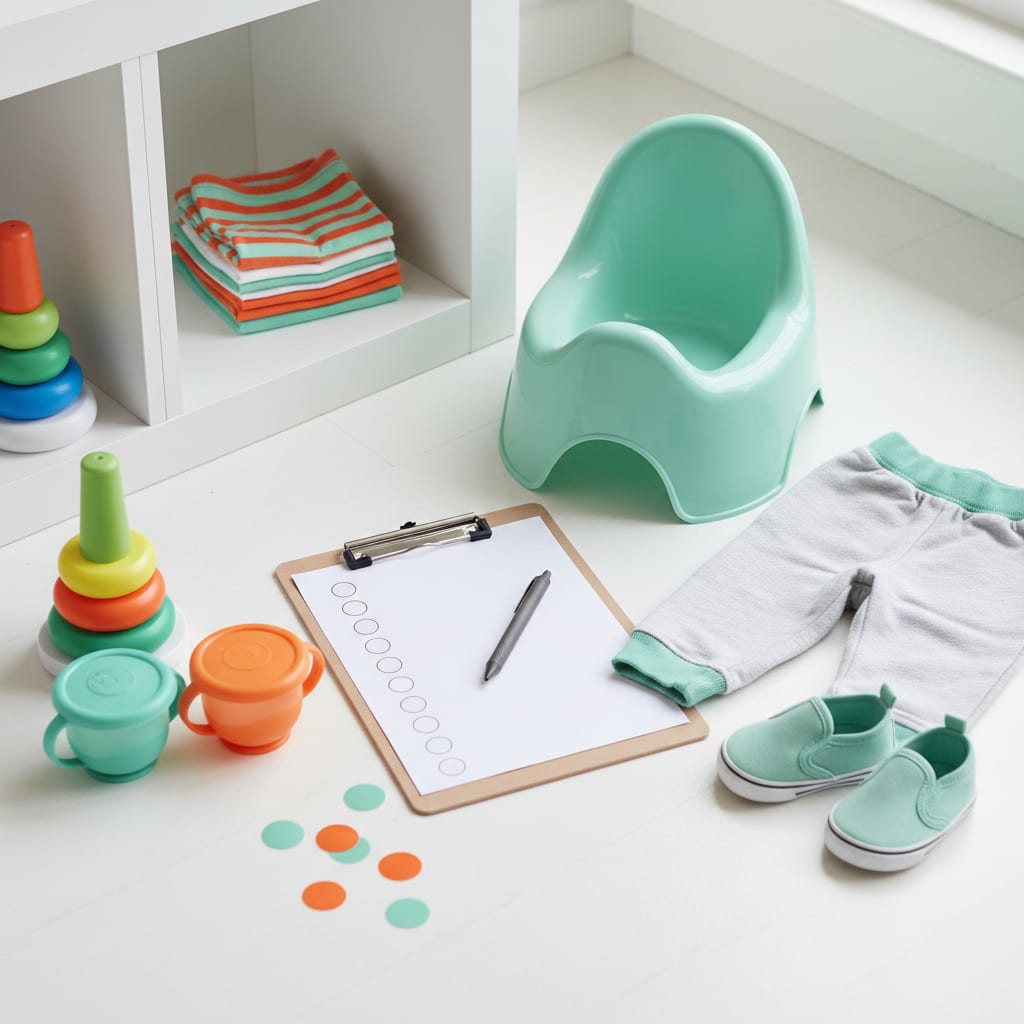
The signs your toddler is ready to potty train are surprisingly checkable: staying dry for longer stretches, noticing or announcing a full diaper, hiding to poop, interest in the toilet or underwear, following simple two-step directions, and managing their own pants. You don’t need every box ticked — two or three strong green lights is a real signal. Readiness commonly shows up anywhere from around 18 months to past age three, and a later-but-ready start almost always trains faster than an early-but-pushed one. Here’s the full checklist, tested on my own two — one early, one fashionably late.
How to use this checklist
Skim it once, then actually watch your kid for a week. You’re looking for a cluster of signs, not perfection, and not the same signs your neighbor’s kid showed. There is no prize for training earliest — this is development, not a scoreboard, and every kid’s timeline is legitimately different. If you’re ever unsure, or you’re seeing pain, constipation or withholding, your pediatrician is the right referee, not a checklist.
The readiness checklist
Body signals
- Dry diaper for two-ish hours at a stretch — or waking dry from naps sometimes. This means the bladder can hold, which is the physical foundation everything else sits on.
- Fairly predictable poops. Roughly same time-ish most days. Predictable is trainable.
- Pausing mid-play when they go. The freeze, the squat, the corner retreat. That’s body awareness arriving in real time.
Awareness signs
- Announcing a dirty diaper — or tugging at it, or bringing you a fresh one. “I pooped” after the fact is genuine progress; “I’m pooping” during is even better.
- Hiding to poop. Behind the couch, under the table. It looks like the opposite of readiness, but wanting privacy means they feel it coming — that’s the whole trick.
- Disliking the wet diaper. A kid who wants out of a wet diaper immediately has the feedback loop half-built already.
Skills
- Follows two-step directions. “Get the cup and put it on the table.” Potty trips are a chain of small steps, so this matters more than it looks.
- Can pull pants down and up — or mostly can, with elastic waists. A kid who can’t undress in a few seconds didn’t fail potty training; the outfit did.
- Can sit still for a couple of minutes. A book on the potty counts. Wiggle-sitting is fine; refusing to sit anywhere ever is a wait sign.
Interest
- Curiosity about the toilet. Following you in, flushing enthusiasm, questions. Mild horror is also common and also fine — curiosity just makes week one easier.
- Excitement about underwear. Character underwear is legendarily motivating. Take them shopping and watch the reaction.
- Wanting to do things “all by myself.” The independence surge is free fuel — steer it at the potty.
Yellow flags: when waiting is the strategy
Hold off for a few weeks if you’re mid-upheaval — new sibling, new daycare, a move, or a rough sleep patch (rough nights sabotage daytime control too; my bedtime battle tips are the companion project). Also wait if every diaper change is already a wrestling match, or if the signs above are mostly absent. Waiting a month is a strategy, not a failure — I’ve watched the same kid go from standoff to trained simply because we tried six weeks later.
While you wait: 4 things to do this week
- Park a potty in plain sight, no assignment. Living room, zero ceremony. Familiar furniture is not scary furniture.
- Narrate your own bathroom trips. Toddlers learn by shameless surveillance. Use the real words you want them to use.
- Practice the wardrobe. Elastic waists, pants-up-pants-down as a game. You’re pre-training the hardest mechanical step.
- Read a potty book at bedtime. Leslie Patricelli’s Potty is an easy first one. Low-pressure exposure while snuggly and captive. When the signs cluster, you’ll be ready to run the real plan — that’s my realistic 3-day plan, and the wider quick-wins list covers accident scripts for once you start.
FAQ: potty training readiness
What age do toddlers show potty training readiness?
Commonly somewhere between around 18 months and age three-and-a-bit, with plenty of healthy kids on either side of that window. Start on signs, not birthdays — a readiness-based start usually finishes faster and with far less drama.
How many readiness signs does my toddler need?
Two or three strong ones from different sections — say, staying dry longer plus announcing poops plus underwear excitement — beats twelve half-signs. The clusters that matter most are body signals and awareness; interest alone isn’t enough.
My toddler shows no interest at all. Should I worry?
Not for a long while — disinterest at two is standard-issue toddler. Do the low-pressure prep above and re-check monthly. If there’s still zero interest well past three, or you see pain, constipation or withholding at any age, bring it to your pediatrician.
Is it bad to potty train before the signs are there?
“Bad” is strong, but it’s usually slow — an unready kid can turn a three-day plan into a two-month standoff, and pressure tends to backfire into resistance. If you have a hard deadline (hi, preschool), talk to your pediatrician and keep the pressure as close to zero as you can.