Grocery Runs With a Toddler: 9 Tips to Skip the Meltdown
Grocery shopping with a toddler goes best when you treat it as a twenty-minute job with a role for them in it. Three things carry most of the weight: go after a nap and after a snack, give your toddler an actual task rather than asking them to sit still, and shop in an order that puts the checkout lane last and quickest. Below are nine tips in the order they happen, from the moment you decide to go to the moment you’re loading bags in the trunk — the everyday errand version, not the once-a-month cart-filling expedition.
Before you go
-
Go in the post-nap window, not the pre-dinner one. The 4:30pm stop on the way home is where meltdowns live: they’re hungry, the nap has worn off, and so have you. An hour after the nap ends is the whole trick, and it’s worth reshuffling the day for.
-
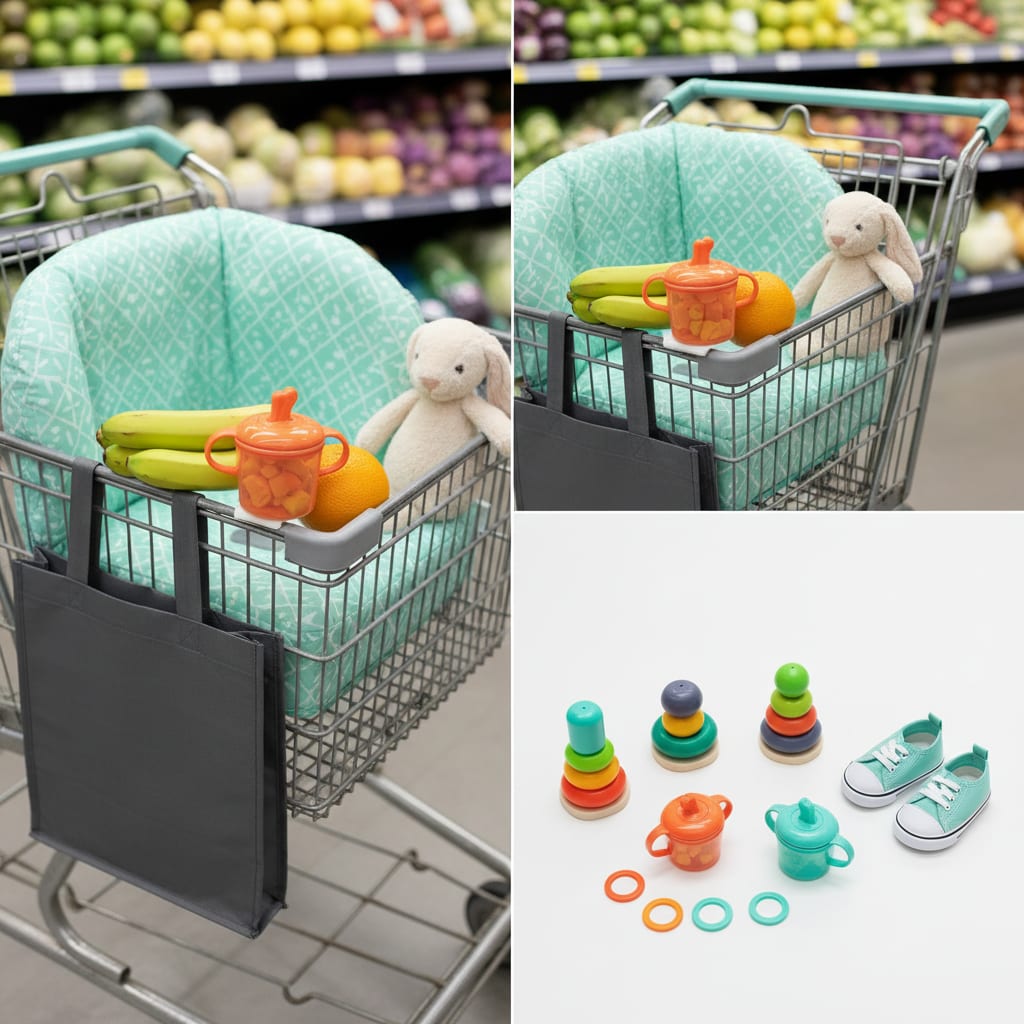
Feed them first, then feed them again in the cart. A snack before you leave prevents the store-wide campaign for the grapes. A second, spill-contained one in the cart buys the back half of the trip — a Munchkin Snack Catcher holds a refillable serving without redecorating the cart seat.
-
Write a short list and shop it in aisle order. Not for organization’s sake — for speed. Every minute of backtracking is a minute added to a countdown you don’t control. Twenty focused minutes beats forty leisurely ones every time.
In the store
-
Give them a job with a name. “You’re the banana holder.” “You’re in charge of putting the pasta in the cart.” A toddler with a role is participating; a toddler without one is cargo, and cargo objects. This one tip changes more trips than everything else here combined.
-
Let them hold something the entire time. A box of crackers, an orange, the reusable bag. Empty hands at toddler height are hands that reach for the shelf. Hand them the next item before they go looking for one.
-
Decide the snack question in the parking lot. “We’re getting one thing today and it’s the yogurt” — said before you walk in, not in aisle six. The negotiation is far easier outside the building, and it gives you a sentence to repeat rather than a decision to defend.
-
Set the cart rules once and enforce them boringly. Sitting in the seat with the strap on, or walking and holding the cart. If they climb, they go back in the seat without a discussion. Standing in a cart is a genuine safety issue, not a preference — this is one to be dull and immovable about.
Checkout and the exit
-
Pick the lane with the least stuff at toddler height. Self-checkout is often the winner because you’re moving the whole time and there’s a screen to press. If you’re in a staffed lane, hand your toddler the items to put on the belt — it’s the same job trick, at the moment you most need it.
-
End before you’re finished, if you have to. Half a list bought calmly is a better outcome than a full list bought during a scene. If it turns while you’re still in produce, get what you came for, skip the rest, and go. What that exit looks like is worth practising — my public tantrum de-escalation moves cover the sixty seconds after you decide to leave.
What to do when it goes wrong anyway
Some trips go badly for no reason you can identify, and it’s rarely about the store. The reliable causes are the boring ones: a nap that got cut short, a stretch that ran too long between meals, or an outing bolted onto the end of a day that already had two others in it. Betteroo’s personalized sleep plans exist for the first of those, and fixing the nap fixes a surprising number of errands downstream.
For the trips where you know the timing is going to be bad — the after-daycare stop, the run you can’t reschedule — plan for a short list, a snack in hand and no expectations of a browse. And keep a small distraction pouch permanently in the car so a spontaneous stop doesn’t need a packing session first; my busy bag ideas are the version I keep in the door pocket. If the errand turns into a meal out, the restaurant order of operations picks up where this leaves off.

FAQ: grocery shopping with a toddler
What is the best time to grocery shop with a toddler?
About an hour after the nap ends, with a snack already eaten. Mid-morning and early afternoon are also quieter in most stores, which means shorter checkout lines — and the checkout line is where a good trip most often falls apart.
How do I keep my toddler happy in a shopping cart?
Give them a job and keep their hands full. A rotating supply of items to hold, one thing to be “in charge of”, a snack cup, and a running commentary about what’s coming next. The goal isn’t to entertain them, it’s to include them.
Should I let my toddler walk in the store?
From around two and a half it can work, if they hold the cart and you accept a slower trip. Under that, the seat with the strap on is usually the calmer option. Whichever you choose, decide before you go in — switching mid-trip is how the climbing starts.
How do I handle the checkout-lane candy grab?
Announce the day’s rule in the parking lot, pick the lane with the least on display, and give them something to do at the belt. If they grab something, it goes back with a short line and no debate. Repetition does the work here, not explanation.
How long should a grocery trip with a toddler be?
Aim for twenty minutes, and treat forty as the outer edge. A list in aisle order and a decision not to browse is what keeps you inside that window — and a short successful trip is what makes the next one easier.