Toddler Only Naps in the Stroller? 10 Fixes That Work
Move the nap in stages, not in one jump. A toddler who only sleeps on wheels has learned a very specific set of falling-asleep conditions — motion, a snug seat, steady road noise, dim light — and the fix is to rebuild those conditions somewhere that doesn’t cost you two miles a day. Shorten the walk before you cancel it, copy the stroller’s conditions into the crib, and change one thing at a time. The ten fixes below are the order I’d work through, and they take about two weeks.
Why the stroller nap sticks
Three things do the work: motion, containment and consistency. The stroller straps a toddler in so they can’t get up and find something better, moves at a rhythm they can’t fight, and — because you walk the same loop daily — hits drowsiness at the same point every time. That’s a well-built sleep routine. It just runs on your legs.
You’ll also read that stroller sleep is “junk sleep” that doesn’t count. I’ve never found solid evidence for that, and it isn’t the reason to move the nap. The real reasons are practical: it ends when the walk ends, and nobody else can put your kid down.
The 10 fixes
- Pick one nap and leave the rest alone. If you’re still on two, work the first one — most sleep pressure, least accumulated frustration. On one nap, pick a day with nothing in the calendar. Trying to move every nap in the same week is how families end up with no naps at all by Thursday.
- Check the timing before you blame the location. A crib nap attempted forty minutes too early gets fought; one attempted an hour too late gets skipped. Both look exactly like “she only sleeps in the stroller.” Before you rebuild anything, make sure you’re trying at the right point in the day — my nap refusal tips walk through how to find it.
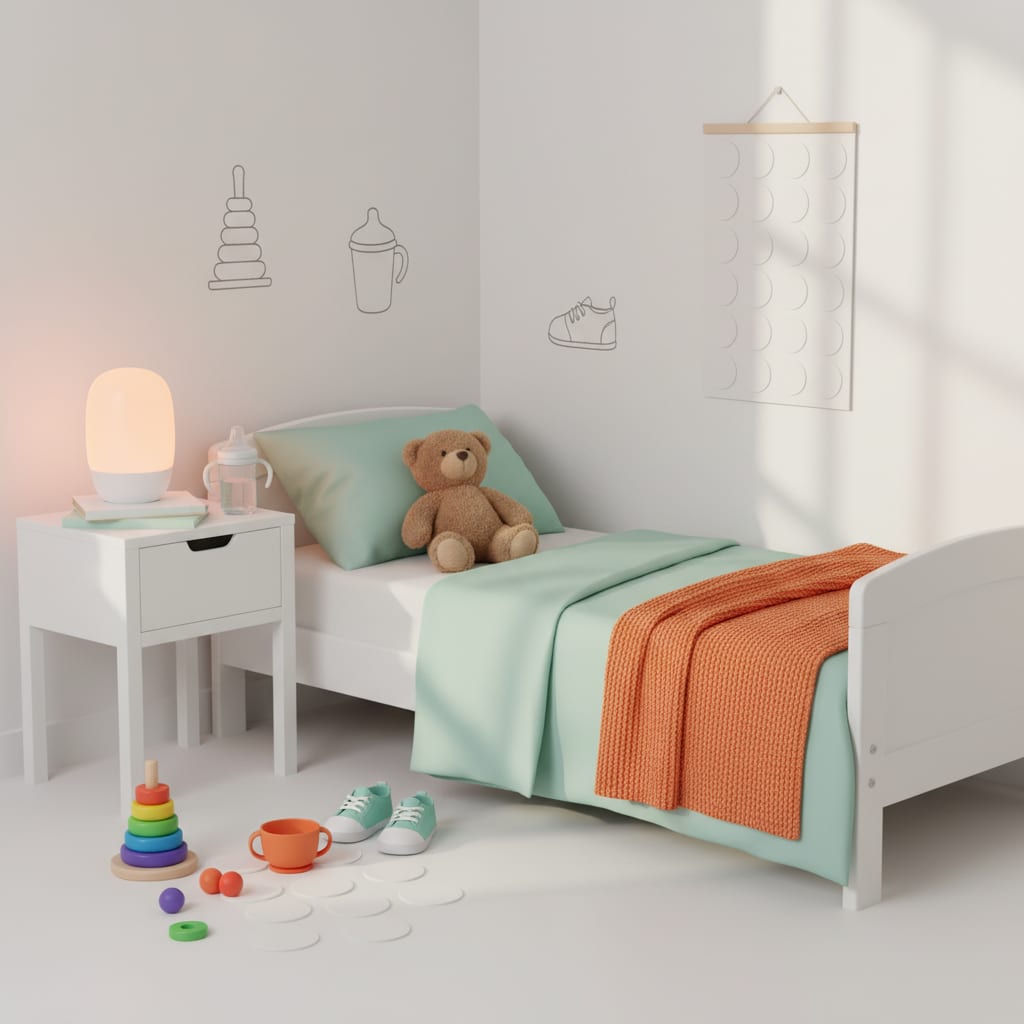
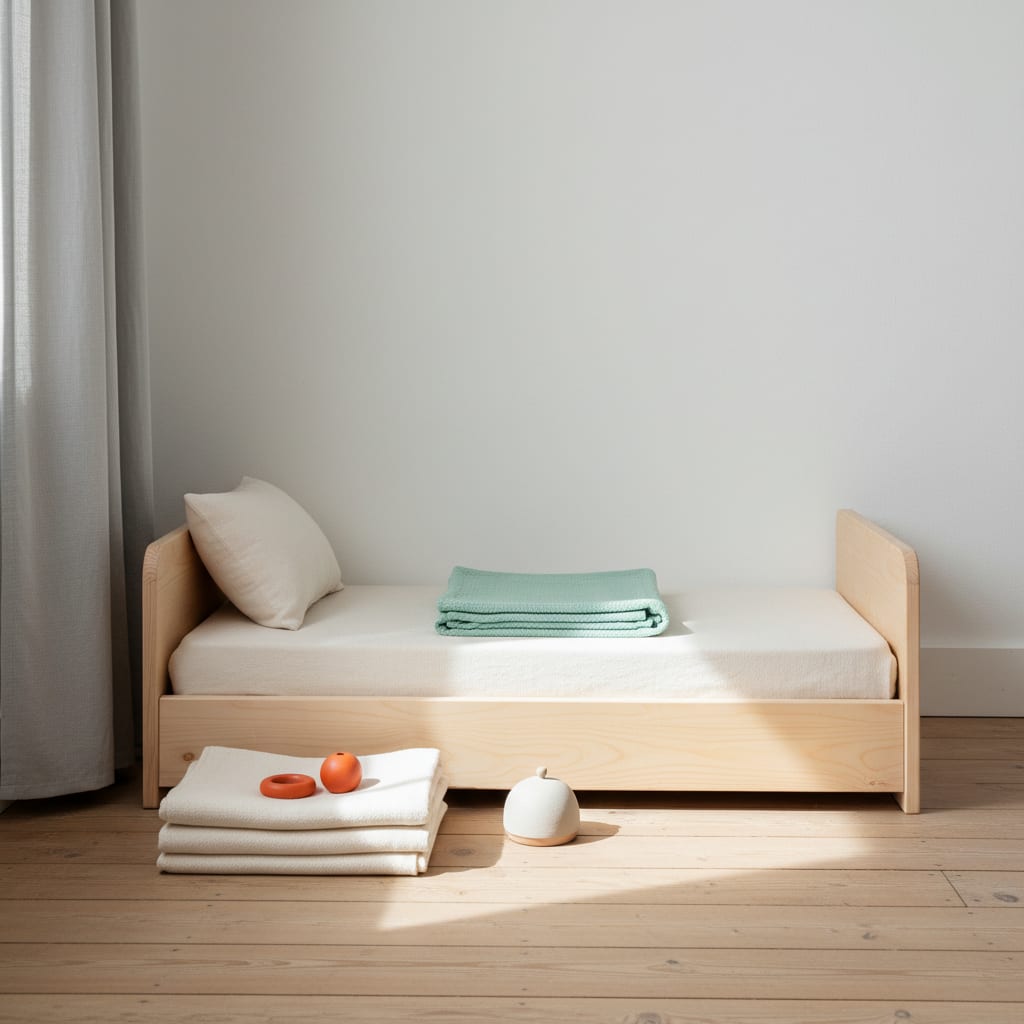
- Copy the stroller’s conditions into the room. Dark, not dim. Cool. A steady sound running the whole nap, not just the start — the stroller gave them constant road noise, and a silent bedroom is a big downgrade. A Yogasleep Dohm is the boring, indestructible version; a fan pointed at the wall does the same job free. Add whatever they hold on the walk.
- Shorten the walk instead of ending it. This is the fix that does the actual moving. Week one: walk your normal loop, but come home while they’re drowsy and not yet asleep, and lift them into the crib. Then cut the walk down — ten minutes, six, three, a lap of the yard, the hallway. Each step stays until it works twice in a row. Betteroo’s guide to contact naps runs the same ladder for the held-to-sleep version, and the shape transfers exactly.
- Try the stroller parked indoors as the middle step. If moving-stroller to crib is too big a jump, park it in a dark hallway, brake on and harness done up, and sit next to it. You’ve removed motion while keeping the seat — one variable instead of two. Once they’ll sleep parked, the crib is a short trip. Don’t leave the room, and don’t use this step at all for a baby under one.
- Start in the crib and keep the stroller as the backup. Offer the crib for twenty minutes; if nothing is happening, get them up and take the walk. That sounds like giving in and isn’t — it guarantees the nap happens, which protects bedtime, which is what lets you try again tomorrow. Betteroo’s step-down method for a motion-dependent nap uses the same fallback rule.
- Build a six-minute wind-down and never skip it. Same order daily: diaper, curtains, sound on, one book, one song, down. The stroller nap had a routine attached — the door, the buckle, the first two streets. If the crib version starts with a toddler carried mid-sentence out of the playroom, you’ve asked for a fight. It’s the espresso shot of the bedtime routine checklist.
- Keep the walk. Just move it earlier. The daily push was doing two jobs — putting them to sleep, and getting them outside and moving beforehand. Only one is the problem. Take the same walk ninety minutes earlier, let them out to toddle part of it, and be home before the nap window opens.
- Expect a shorter crib nap at first. Forty minutes in week one is normal: they’re falling asleep a new way and surfacing at the first cycle without road noise and rocking to carry them past it. It usually stretches within a fortnight. What tells you it’s working is that they go in more easily, not that they stay in longer.
- Protect bedtime the whole time you’re experimenting. A day the nap collapses ends with an earlier bedtime, not a later one — thirty to forty-five minutes, without discussion. Overtired toddlers don’t sleep in to compensate; they wake at five. The AASM advises children 1 to 2 “should sleep 11 to 14 hours per 24 hours (including naps)” and 3 to 5 year olds “10 to 13 hours per 24 hours (including naps)”, so a lost nap comes out of the evening or out of the night. If nights are already rough, run the sleep-through-the-night diagnostics alongside this.
Safety rules while the stroller nap is still happening
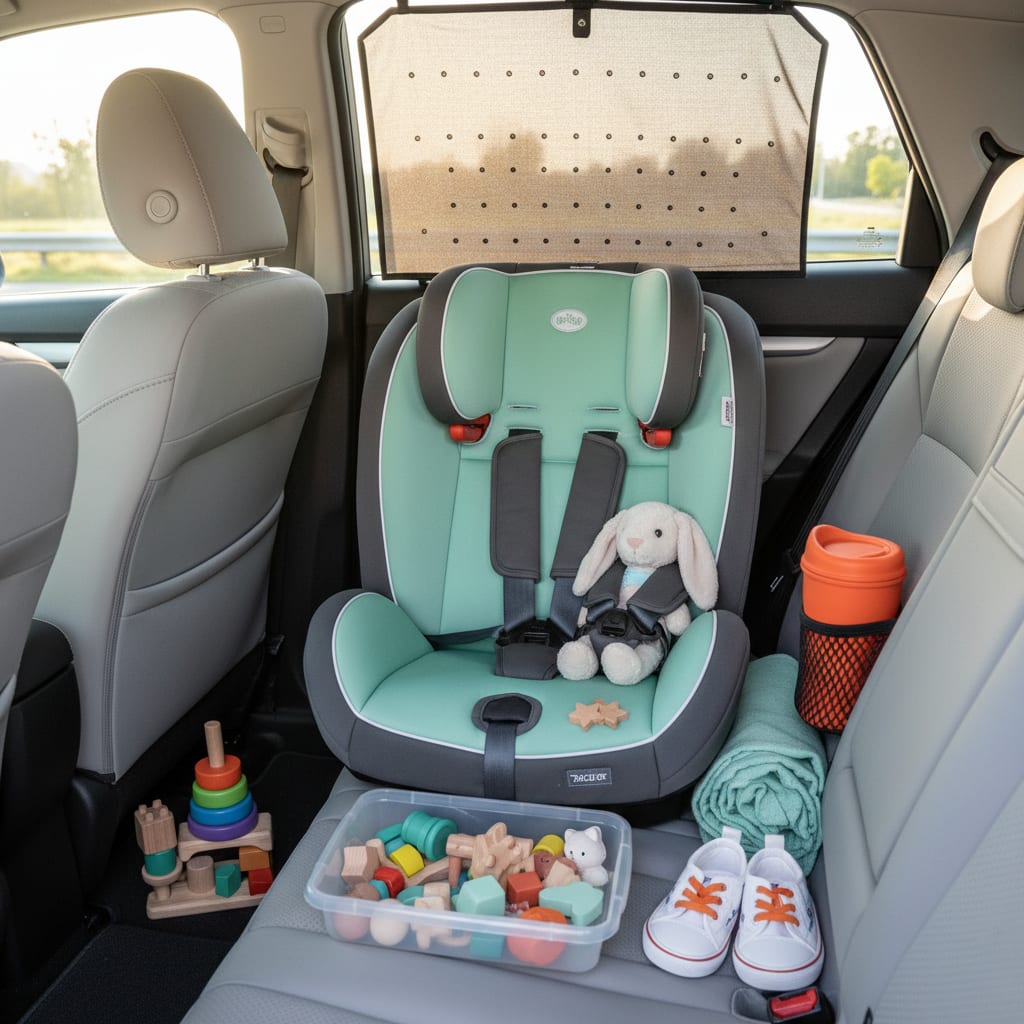
You’ll be running stroller naps for another fortnight at least, so run them properly. The AAP’s stroller safety guidance is short and worth all four:
- The five-point harness goes on “whenever your child goes for a ride”, sleeping included. A sleeping toddler slumps, and a slumped toddler slides.
- “Use the brake whenever you are stopped, and be sure your child can’t reach the release lever.”
- “Don’t hang bags or other items from the handles of your baby’s stroller — they can make it tip backward.” The diaper bag goes in the basket, low and near the rear wheels.
- “Never leave your child unattended in a stroller. If they fall asleep in their stroller, make sure you can see them at all times.”
One rule changes entirely for a baby under one: the AAP’s safe sleep guidance says that if a baby “falls asleep in a car seat, stroller, swing, infant carrier or sling, you should move them to a firm sleep surface on their back as soon as possible”, for the whole first year. This page is written for the walking-and-talking crowd, not for that.

FAQ: the stroller-only napper
Is it bad for my toddler to nap in the stroller every day?
For a walking toddler, no — it’s a logistics problem, not a health one. It costs you a daily walk, it can’t happen in a downpour, and no sitter can reproduce it. For a baby under one it’s a different question, and the AAP answer above applies.
Why does the nap end the second I stop pushing?
Because stopping changes every input at once — motion, sound, and usually light and temperature as you come through the front door. Test it before you redesign anything: next time, keep walking past the point you’d normally turn in. If they sleep another forty minutes, it’s the arrival waking them, not the sleep cycle ending.
How long should this take?
Two full weeks of doing it the same way, then judge. It usually gets slightly worse for three or four days, because you’ve removed something that reliably worked. Change one variable at a time, or you won’t know which one moved the needle.
We’re travelling next month. Will that undo it?
A bit, and that’s fine. Do the trip on stroller naps if that’s what works, then restart at the step you were on when you left — not from the beginning. Sleeping away from home has its own travel sleep tips.
Won’t the two-to-one nap transition sort this out anyway?
No — waiting doesn’t fix a location problem. Nemours KidsHealth notes that “at around 18 months, or sometimes sooner, most toddlers condense their two naps into one afternoon nap.” What changes is how many naps there are, not where your toddler will take them. Dropping to one on top of an unmoved stroller habit just means one very long walk instead of two.