Toddler in Your Bed at 3am? 10 Kind Ways to Send Them Back

The toddler who pads into your room at 3am and climbs in is not being difficult — they’ve woken between sleep cycles, found the room dark and empty, and gone to the one place that reliably feels better. Sending them back kindly works when you make the walk back boring, predictable and short, and when you give their own bed something that answers the thing they came looking for. Below are ten tips: four for tonight, four for the daytime, and two for making their bed the place they’d rather be. If bed-sharing is what you want, that’s a legitimate choice and this post isn’t an argument against it — it’s for the households where it’s stopped working.
What to do at 3am tonight (tips 1–4)
-
Walk them back before you’re properly awake enough to negotiate. The window between “small hand on your arm” and “toddler horizontal across your pillow” is about fifteen seconds. Standing up immediately, taking their hand and walking is far easier than extracting a settled child ten minutes later.
-
Say the same six words every single time. “It’s still sleep time. Back to bed.” Not a conversation, not a question, not a new explanation at 3:12am. The sentence becomes the signal, and within a week or two most toddlers start turning around before you’ve finished it.
-
Keep the lights off and yourself dull. No overhead light, no chat about the dream, no snack, no drink beyond the water already by their bed. A round trip that includes a cuddle on the sofa and a conversation is a round trip worth repeating tomorrow.
-
Tuck them in for ten seconds, then leave. Blanket, lovey, hand on the back, out. If they get up again, repeat exactly — same words, same silence, same speed. It is the identical silent-return method that works at bedtime, and my stay-in-bed tricks cover how to run it when the returns come in double figures.
Daytime changes that shorten the night trip (tips 5–8)
-
Talk about the plan in daylight, never at 3am. At breakfast: “If you wake up when it’s dark, you can hug your bear and I’ll come tuck you in.” Rehearsing at a time when they can actually take it in is worth ten repetitions in the dark.
-
Look at what changed a fortnight ago. A new sibling, a room move, starting daycare, a house guest, a parent traveling. Night wandering in year two and three is very often separation anxiety wearing a different hat, and it comes and goes in phases. Betteroo’s rundown of how separation anxiety shows up at night is a useful read if the timing lines up with something in your house.
-
Check the schedule before you blame the behavior. A nap that runs late, an early bedtime after a nap-free day, or a bedtime that lands before they’re actually tired all produce a middle-of-the-night wake with somewhere to go. If they’re wide awake and cheerful rather than upset when they arrive, that’s a sleep-pressure pattern and the split-night fixes are the closer match.
-
Front-load the connection at bedtime. Ten unhurried minutes — books, the same songs, lights low, no phone in your hand — beats twenty distracted ones. A toddler who got a proper landing at 7pm has less to come looking for at 3am. The order that works for us is in my bedtime routine checklist.
Making their own bed the better option (tips 9–10)
-
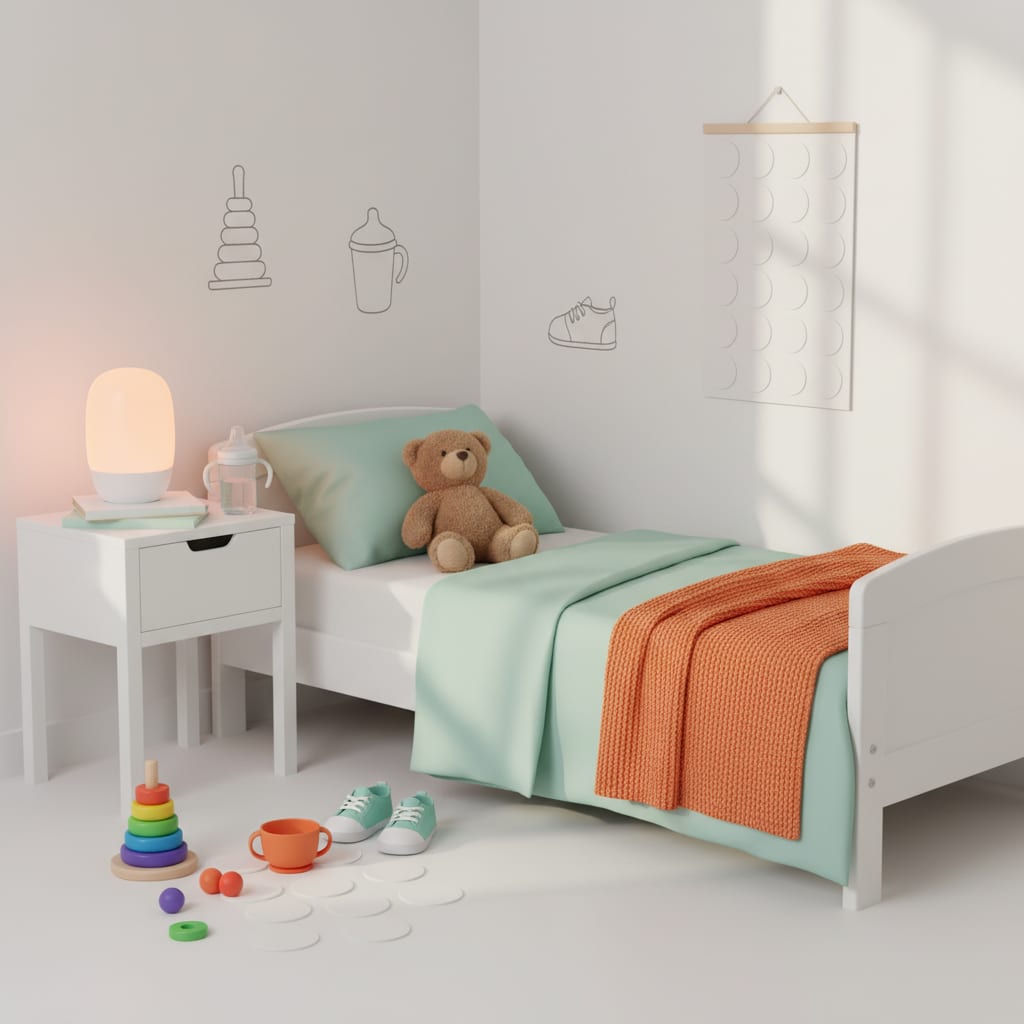
Give the bed the thing they’re crossing the hall for. Usually that’s warmth, a body to touch and something to hold. A heavier blanket they can pull up alone, a lovey that always lives in the bed, a soft nightlight low on the wall, and a cup of water within reach so thirst isn’t a reason to travel.
-
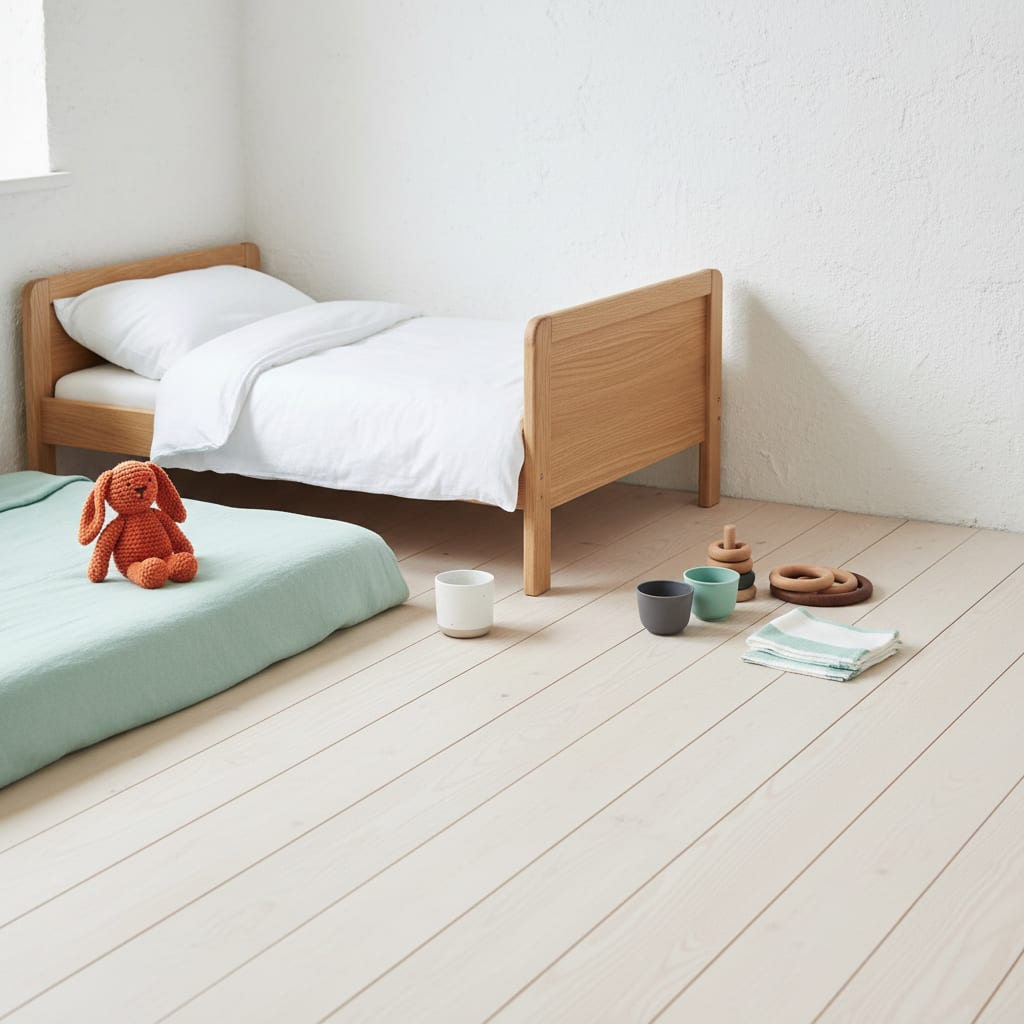
Offer a floor bed in your room as the compromise, if you need one. A folded quilt or a tri-fold mat like the Milliard toddler nap mat on the floor beside your bed, with the rule that they come in silently and lie down there. Half the households I know landed here for a few weeks and then quietly stopped needing it. It keeps everyone asleep, which is the actual goal, and it’s far easier to phase out than a spot in the bed.
How long this usually takes
Give any single approach two weeks before you judge it, and change one thing at a time. Nights three to five are typically the worst — the pattern gets louder before it goes quiet, because a thing that used to work is being tested. Consistency between the two of you matters more than which method you pick: one parent walking them back and the other lifting the duvet keeps the phase alive indefinitely.
Two things worth flagging to a pediatrician rather than solving with a routine: night wakings that arrive with pain behaviors or come alongside snoring and mouth-breathing, and waking that is genuine terror rather than a wander — screaming, inconsolable, not really awake. Neither responds to a walk-them-back script, because neither is about habit.
And if the wandering started within a few weeks of leaving the crib, that’s the more likely cause than anything else on this list; a new bed with no walls simply makes an old 3am waking visible for the first time. My tips for a smooth toddler bed switch cover the setup that keeps the room worth staying in. For what’s actually happening developmentally in these wakings, the explainer on toddler waking up at night at toddlertopics does the “why” that this list deliberately skips.

FAQ: the toddler who climbs into your bed
How do I stop my toddler getting into my bed at night?
Walk them back immediately, every time, with the same short sentence and no lights or conversation, then tuck them in and leave within ten seconds. Pair that with a bed that has what they’re coming for — a lovey, a warm blanket, water, a soft nightlight — and give it two consistent weeks.
Is it bad to let a toddler sleep in your bed?
It’s a family choice, not a moral one, and plenty of households do it happily for years. It becomes a problem when it isn’t what you want, when nobody is sleeping well, or when it’s a nightly negotiation rather than a decision. If it’s working for everyone, there’s nothing to fix.
Why does my toddler come into my room at 3am specifically?
Most wakings cluster in the lighter sleep of the second half of the night, so that’s when a toddler is most likely to surface, notice the room is dark and quiet, and go looking. Whether they travel depends on habit and on how easy it is — which is why the walk back being dull matters so much.
Should I lock or gate my toddler’s bedroom door?
Locking a child in a room isn’t a safe option. A gate at the doorway is a different thing and some families use one, but it only helps if your toddler settles behind it rather than screaming at it — for many, it turns a walk back into a much longer wake-up.
How long does the night-visiting phase last?
When it’s driven by a change — a new sibling, a room move, a separation-anxiety phase — often two to six weeks. When it’s driven by habit, it lasts as long as the response stays inconsistent. The fastest version is the boring one: same words, same walk, same ending, every night.