Toddler Awake at 2am? 10 Fixes for the Split Night

A split night is when your toddler wakes somewhere between 1am and 3am completely awake — chatting, playing, asking for snacks — and stays that way for an hour or two before falling back asleep. It is not a nightmare, not a night terror, and usually not hunger. In year two it almost always traces back to one thing: there is more sleep on offer across the 24 hours than your toddler currently needs, so the middle of the night is where the surplus goes. Below are ten fixes — four for surviving tonight, six for ending the pattern over the next fortnight.
Getting through tonight (fixes 1–4)
-
Keep the room dark and yourself boring. No overhead light, no conversation beyond a few words, no picking them up unless they need it. A split night that gets attention, snacks and a lit room becomes a split night that repeats, because you’ve accidentally made 2am the most interesting hour of the day.
-
Do the basics check once, then stop responding. Diaper, temperature, teeth, a sip of water — one lap, ninety seconds. Then back to bed and back to the doorway. The check is for you as much as for them; once it’s done you can stop wondering.
-
Let them be awake in the bed. If they’re happy and safe, talking to themselves in the dark, you do not have to fix it. Toddlers frequently resettle on their own after 45 minutes of babbling — and a parent who goes in every ten minutes is the thing preventing it.
-
Have a plan for the “I’m not tired” argument. For a toddler in a bed, the rule is the same as bedtime: you don’t have to sleep, you do have to stay in bed. The same silent-return routine works at 2am as at 8pm — my stay-in-bed tricks are the version to run when they keep appearing in the hallway.
Changing the pattern (fixes 5–10)
-
Cut the nap before you touch bedtime. The most common cause of a split night in the second year is a nap that’s still running long after their total sleep need has dropped. Trim it in fifteen-minute steps — cap at two hours, then 1:45, then 1:30 — and give each version four days before judging.
-
Wake them from the nap by a fixed time. A nap that ends at 4:30pm leaves too little pressure for a 7:30 bedtime. Pick a hard end time in the mid-afternoon and stick to it for a week; the effect on the middle of the night often shows up by night three.
-
Push bedtime later, temporarily and deliberately. If the nap is already reasonable, move bedtime 20–30 minutes later for a week. It feels like the wrong direction when you’re exhausted, but a toddler who’s genuinely tired at bedtime is a toddler who consolidates the night instead of splitting it.
-
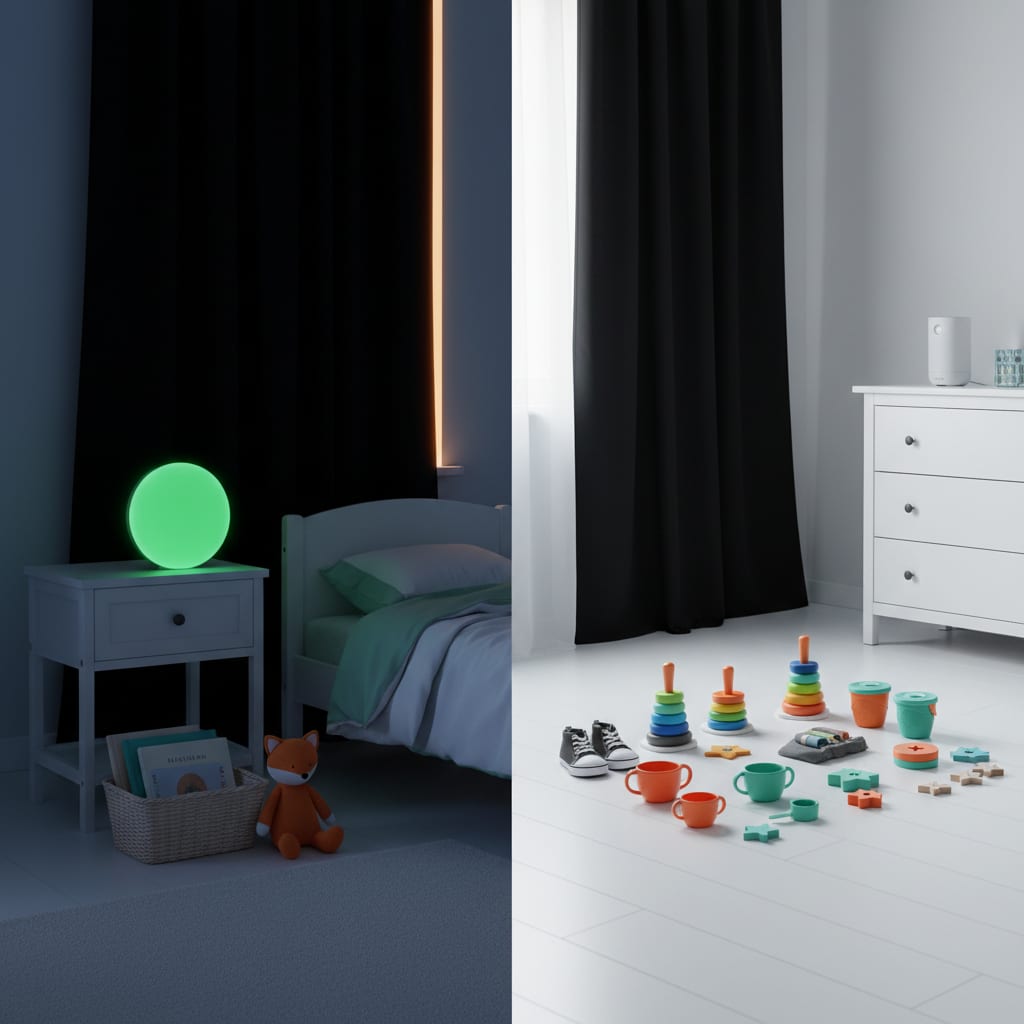
Keep the morning wake-up fixed no matter what. The instinct after a two-hour split is to let them sleep in, and it’s the thing that guarantees a repeat tomorrow. Hold the same get-up time and take the rough day; the pressure has to land somewhere, and you want it landing at bedtime. A wake-up light that changes color at your chosen morning time makes that boundary something a pre-reader can see for themselves.
-
Move the day’s activity earlier and get outside. Physical output and daylight both push sleep pressure into the night rather than the afternoon. A morning park run does more for a 2am waking than any evening routine tweak.
-
Check what changed two weeks ago. New words arriving in a rush, a first big climbing skill, a room change, a new sibling, dropped pacifier, a house guest — developmental leaps in the back half of year two reliably fragment nights for a stretch. Betteroo’s write-up of the 21-month regression covers what that phase tends to look like and roughly how long it runs.
How long to give it
Two weeks. Change one variable — the nap cap, or the bedtime, not both — hold it for four nights before deciding whether it worked, then adjust once more. Splits nearly always take a fortnight to unwind rather than a night, and switching tactics every second evening is what makes them last a month instead.
Two things are worth flagging for a pediatrician rather than a schedule fix: a split night that arrives with pain behaviors — pulling at an ear, refusing to lie flat, waking screaming — and one that starts abruptly alongside snoring or mouth-breathing. Those aren’t sleep-pressure problems and no nap cap will touch them.
And if the trimmed nap starts collapsing into daily refusals rather than shorter naps, you may be looking at the beginning of the nap drop rather than a split-night fix gone wrong; my nap refusal tips cover how to tell the difference before you give up the nap entirely. If the wake-ups have migrated toward 5am rather than 2am, the early-waking fixes are the closer match.

FAQ: toddler split nights
Why is my toddler wide awake at 2am?
Most often because their sleep need is now smaller than their schedule assumes — a long nap plus an early bedtime leaves a gap that opens in the middle of the night. Less commonly it’s a developmental leap, a schedule disruption, discomfort or illness. If they’re cheerful rather than distressed, sleep pressure is the first place to look.
How long do split nights last in toddlers?
If it’s driven by a leap or a disruption, often one to three weeks. If it’s driven by the schedule, it lasts until the schedule changes — which is why cutting the nap or moving bedtime later usually resolves it inside a fortnight when nothing else has.
Should I get my toddler out of bed during a split night?
Not if they’re safe and content. Getting up, turning on lights and starting an activity teaches the body that 2am is a wake time. Stay boring, keep it dark, and let them talk themselves back to sleep — even if that takes 45 minutes.
Is a split night the same as a night terror?
No. In a split night your toddler is genuinely awake, alert and usually happy. A night terror involves being distressed and not really conscious, and typically happens earlier in the night. The response is different too — for a terror you keep them safe and wait rather than trying to wake them.
Should I feed my toddler in the middle of the night?
Past twelve months, most toddlers don’t need a night feed, and a snack at 2am can quickly become an expected part of the night. Water is fine. If your toddler seems genuinely hungry overnight on a regular basis, that’s a question for your pediatrician rather than a schedule change.