Toddler Won't Stay in Bed? 12 Tricks That Hold
A toddler who won’t stay in bed is running an experiment: what happens if I get up? The trick that holds is making the answer so boring it isn’t worth the trip — walk them back silently, every single time, with zero show. Pair that with a bedtime that actually matches their sleep needs and a routine with the loopholes closed, and the pop-up parade usually shrinks within a week. Below are the 12 tricks I use, numbered so you can start tonight. All twelve survived my own two — including the one who once logged fourteen escapes in a single evening.
The 12 tricks
- Master the silent return. They get up, you walk them back. No lecture, no negotiation, no eye contact beyond what steering requires. The 40th return looks exactly like the 1st. Boring is the entire strategy — any reaction, even an annoyed one, is payment.
- Check the bedtime itself before blaming the kid. A toddler put down 45 minutes before they’re actually tired has 45 minutes to fill, and they’ll fill it with hallway laps. This is where I lean on Betteroo, the personalized sleep-plan app from my bedtime battle tips — it sets tonight’s bedtime from how today’s naps actually went, so you’re not defending a made-up time. The quiz takes two minutes.
- Run the needs audit before lights out. Water within reach, potty trip done, lovey located, nightlight on, blanket preference confirmed. Every need you close in advance is one less legitimate-sounding reason to appear in the kitchen.
- Say the last-call phrase and retire for the night. Ours is “night night, love you, see you in the morning.” After it’s said, every request gets the phrase again — not a fresh conversation. Toddlers stop knocking on doors that never open differently.
- State the rule in positive, tiny words. “You stay in bed. I’ll check on you.” Not a paragraph about sleep being important. One sentence, same words nightly, said before the first escape rather than during the tenth.
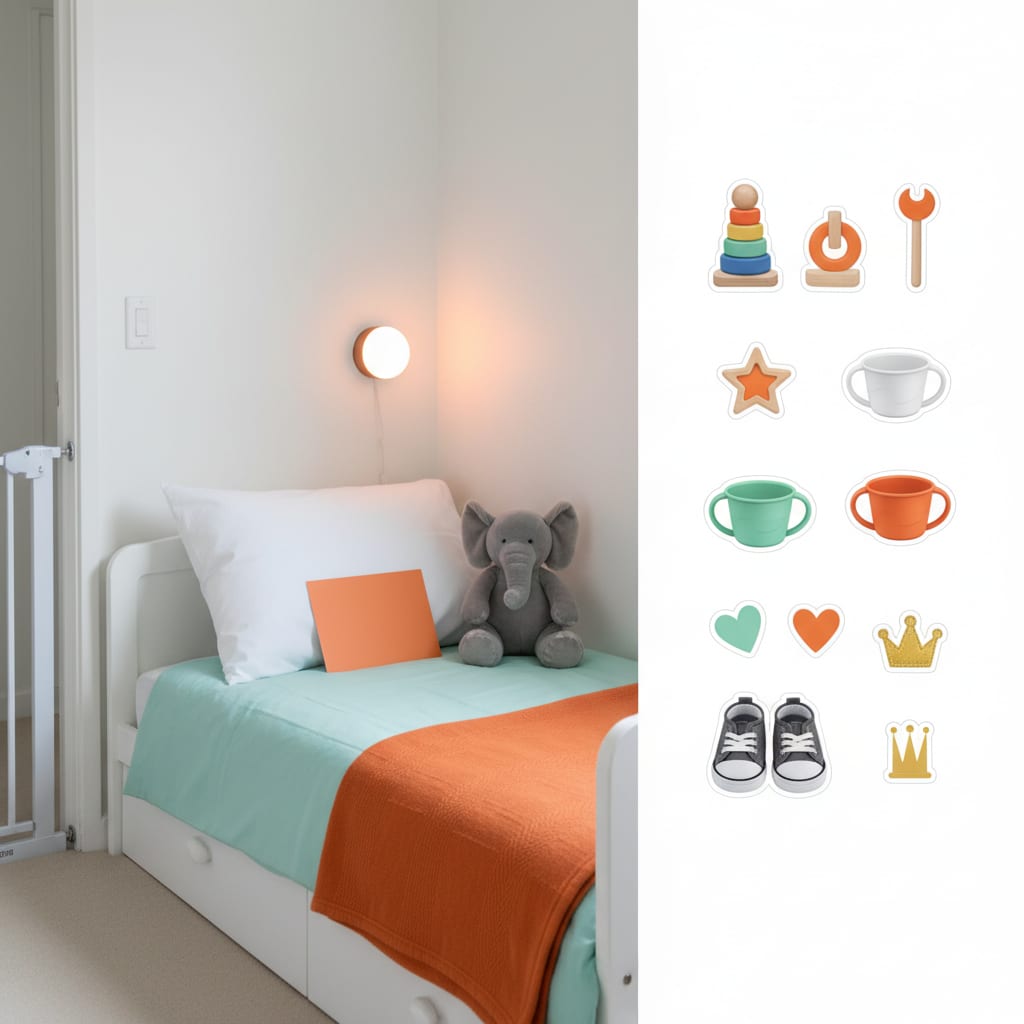
- Try the bedtime pass. One physical card, trade-able for one hug or one sip of water per night. For kids two-and-a-half and up it converts unlimited pop-ups into a single budgeted transaction — and half the time they fall asleep clutching it, unspent.
- Offer scheduled check-ins. “I’ll come peek at you in two minutes.” Then actually do it, briefly and boringly. A toddler who trusts you’re coming back has less reason to come find you. Stretch the interval nightly.
- Make the room win the argument. If they’re climbing out into an exciting hallway, the hallway is the prize. Dim everything after lights out, keep the TV inaudible, and toddler-proof their room fully so the space is safe even if they roam it and fall asleep on the rug. (You may find them there. That’s a win, not a failure.)
- Use a gate or door strategy you can live with. A gate at their door turns the whole room into a big crib for the kids who treat an open door as a starting gun. If gates feel wrong to you, skip this one — the silent return does the same job slower.
- Add a wake-up light for the other end of the night. A toddler clock that turns green at morning time ends the “is it morning?” 5am appearances — the sibling problem of bedtime escapes. My early-waking tips go deep on this.
- Practice staying in bed when it’s not bedtime. A silly daytime game — “get in bed, I’ll count to ten, you stayed! high five” — teaches the skill without the stakes. Toddlers repeat what got applause at 2pm.
- Hold the line for two weeks and count returns. Night one of the silent return is usually the worst night. Track the number of escapes on your phone; watching 14 become 6 become 1 is what keeps you consistent on night five, which is precisely when they test hardest.
If they melt down instead of popping up
Some kids don’t escape — they stand at the gate and wail. Same playbook, gentler pacing: sit quietly near the door the first few nights and move your chair away gradually. Escalating, panicky distress that doesn’t ease within a week or two — or anything that looks like real fear rather than protest — is worth a conversation with your pediatrician, not a stricter chart. If the escapes started right after a crib-to-bed move, my toddler bed transition tips cover that specific mess.
FAQ: toddler won’t stay in bed
How many times should I return my toddler to bed?
As many times as they get up, identically. It genuinely is a numbers game — the returns drop fast once the experiment stops producing interesting results. My house record was fourteen; it hit zero within the week.
Should I stay in the room until my toddler falls asleep?
If you’re happy doing it, it’s not a crime. If you’re doing it hostage-style and resenting it, use scheduled check-ins (trick 7) to work your way out of the room a few feet a night rather than cold turkey.
Should I lock my toddler’s door?
I don’t — locked doors are a fire-safety problem and can frighten kids. A gate at the doorway keeps the room contained while the door stays open, which is a very different experience for the toddler.
What if my toddler falls asleep on the floor?
Cover them or move them once they’re deeply out, and file it under wins. Staying in the room was the goal; the mattress is a stretch goal.