Moving to a Toddler Bed: 12 Tips for a Smooth Switch
The smoothest crib-to-bed switch keeps everything else identical: same corner of the room, same routine, same bedtime — the mattress is the only thing that changes. Prep the room so it’s safe to roam, give your toddler real jobs in the changeover, and have your stay-in-bed plan ready before night one, because a bed without bars is mostly a suggestion. Below are the 12 tips I used for both of my own switches, numbered so you can run them this week. One kid never noticed; the other treated the new freedom like a jailbreak. The tips cover both personalities. (Still deciding whether it’s time rather than how to do it? The when-to-switch explainer at toddlertopics walks through the readiness signs and why later often beats earlier — this post picks up once you’ve decided.)
The 12 tips
- Pick a boring week. Not the week of a new sibling, a new daycare room, or potty-training boot camp. The switch costs a toddler some change-tolerance, and change-tolerance is a shared tank. If life is loud right now, the crib can wait — there’s no prize for early, and Betteroo’s rundown of when to make the toddler-bed switch covers the readiness signs.
- Put the bed where the crib stood. Same corner, same wall, same view from the pillow. The bed is the novelty; the geography shouldn’t be. If you’re planning a furniture reshuffle, do it a couple of weeks before or after — not the same night.
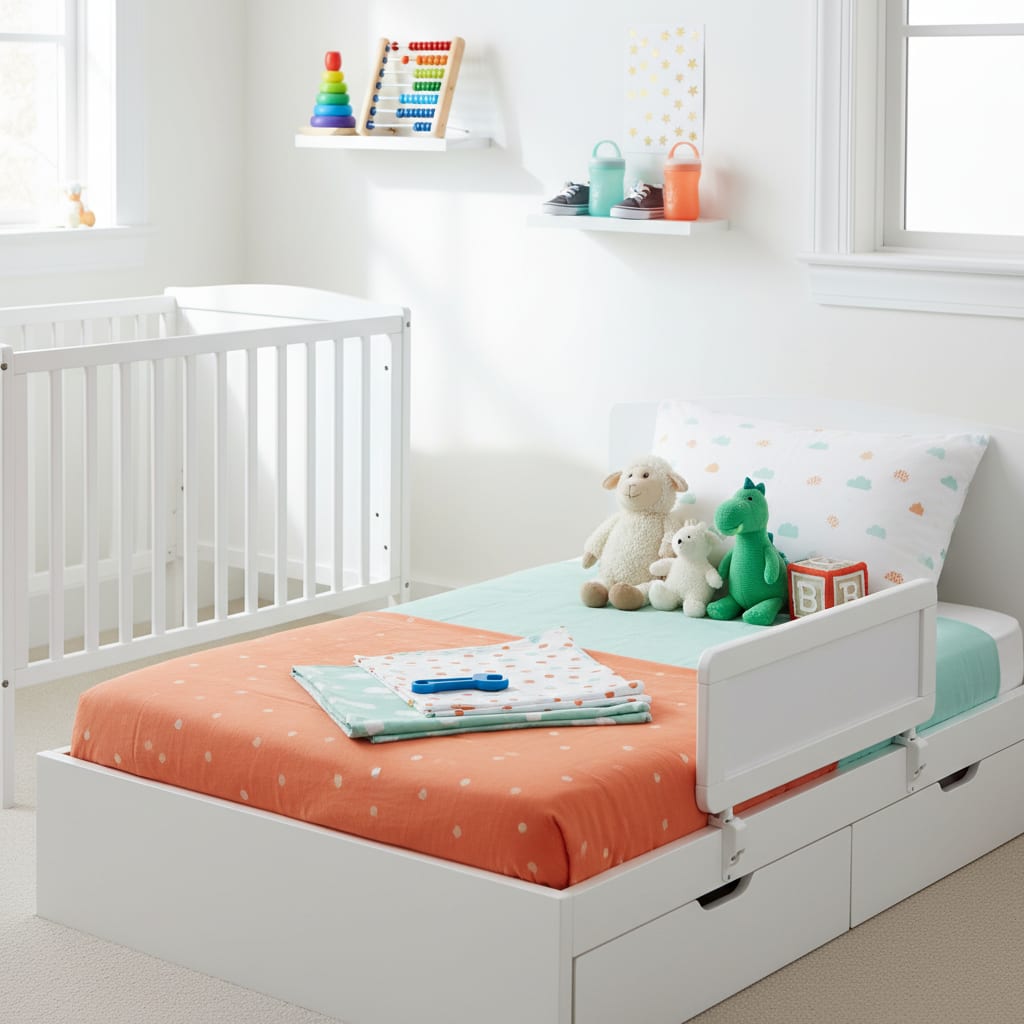
- Hire your toddler for the changeover. Let them turn the wrench (with your hand on theirs), pick between two sheet sets, and park their stuffed animals on the pillow. A bed they built is a bed they’re invested in defending, and toddlers love a job.
- Toddler-proof the room like it’s a giant crib. Once the bars are gone, the whole room is the bed at 2am. Anchor the dresser and bookcase to the wall, cover outlets, cord-wrap the blinds, and clear anything climbable away from the window. Do this before night one, not after the first solo expedition.
- Add a rail — or start with the mattress low. A clip-on bed rail catches the mid-dream rolls, and a folded blanket on the floor beside the bed catches whatever the rail misses. If the bed converts, run it in its lowest configuration first.
- Keep the routine letter-for-letter identical. Same steps, same order, same last-call phrase — the whole bedtime checklist, just docking at a different mattress. The routine is the continuity that tells your toddler this is still ordinary bedtime, not a new negotiable era.
- Try the nap in the bed first. A few daytime naps in the new bed lets the novelty burn off in the cheapest slot of the day. Nap goes fine for a few days? Promote it to nights.
- State the one rule before the first escape. “You stay in bed until morning. I’ll check on you.” Short, positive, said at storytime while everyone’s calm — not invented mid-hallway at 9pm on night two.
- Have the silent return loaded and ready. When they test the new freedom — most kids do — walk them back wordlessly, every time, with all the emotional wattage of a parking attendant. My full stay-in-bed playbook is the companion post to this one; read it before night one, not during night three.
- Use a gate if the door becomes a revolving one. A gate at the doorway — a walk-through one like the Regalo Easy Step — turns the room into a big safe crib while the silent returns do their slow work. Kids who’d never climb a crib rail will absolutely stroll out an open door.
- Skip the “big kid” sales pitch. Heavy “you’re a BIG KID now!” framing backfires two ways: it pressures the ambivalent kid, and it invites regression theater the moment a new baby claims the crib. Keep it light and factual — “this is your bed now” — and let the bed be nice on its own merits.
- Expect a two-week wobble, not a verdict. Night three is often louder than night one — that’s the novelty wearing off and the testing beginning, not proof you switched wrong. Hold the routine, run the returns, and reassess after two weeks before changing anything. (And if bedtime was already a nightly war before the switch, fix that first — my bedtime battle tips sort the schedule and the stalling. I use Betteroo for the schedule half; its plan carries a kid right through transitions like this one.)
If the wheels come off
A switch that’s still chaos after two or three weeks isn’t a failed kid — it’s usually a timing problem. If your toddler seems genuinely scared or the sleep loss is snowballing, moving back to the crib for a month or two is a legitimate strategy, not a defeat; nobody remembers a do-over at this age. The exception: a climber launching over the crib rail needs the lower bed (or the crib mattress on its lowest setting, then the bed) regardless of readiness, because falls beat feelings. Persistent night terrors, breathing weirdness, or fear that doesn’t fade with a gentle presence — pediatrician, not Pinterest.
FAQ: crib to toddler bed
Should I use a toddler bed or go straight to a twin?
Either works. Toddler beds reuse the crib mattress, sit low, and feel cozy; a twin with a rail skips a purchase later. The tips above run identically on both — pick on budget and room size, not doctrine.
What if my toddler keeps getting out of the new bed?
Expected, honestly. That’s tips 8-10: one clear rule, silent returns without a floor show, and a gate if the door traffic stays heavy. The freedom is thrilling for about a week; boring consistency outlasts thrilling every time.
Should I switch to the bed before the new baby needs the crib?
Give it a running start — a couple of months of buffer, so the toddler doesn’t watch the baby “take” their bed the same week. If the baby’s due sooner than that, a borrowed bassinet buys you the buffer instead.
Can we do the switch and drop the crib cold turkey?
Yes — most families do exactly that, using tips 1-6 to soften it. Just don’t stack it with potty training or a paci goodbye the same week. One frontier at a time.