12 Hidden-Veggie Tricks (That Aren't Really Hiding)
The best hidden-veggie tricks for toddlers aren’t really hiding anything — they’re blending vegetables into foods your kid already eats while the same vegetable keeps showing up visibly on the plate. Blend carrots into the pasta sauce, and also serve two carrot coins next to the pasta. The blend gets vegetables in tonight; the visible version builds the repeated, no-pressure exposure that eventually gets them eaten on purpose. Run the 12 tricks below as a both-and, not a cover-up. Every one is tested on my own two, including the one who once interrogated a muffin.
Why “not really hiding” matters
Pure stealth has a shelf life. The day a sharp-eyed toddler finds a green fleck in the “wrong” food, you can lose the whole food, not just the vegetable. So the house rule here: blending is for nutrition, exposure is for progress, and nobody lies when asked. “Yes, there are carrots in the sauce — that’s what makes it orange.” Said cheerfully, it’s a non-event. The no-pressure framework does the long-game work; these tricks feed the kid meanwhile.
The 12 tricks
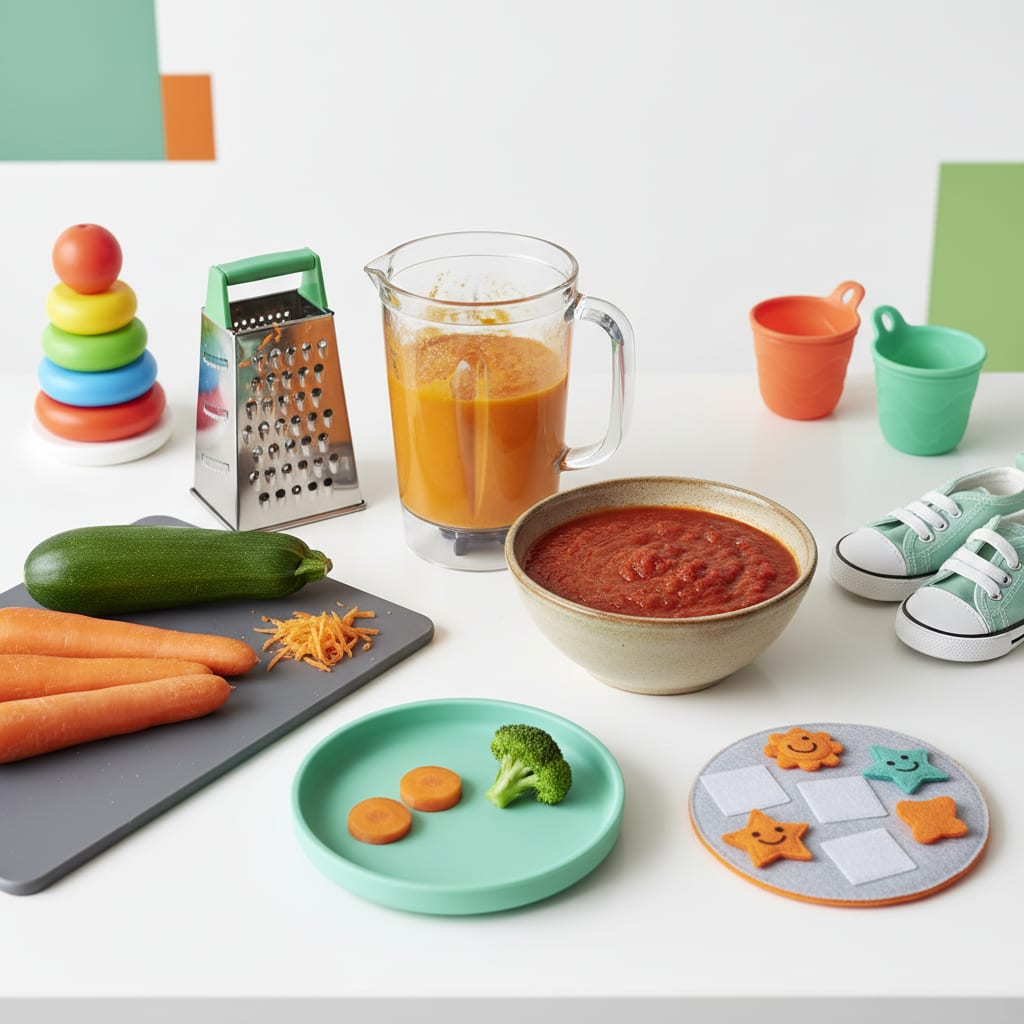
- Blend into red sauce. Steamed carrot, zucchini, or bell pepper puréed into marinara disappears into pasta, pizza night, and dip bowls. Serve a visible spoonful of the same veg on the side — the both-and in one dish.
- Upgrade the smoothie. A handful of spinach vanishes into a banana-and-frozen-berry smoothie; the berries win the color war. Let your toddler drop the spinach in the blender themselves — that’s exposure and a button to press.
- Mash into mashed potatoes. Cauliflower steams and mashes right in. Start with a small ratio and hold it steady for a week before nudging it up. Sudden flavor jumps get audited.
- Grate into everything sticky. Finely grated zucchini or carrot folds into meatballs, burger patties, quesadillas, and grilled cheese. Sticky, melty formats forgive texture like nothing else.
- Make the sauce the dip. Toddlers who refuse sauced food will often dip plain food into the exact same sauce. Deconstruct it: plain noodles, veggie-loaded marinara in a tiny bowl, dipping rights granted. Same trick that saves dinner in my dinner-strike playbook.
- Bake it in. Zucchini bread, carrot-oat muffins, sweet-potato pancakes. Name them honestly — “carrot muffins” — so the vegetable gets credit while the muffin does the selling.
- Add veg to the eggs. Finely chopped spinach or grated zucchini scrambles into eggs or egg muffins and softens to nothing. Cheese on top closes the deal.
- Ride a favorite soup. If any soup or noodle bowl is already accepted, purée extra vegetables into the broth and float one visible piece on top. The floater is the exposure; the broth is the nutrition.
- Swap half the base. Half regular pasta, half chickpea or lentil pasta, same sauce. Riced cauliflower folded into regular rice. Keep familiar food majority-share so the swap reads as normal.
- Serve the tiny visible portion every time. One broccoli tree. Two peas. On the plate, every meal, zero commentary, no eating required. Boring, repeated, pressure-free visibility is the entire engine of eventual acceptance — and it’s what makes the blending honest.
- Give them the job. Toddlers who wash the zucchini, tear the lettuce, or press the blender button eat their own work more often. A job also beats a lecture for making vegetables interesting — the same reason tasting games outperform “just try it.”
- Eat the visible version yourself, on camera. Meaning: at the table, where they can see you, routinely and without a sales pitch. Toddlers surveil. A vegetable mom eats every day is a vegetable under quiet consideration.
Keep the portions honest too
A note on expectations: blended vegetables in a sauce are a real but modest win — a serving of marinara only carries so much zucchini. Don’t let a successful smoothie convince you the exposure work is optional, and don’t tally imaginary servings. The visible-portion trick (number 10) costs nothing and is doing the compounding work. Snacks are an easy second front — a few of my two-minute snack ideas put fruit and veg in the rotation without a negotiation.
FAQ: hidden veggies for toddlers
Isn’t hiding vegetables lying to my kid?
Hiding-only can become that, which is why every trick here pairs blending with a visible version and a tell-the-truth-if-asked rule. “There’s carrot in this sauce” delivered like a boring fact isn’t a confession — it’s advertising.
What if my toddler finds a vegetable fleck and refuses the whole food?
Stay bored: “Yep, that’s zucchini. You can pick it out.” Then blend finer next time and keep the visible side portion going. One discovered fleck plus a calm response costs you nothing; a caught cover-up plus a flustered response can cost you the food.
Do blended vegetables count as much as whole ones?
They carry real nutrition, but a sauce-sized portion is a partial serving, not a loophole. Treat blends as a floor while repeated visible exposure builds toward vegetables eaten on their own — that’s the goal the whole list points at.
How long until my toddler just eats vegetables?
Sometimes ten exposures, sometimes months — my two split exactly that way, same kitchen, same mother. The timeline isn’t yours to control; the calm, repeated offers are. Keep the visible portions tiny, the commentary at zero, and let boring repetition do what pressure can’t.