10 Tasting Games That Get New Foods Tried
The fastest way to get a toddler to try a new food is to stop asking them to eat it and start playing with it: a tasting game lowers the stakes from “finish this” to “touch it, lick it, make a face, tell me about it.” That tiny interaction is the win — repeated low-pressure contact is what turns a suspicious food into a familiar one. The 10 games below are built for ages 1-3, need zero special equipment, and were tested on my own two, one of whom rated foods for a full year like a tiny unpaid critic.
The rules that make the games work
Three rules, and they’re load-bearing. One: eating is never the goal — touching, smelling, licking, and dramatic spitting-into-a-napkin all count as playing. Two: no rewards for tasting; the game is the reward, and a paid bite teaches that the food itself must be bad. Three: you play too, with the same foods, visibly having fun. This is the same no-pressure engine behind my picky-eater tricks — the games are just that framework wearing a party hat.
The 10 games
- Lick and wave. The entry-level game: lick the food, wave it in the air like you’re famous, put it down. That’s the whole game. It sounds absurd; it works because it makes contact silly instead of scary, and “put it down” is a legal ending.
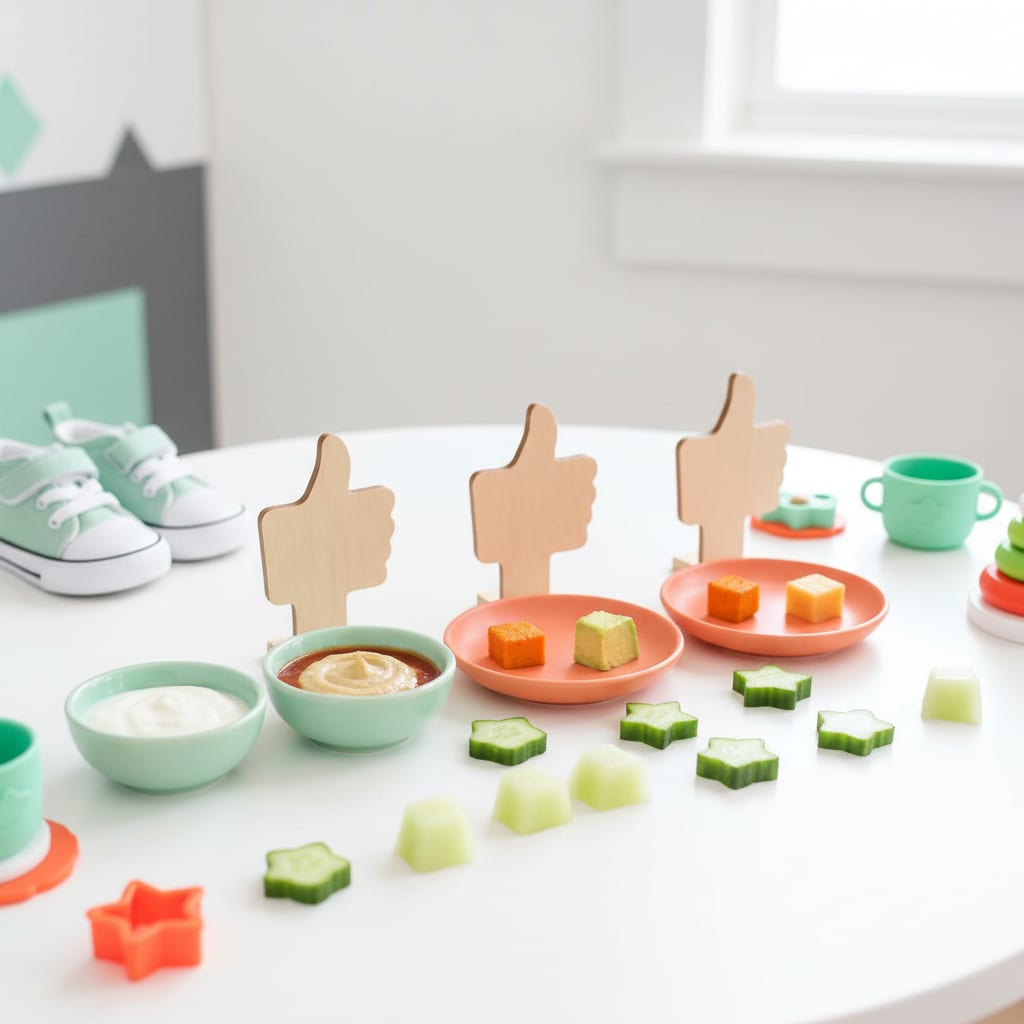
- The rating game. Everyone tastes (or licks, or sniffs) and gives a review: thumbs up, thumbs sideways, thumbs down, or a star count for verbal kids. Critical reviews are allowed and celebrated — “one star! too squishy!” is a toddler voluntarily engaging with a vegetable, which is the entire point.
- The dip flight. One familiar food, three little dips lined up — yogurt, hummus, marinara — and the toddler dunks and judges each. Then flip it: one trusted dip, three dippable foods, including exactly one newcomer. Dipping grants toddlers control, and control is half the battle.
- Blindfold taste test. Eyes closed or hands over eyes, guess the food. Start with three favorites so the game feels safe, then slide one new food into round four. For kids who won’t close their eyes, “guess with your nose” works the same magic.
- The crunch orchestra. Everyone bites at the same time and compares sounds — loudest crunch, squeakiest bite, quietest chew. Crunchy newcomers like snap peas, bell pepper strips (cut thin for the newest chewers), and toast ride in on the sound effects.
- Match the pair. Two bowls of mixed pieces; find the matching twins by look, then confirm by taste. Sorting is developmentally irresistible at this age — tasting sneaks in as verification.
- Tiny-chef plating. The toddler assembles the tasting plate themselves: three cubes here, one dip there, arrange, serve to a stuffed animal, then sample their own work. Kids taste what they built at a rate no amount of coaxing matches — the same job-not-lecture trick that powers my hidden-veggie list.
- Copy the face. Take a bite, make an enormous face — shocked, delighted, robot — and have them copy you with their own bite. The imitation reflex is strong enough to carry a new food right past the suspicion checkpoint.
- Shape safari. Cut one familiar food and one new food into the same shapes (cookie cutters count) and hunt for triangles, moons, stars. “Eat the triangle” lands completely differently than “eat the zucchini.”
- The alphabet-sound picnic. Pick a sound — “mmm” foods, “buh” foods — and taste everything on the blanket that matches. Great for lunch on the floor on a slow day, and the picnic novelty alone buys two or three brave tastes.
Keep the game a game
The fastest way to kill a tasting game is to weaponize it — “okay, NOW take a real bite” converts play back into pressure, and toddlers feel the switch instantly. Run games outside of hungry-and-tired windows (an afternoon mini-session beats the dinner table), keep them short, and quit while it’s fun. New foods introduced through games still follow the boring-exposure math: many calm meetings before acceptance, timeline not yours to control. And if dinner itself is the battleground right now, settle that separately with my dinner-strike playbook — games work best when mealtimes aren’t a war zone.
FAQ: toddler tasting games
How often should we play tasting games?
A few short sessions a week beats a nightly production. Two to five minutes is a full session for a toddler — end at the peak, not the meltdown, and let them ask for the game again tomorrow. Wanting more is the engine.
What if my toddler just plays and never eats the food?
Then the game is working exactly as designed. Touching, sniffing, licking, and reviewing are the on-ramp; swallowing is the last step of a long boring sequence of exposures, not the first. The kid happily licking a green bean and awarding it one star is measurably closer to eating green beans than the kid who won’t allow one on the plate.
Aren’t food games teaching my toddler to play with food?
There’s a difference the rules keep clear: games happen with intention, at the table or picnic blanket, with you playing too — that’s exploration, and it’s how this age learns. Throwing food or dumping plates is a different behavior with its own boring script. Toddlers handle the distinction better than you’d guess when the game has a clear start and end.
When should I worry beyond normal pickiness?
Games handle garden-variety suspicion. A toddler who gags or coughs at most meals, accepts a total menu of fewer than roughly 15-20 foods past age two, drops whole food groups long-term, or has weight or growth concerns has earned a pediatrician conversation — feeding therapy is real and effective, and no game replaces it.