Gross Motor Activities for Toddlers: 18 Indoor Ideas
Gross motor activities use the big muscles: legs, arms and core. For a toddler that means balancing, climbing, jumping, throwing, kicking, pushing and carrying. Indoors, the best ones need nothing more than cushions, socks, a hallway and a laundry basket. Below are 18 ideas sorted by skill, then one obstacle course written three ways for 12 months to 3 years, and the safety checks to do before you move the furniture. Most take under two minutes to set up. Pick one per skill and you’ve covered a winter afternoon.
The animal walks, freeze dance and basic obstacle course in my activities for 2 year olds still count. This list goes further.
Balance (1–4)
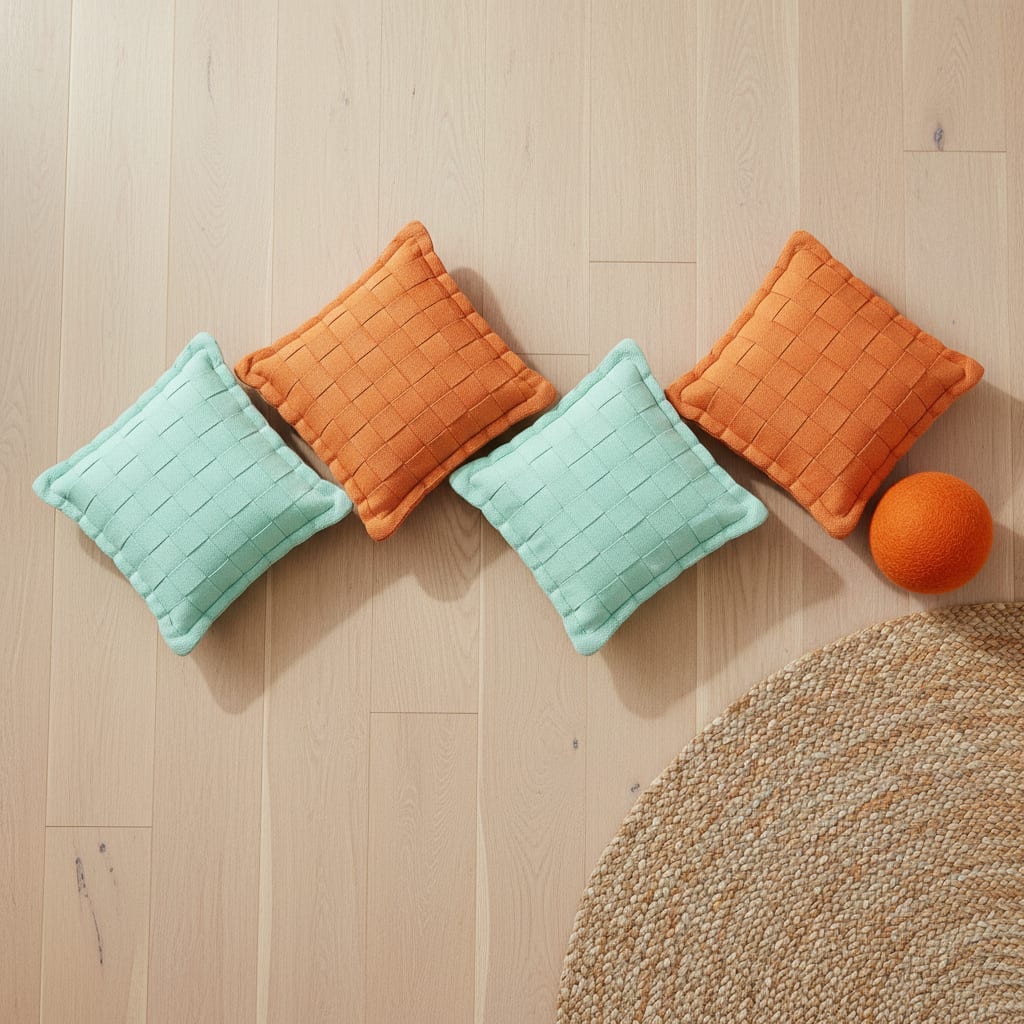
- Cushion stepping stones. Lay sofa cushions or pillows on the floor in a wobbly line with small gaps. Crossing a soft, uneven surface is much harder than walking on a flat floor, which is the point. A set of plastic balance stepping stones does the same job and stacks away. The AAP’s activity ideas for 31–36 months include exactly this as “the floor is lava”.
- Tiptoe stickers. Stick a few stickers on a door just above where they can reach flat-footed. Peeling them off means standing on tiptoes, which the AAP lists among the skills of 19–24 months.
- Flamingo count. For nearly-threes: stand on one foot while you count. Two seconds is a win. KidsHealth says that by age 3, toddlers usually can balance briefly on one foot.
- Carry the cup. A plastic cup with a little water in it, walked from the kitchen to the bathtub without spilling. Slow, careful walking is balance work, and spills land on a towel.
Climbing and crawling (5–7)
- The table tunnel, with an exit puzzle. A sheet over the dining table, then a cushion wall at one end so they must climb over it to get out. Crawling under and climbing over use different muscles.
- Stairs with a prize. Put a toy three steps up and let them fetch it, with you right beside them. The AAP suggests singing “up, up, up” on the way and “down, down, down” on the way back. Practising coming down, feet first and facing the stairs, is the skill that matters most.
- Couch dismount drills. Toddlers climb the couch whether you plan it or not. Teach the safe way down: tummy on the cushion, legs first, feet to the floor. Practise it ten times in daylight and it becomes the default.
Jumping (8–10)
- Jump the river. Two strips of painter’s tape on the floor, a hand-width apart. Jump over with two feet, then widen the river. The CDC lists “jumps off the ground with both feet” at 30 months, so expect a step-over before a true jump.
- Bottom-step landings. From the bottom stair onto a firm floor cushion, holding your hand at first. Bending the knees to land is the skill. One step only.
- Touch the ball. Hang a beach ball on a string from a doorframe, just out of reach, and let them jump to tap it. It’s one of the AAP’s own suggestions for 25–30 months. Raise it a little as they get better.
Throwing, catching and kicking (11–14)
- Overhand at a target. A square of tape on a door and a pile of rolled-up socks. Throwing overhand at something is a big step up from dropping a ball into a basket. KidsHealth puts overhand throwing among the skills most children have by age 3.
- Scarf catch. Toss a light scarf in the air and let them catch it as it floats down. It’s slow enough for a toddler to track, so catching works long before it does with a ball.
- Hallway bowling. Five empty plastic bottles at the end of the hall, a soft ball, and a line to roll from. Setting the pins back up is half the activity.
- Kick it back. Sit at one end of the hallway and roll a soft ball towards them, and they kick it back. Kicking a moving ball is harder than kicking a still one, and it turns into a game you can play sitting down.
Pushing, pulling and carrying (15–18)
- Book delivery. Load a cardboard box with a few board books and let them push it across the rug to “deliver” it to another room. Pushing something heavy is good for strength and oddly calming.
- Towel tug-of-war. Both of you sitting, each holding one end of a bath towel. Pull gently and let them win most rounds.
- Cushion movers. Every cushion in the living room has to get to the hallway. Carrying something big and soft that’s almost too large is a full-body job.
- Wheelbarrow steps. For nearly-threes only: hold them at the thighs, not the ankles, while they walk a few steps on their hands. Three steps is plenty. Stop the moment their arms wobble.
One obstacle course, three ages
Keep the same five stations and change what each one asks:
- 12–18 months: crawl through the table tunnel, climb over one cushion, walk along the couch holding on, push a basket, fetch a ball.
- 18–24 months: walk the cushion stones holding your hand, squat to pick up a toy, step over the tape river, climb one stair and come down, kick the ball.
- 2–3 years: cross the stones alone, jump the river with two feet, tunnel, flamingo count, overhand throw at the door target. Time them if they like being timed.
Run it twice, then let them redesign it. A toddler who moves the cushions themselves has invented a new course, and that holds their interest much longer.
Safety before you clear the living room
- Anchor tall furniture first. The AAP says 77% of tip-over deaths from 2000 to 2019 involved children under six, and that climbing furniture is how many of them happen. A steel anti-tip kit on dressers and bookcases takes minutes. My yes space bedroom walks through the rest of the room.
- Land on soft, not on edges. Cushions go on the floor, away from the coffee table corner and the radiator.
- Bare feet on hard floors. Socks on wood floors make every jump a slide.
- Stay within arm’s reach for stairs, jumping and anything with water.
How much active play toddlers need
KidsHealth’s summary of the guidelines for toddlers is a useful target: at least 30 minutes of adult-led activity, at least 60 minutes of free active play, and no more than an hour at a time sitting still, except when sleeping. It doesn’t need to happen in one go. Two short bursts of activity before lunch and one after the nap add up quickly. Betteroo’s guide to keeping kids moving has more ideas for when they’re older.
For a quieter hour after all that, the fine motor activities are the opposite kind of work, at the table with small hands.
FAQ: gross motor activities for toddlers
What are gross motor skills in toddlers?
The big-muscle skills: walking, running, climbing, jumping, throwing, kicking and balancing. By age 2, KidsHealth says toddlers should walk and run well. By 3 they can usually balance briefly on one foot, throw overhand, catch a ball and pedal a tricycle.
What gross motor activities can I do indoors with a toddler?
Cushion stepping stones, a table tunnel, tape-line jumping, sock-ball throwing at a target, hallway bowling and pushing a box of books. Hallways are the best indoor space, because they’re long and usually have nothing to tip over.
Should active play happen right before bed?
Better earlier. The AAP’s advice on sleep is to avoid lots of physical activity close to bedtime and keep the last hour calm. Do the jumping before dinner and the books after.
When should I mention my toddler’s movement to the doctor?
If your child doesn’t want to play or complains of pain during or after being active, KidsHealth advises talking with your doctor. Losing a skill they used to have is also worth raising promptly. The AAP also offers a Motor Delay Tool on HealthyChildren.org if you want to check before the next well visit.