Toddler Fights the Car Seat? 8 Tips That End the Arch
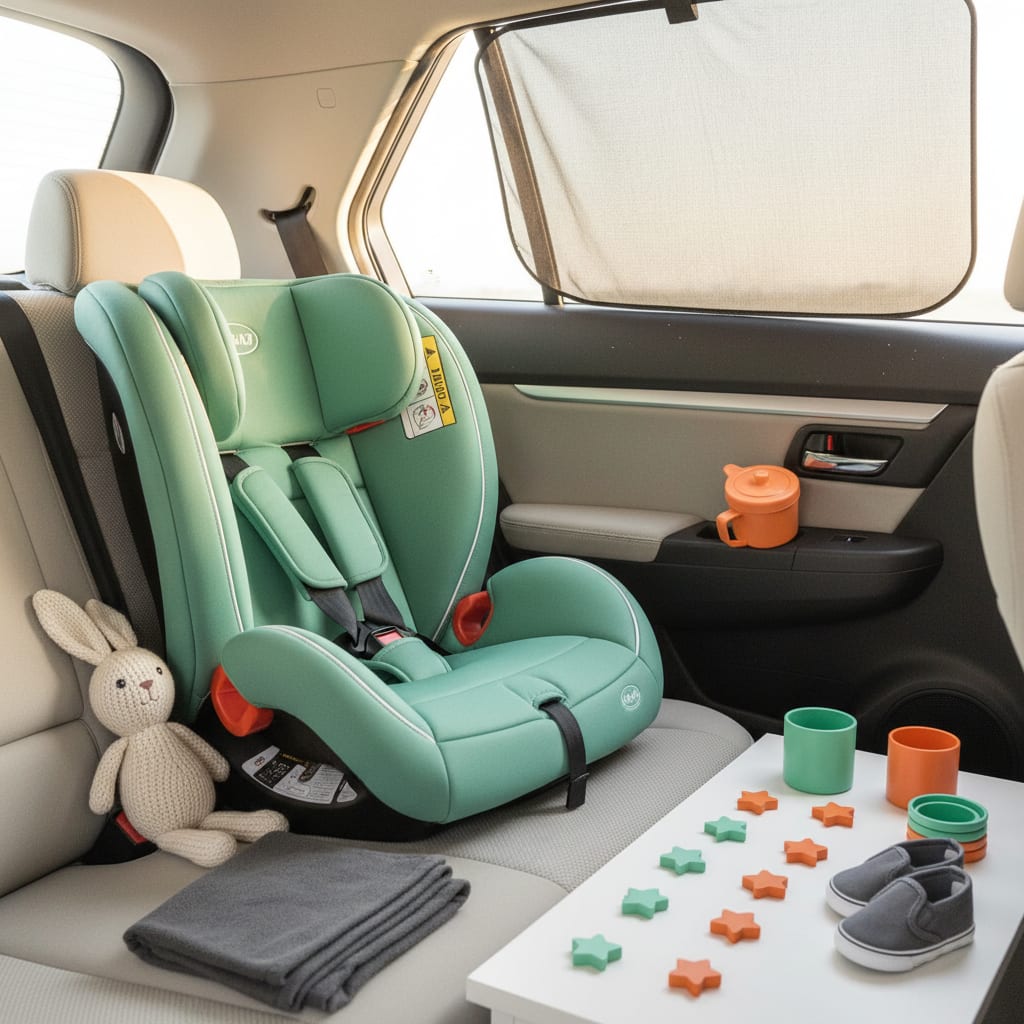
The toddler who arches their back into a rigid plank the moment you approach the car seat is almost always solving one of four problems: they’re uncomfortable, they’re overtired, they’re mid-something they don’t want to stop, or they’ve learned that the fight delays departure. Below are eight tips that work on all four, in the order I’d try them. One thing sits above the whole list and has no flexible version: the harness goes on correctly every single time, no matter how loud it gets. There is no tip on this page worth loosening a strap for.
Rule out the boring causes first (tips 1–3)
-
Check the temperature of the seat and the child. A black harness buckle in the sun is genuinely hot, and a toddler in a fleece is roasting five minutes into a drive. Run the air conditioning for a minute before you buckle in summer, and in winter take the coat off — bulky coats compress under a harness and leave the straps dangerously loose. A blanket over the top afterwards does the warmth job safely.
-
Cut the glare. Sun straight in the eyes for a twenty-minute drive would make anyone furious, and a toddler can’t shift position to escape it. Static-cling mesh shades like these Enovoe window shades stick to the glass rather than clipping onto anything, which matters — nothing goes on or near the harness itself.
-
Look for the strap that’s digging. A twisted strap, a seam on a chest clip, a stiff jeans waistband, a hood bunched behind the shoulders. Run a hand down both straps before you buckle. This is the fix that takes four seconds and solves a surprising share of sudden-onset car seat hatred.
Change the routine around the buckle (tips 4–6)
-
Give a warning and a job. “Two more pushes and then we get in the car — you can carry the keys.” A toddler yanked mid-play into a restraint will fight the restraint. Thirty seconds of warning plus one thing to hold changes the whole approach.
-
Let them climb in themselves. Slower on the day, dramatically faster within a fortnight. Being lifted into a seat you don’t want to be in is a fight; climbing into it is a small achievement. Say “climb in and I’ll do the buckles” and mean it, even when it costs you ninety seconds.
-
Make the seat the only place a specific thing happens. One toy that lives in the car and appears nowhere else. One playlist, one audiobook, one snack cup that is a car-only item. Novelty resets roughly every three weeks, so rotate it before it stops working rather than after.
When it’s a genuine arch-and-scream (tips 7–8)
-
Stop lifting and go horizontal-ish. With a rigid arching toddler, pressing down on the chest is a losing battle and not a kind one. Stand them on the seat facing you first, then sit them back with one hand behind the shoulder blades as you fold at the hips. If they’re still rigid, put them down on the ground, wait ten silent seconds, and start again. Nothing about the second attempt is easier if the first one turned into a wrestling match.
-
Buckle first, negotiate never. Once the fight is on, the fastest kind route is a calm narration — “buckle, buckle, click, done” — and then the toy or the music, not before. Handing over the snack mid-arch teaches that arching produces snacks. That’s the same mechanism as any other public standoff, and the same de-escalation moves apply; my public tantrum de-escalation moves are the longer version of the calm-and-boring approach.
The shortcuts you must not take
Never loosen the harness to stop the screaming. Never leave the chest clip low on the belly instead of at armpit level, because that’s the position that lets a child out of the top of the harness in a crash. No coats, no snowsuits, no aftermarket strap covers, cushions, inserts or “no-arch” wedges that didn’t come in the box with the seat — untested add-ons change how the harness performs and none of them are worth it. And never drive with an unbuckled toddler “just to the end of the road.”
If they get out of the harness while you’re moving, pull over safely and stop. Re-do the straps tighter — the pinch test is the standard, meaning you can’t pinch a horizontal fold of webbing at the collarbone — and lower the chest clip only to armpit height, never below. If it keeps happening, that’s a conversation for a certified car seat technician rather than an internet fix, and most fire departments and hospitals can point you to one for free.
Timing beats every trick on this list
The single biggest predictor of a car seat fight in my house was never the seat. It was leaving twenty minutes into an overtired stretch. Drives that start right after a nap or right after a meal go quietly; drives that start at 4:45pm do not. If your toddler only ever naps in the car, that’s also worth untangling — Betteroo’s guide to teaching naps outside the car seat covers how that pattern usually unwinds, and it takes the pressure off every single trip.
For longer drives the same eight tips still apply, just with stops built in — my road trip survival tips cover the two-hour stop rhythm that keeps a toddler willing to get back in. And for the short everyday hops, the errand version is in my grocery run tips.

FAQ: toddler car seat battles
Why does my toddler suddenly hate the car seat?
Most often something changed: they got taller and the straps now sit wrong, the weather turned and the seat is hot or the coat is bulky, they dropped a nap so departures land in an overtired window, or they’ve discovered that fighting delays leaving. Check the physical causes before assuming it’s behavioral.
How do I get a toddler into a car seat when they arch their back?
Stand them on the seat facing you, then fold them back at the hips with a hand behind the shoulders — pushing down on a rigid chest doesn’t work and isn’t kind. If they stay rigid, set them down, wait ten quiet seconds and try again. Buckle first, then hand over the toy.
Is it okay to loosen the straps if my toddler complains they’re tight?
No. The correct tightness is the pinch test — you shouldn’t be able to pinch a horizontal fold of harness webbing at the collarbone — and comfort complaints are almost always about a twisted strap, a seam or a bulky layer, all of which you can fix without touching the tension.
Can I use a car seat insert or strap cover to stop the arching?
Only if it came with the seat. Aftermarket inserts, wedges and padded covers weren’t tested with your seat and can change how the harness holds a child in a crash. Every manufacturer says the same thing, and it’s the one piece of advice here worth being rigid about.
At what age do toddlers stop fighting the car seat?
There’s no fixed age — it usually eases as language improves and they can tell you what’s wrong, often somewhere in the back half of the third year. What shortens the phase is consistency: the seat is not negotiable, the routine around it is friendly, and the timing of trips respects their nap.