Yes Space Bedroom: 12 Steps to a Toddler Room Safe to Wake In
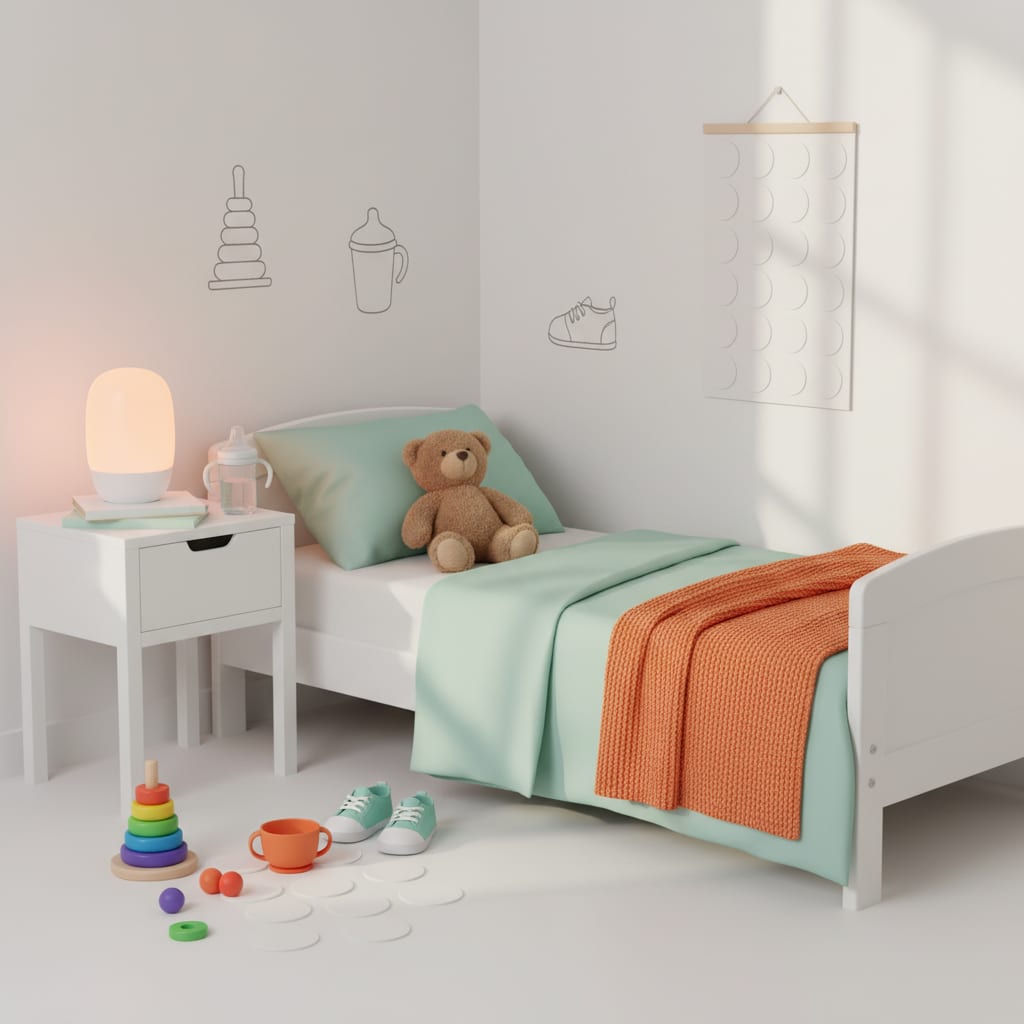
A yes space bedroom is a room where everything your toddler can reach is safe to touch, so they can wake up, climb out and play quietly until you come in. Building one takes an evening. Anchor every piece of furniture to the wall, take the cords and climbing routes away from the windows, cover the outlets, clear anything small off the floor, then stock one low shelf with a few quiet things. Twelve steps below: the safety work first, then the morning setup that makes the room worth staying in. This matters most once there’s no crib rail, when the whole room becomes the bed.
Start at their eye level (step 1)
- Do the crawl-height sweep. The AAP’s home safety checklist says the best way to check for small hazards “is to get down at your child’s level and see what’s there.” Do it on your knees, then sitting on the floor where your toddler sits. Look for coins, beads, buttons and pills, which are the AAP’s own examples. Look for button batteries too. The same page warns they can cause “swift, life-threatening damage” if swallowed, and lists remote controls, flameless candles and toys among the places they hide.
Make sure nothing can fall on them (steps 2–4)
-
Anchor every tall or heavy piece to the wall. The AAP’s tip-over page says about 50% of fatal tip-over incidents involving children happen in bedrooms, “sometimes when parents think their kids are asleep.” That’s exactly the room and the hour we’re talking about. Nationwide Children’s tip-over research says these injuries peak at two years old. The AAP recommends metal anchors such as L brackets because “plastic can become brittle over time.” An all-steel kit like the Hangman anti-tip kit fits that advice; fix it into a stud, as the AAP describes. The stair-gate fixes cover the same job for a toddler who’s already escaping the room.
-
Load the dresser from the bottom and stop the drawers. The AAP advises putting heavier things in the lowest drawers and fitting drawer stops “so your child can’t pull drawers out all the way.” It also says plainly: “Never place a TV on top of a dresser, especially in a child’s room.”
-
Remove every step up. The AAP’s safety page for 1 to 2 year olds warns that a chair left next to a counter, table or window “allows your child to climb to dangerously high places,” and to remove sharp-edged furniture from the room your child plays and sleeps in. Look at what sits under the window and next to the shelves. A toy box, a stool or a laundry hamper is a step to a toddler.
Windows and cords (steps 5–7)
-
Move the bed away from the window. The AAP’s bedroom safety checklist says not to place a crib “or any other child’s bed” near a window, both to prevent falls and to keep children away from blind and drapery cords. If the room only works with the bed under the window, move something else.
-
Guard the window itself. The home safety page says to open windows from the top where possible, and otherwise to fit operable window guards “that only an adult or older child can open from the inside.” It adds that “a screen is not strong enough to prevent a fall.”
-
Get rid of loose cords: blinds first, then everything with a plug. The bedroom checklist notes that the Consumer Product Safety Commission recommends cordless window coverings where possible. If yours aren’t cordless, the AAP says to attach cords to floor mounts that hold them taut, or wrap them around wall brackets out of reach. Then look at the other cords in the room. The AAP says to “keep electrical cords out of reach and sight” and to put floor lamps behind other furniture. Baby-monitor and sound-machine cables should run up high or behind furniture, never along the bed.
Power and heat (steps 8–9)
-
Cover the outlets in a way that can’t become a choking hazard. The AAP’s wording is specific: “non-choking hazard safety plugs in all unused electrical outlets.” It also suggests blocking outlets with furniture if your child won’t stay away from them. Loose plug-in caps are small enough to end up in a mouth once pried out. A self-closing cover plate like these Safety Innovations covers replaces the faceplate, so there’s nothing loose to remove.
-
Check the night-light and anything warm. The bedroom checklist says to “buy only cool night-lights that do not get hot” and to keep them away from drapes and bedding. A plug-in LED like the GE Ultrabrite on the low setting is enough to see by. The home safety page also says radiators, baseboard heaters and vents may need screening if they get hot.
Stock the yes shelf (steps 10–12)
-
Swap the toy chest for open baskets. The AAP checklist says “the best toy chest is a box or basket without a lid,” and if a chest has a lid, its hinges should hold it open and not pinch.
-
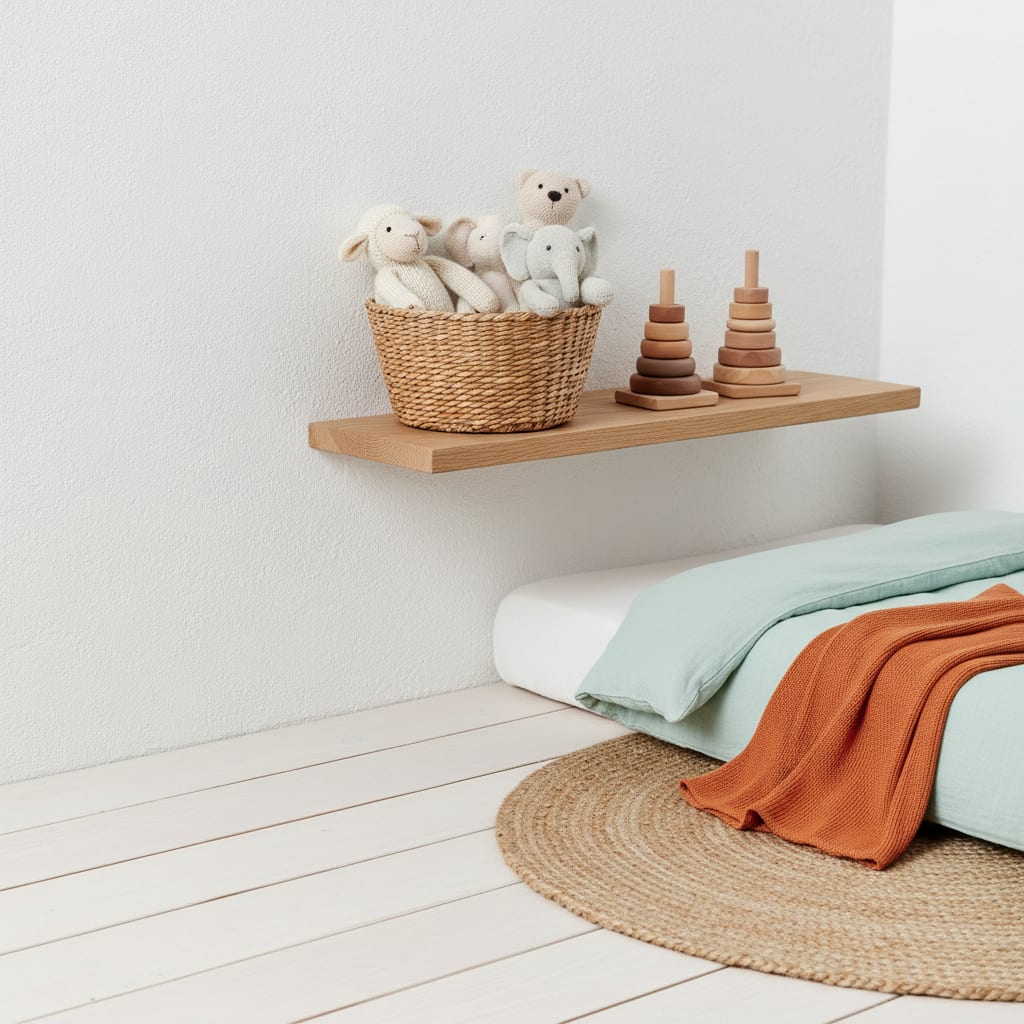
Put out a few quiet things, and nothing else. One low shelf with four to six things they can use alone: board books, two soft animals, a chunky puzzle, a stacking toy. Nothing with small parts, nothing that needs batteries, nothing loud. Rotate it weekly so the morning shelf stays interesting. It’s the room-sized version of the morning basket in my 5am wake-up tips, and it’s what turns an early wake-up into quiet play instead of a shout down the hall.
-
Show them when morning starts, and keep the door open. A light that changes color at wake-up time tells a toddler who can’t read a clock when they’re allowed to come out. Hatch’s sound machine and night light does both jobs from one plug. Betteroo’s walkthrough of introducing a wake light covers the step-by-step setup and what a clock can’t fix. For containment, use a gate across the doorway, not a lock on the door. The doorway stays open for you, and a monitor pointed at the room tells you what’s happening.
Test it before you trust it
Watch the first three mornings on the monitor. You’ll find the thing you missed, and there’s always one: the dresser knob they use as a foothold, the blind wand they swing on, the shelf they try to climb to reach the top basket. Fix that, then watch one more morning.
Redo the crawl-height sweep whenever something changes. If you’re doing this because the crib is about to go, the crib to toddler bed tips cover the fortnight of testing that usually follows. A yes space bedroom won’t stop a toddler getting up. It means that when they do, every choice in the room is a safe one.

FAQ: yes space bedroom
What is a yes space for a toddler?
A space where everything a child can reach is safe for them to touch, so you don’t have to keep saying no. In a bedroom, that means anchored furniture, no reachable cords, covered outlets, nothing small on the floor, and a low shelf of toys they’re allowed to use on their own.
Is it safe to let my toddler play alone in their room in the morning?
For short periods, once the room has been properly toddler-proofed and you can hear or see them on a monitor, many families do. Tip-overs are the main reason to do the anchoring first. The AAP notes that many happen in bedrooms when parents think their children are asleep.
Should I lock my toddler’s bedroom door?
No. A door that can’t be opened from the inside is a barrier for you too, and it cuts you off from what’s happening. A gate across the doorway gives the same containment and keeps the doorway open.
What toys belong in a toddler’s bedroom?
A few quiet ones they can use without help: board books, soft toys, a chunky puzzle, stacking cups. Keep anything with small parts or button batteries out of the room, and store toys in open baskets rather than a chest with a heavy lid.