Fine Motor Activities for Toddlers: 20 Easy Ideas
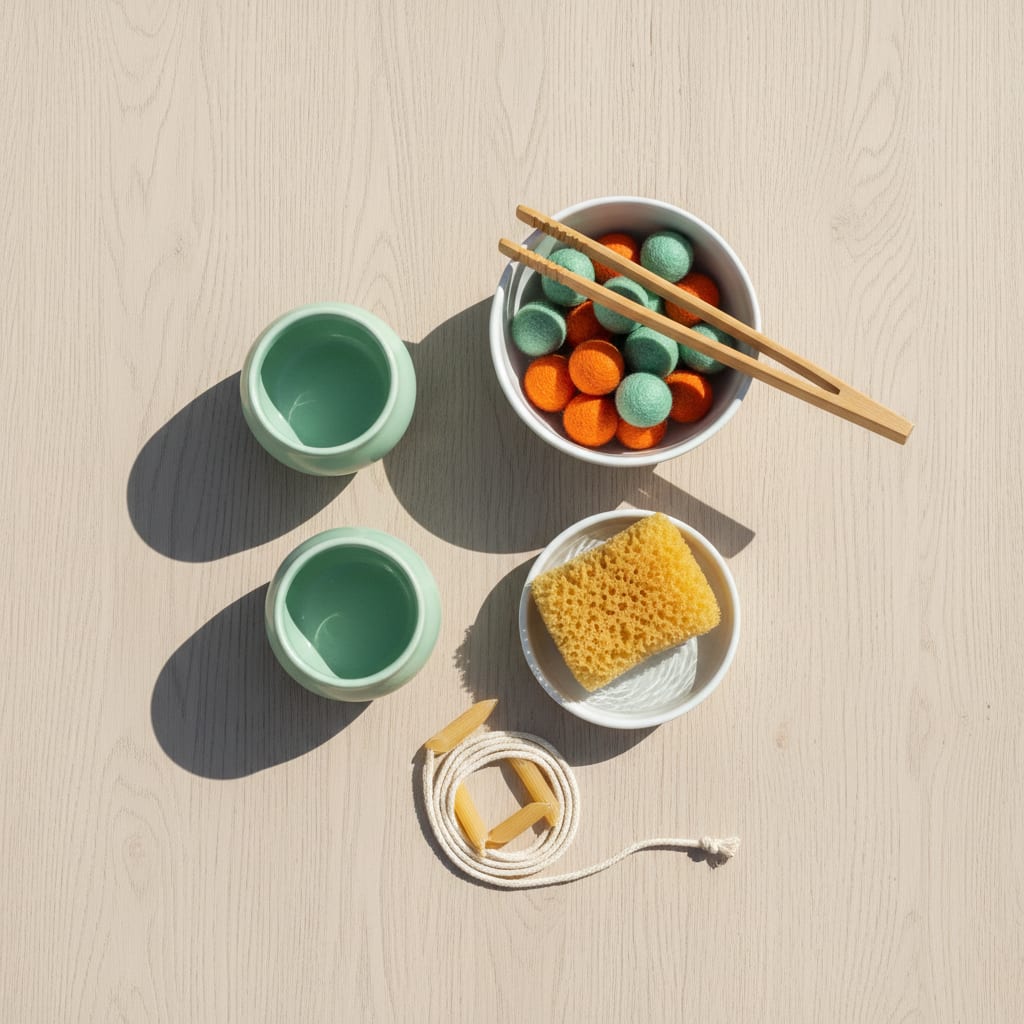
The best fine motor activities for toddlers are everyday jobs that make small hand muscles work: pinching, twisting, squeezing, threading, tearing and scribbling. You don’t need a kit. A jar lid, a sticker, a spray bottle and a lump of play dough cover most of it. Below are twenty ideas grouped by the hand skill each one practices, so you can pick for the skill your toddler is reaching for right now. Every one can be set up in about two minutes from what’s in the house.
Safety first, because fine motor work means small things. The AAP’s home safety checklist names coins, beads and buttons among the small objects that “can be dangerous if a child swallows them.” Stay with your toddler for anything small, use taste-safe options for a child who still mouths, and count small pieces out and back in.
Pinching (ideas 1–5)
- Peeling stickers. A sheet of big stickers and a piece of paper. Peeling the backing off is precise pincer work. Start them off by lifting a corner, then let them do the rest.
- Pulling tape off a table. Stick ten strips of painter’s tape to the table, edges slightly lifted. They peel them all off and stick them back somewhere else. It costs almost nothing and is surprisingly absorbing.
- Tearing paper. Junk mail or old wrapping paper torn into strips, then into scraps. Tearing uses both hands in opposite directions, which is harder than it looks.
- Cereal loops from a muffin tin. Put one O-shaped cereal piece in each cup and let them pick them out and eat them. It’s a snack and a pincer workout in one, and fine for a mouther.
- Knob puzzles. A wooden puzzle with small knobs on each piece, like the Melissa & Doug jumbo-knob puzzle, rewards a pinch grip every time a piece comes out.
Twisting and turning (ideas 6–9)
- Jar lids. Three plastic jars with screw-top lids and a small toy hidden in each. Unscrew, find, screw it back on for the next round. This one holds a two-year-old for a long time.
- Water-bottle caps. Clean empty bottles with their caps. Twisting a small cap is harder than a jar lid, so this is the next step up.
- Door handles and light switches, with you. Toddlers want to work real mechanisms. Let them turn the handle on the way out and flick the switch at bedtime. It’s practice they’ll ask for.
- Play-dough twists. Roll a long snake, then twist two snakes together. Rolling into balls with the palms is a good start for younger ones.
Squeezing (ideas 10–13)
- Bath sponges. Soak in one bowl, squeeze into another. Whole-hand squeezing builds the strength that later goes into holding a crayon properly.
- A spray bottle on the window. A small spray bottle of water and a window, a plant, or the outside wall. Pulling the trigger is a real finger workout, and they’ll want to do it until the bottle is empty.
- Tongs and pom-poms. Kitchen tongs, or kid-sized squeeze tools like the Helping Hands set (labeled for three and up), to move big pom-poms from one bowl to another. For a younger child, swap in large blocks and salad tongs.
- Play-dough squeezing. Just squeezing a lump through their fingers counts. A Play-Doh ten-pack keeps the colors going, and a garlic press adds a second job.
Threading and posting (ideas 14–16)
- Pipe cleaners into a colander. Poke them through the holes from the outside in. Fold the cut ends over first so they’re not sharp.
- Penne on a shoelace. Dry penne or rigatoni threaded onto a shoelace with a knot at one end. Wrap a piece of tape around the other end to make it stiff.
- Posting through a slot. Large lids or cardboard circles posted through a slot cut in a box lid. For a one-year-old this is the whole activity; my activities for 1 year olds start here.
First drawing (ideas 17–20)
- Palm-grip crayons. Toddlers hold crayons in their fist at first, and that’s normal. Chunky crayons shaped for a fist, like Crayola’s palm-grip crayons, let them scribble without fighting the grip they already have.
- Paper on the wall. Tape a big sheet at shoulder height and let them draw standing up. Drawing on a vertical surface works the wrist and shoulder in a different way.
- Chalk on the sidewalk. Thick chalk outside, or a chalkboard inside. Chalk needs more pressure than a crayon, which is good practice.
- Paint with water. A paintbrush and a cup of water on a fence, a step or a chalkboard. They get the brush practice with no mess, and the “painting” disappears as it dries.
Making it stick
Match the job to the age. At one, most fine motor work is posting, pulling and dumping. Between two and three, twisting, threading and early scribbles appear. If you want to know what’s typical when, toddlertopics’ fine motor milestones explains the stages. This list is just the doing part.
Build it into the day. Most of these fit into things you already do: lids at snack time, stickers in the car, a spray bottle during bath, a crayon while dinner cooks. A few minutes, many times a day, beats one long session. For a ready-made version you can grab on the way out, my toddler busy bags are mostly fine motor work in a ziplock. If messy hands are part of the fun, the sensory bin ideas add scooping and pouring.
For more ideas sorted by age, Betteroo keeps a wider bank of toddler activities that’s worth a look when this list runs dry.
FAQ: fine motor activities for toddlers
What are fine motor skills in toddlers?
The small, precise movements of the hands and fingers: pinching, twisting, grasping a crayon, turning a page, threading. They develop gradually through the toddler years, mostly through ordinary play and everyday tasks.
What are good fine motor activities for a 1 year old?
Posting objects through a slot, pulling scarves out of a box, knob puzzles, squeezing a wet sponge, and picking cereal pieces out of a muffin tin. Keep everything bigger than mouth-sized and stay right there with them.
How can I help my 2 year old hold a crayon?
Mostly by giving them lots of chances to use their hands. Fist grips are normal at this age. Chunky crayons, chalk and drawing on a wall-mounted sheet all help, as do pinching and squeezing activities that build hand strength.
When should I worry about my toddler’s fine motor skills?
If you’re concerned, mention it to your pediatrician, who checks development at well visits. The CDC’s milestone guidance says to act early if a child “has lost skills he or she once had” or you have other concerns, and to ask about developmental screening.