Toddler Throws Toys Out of the Crib? 11 Calm Fixes
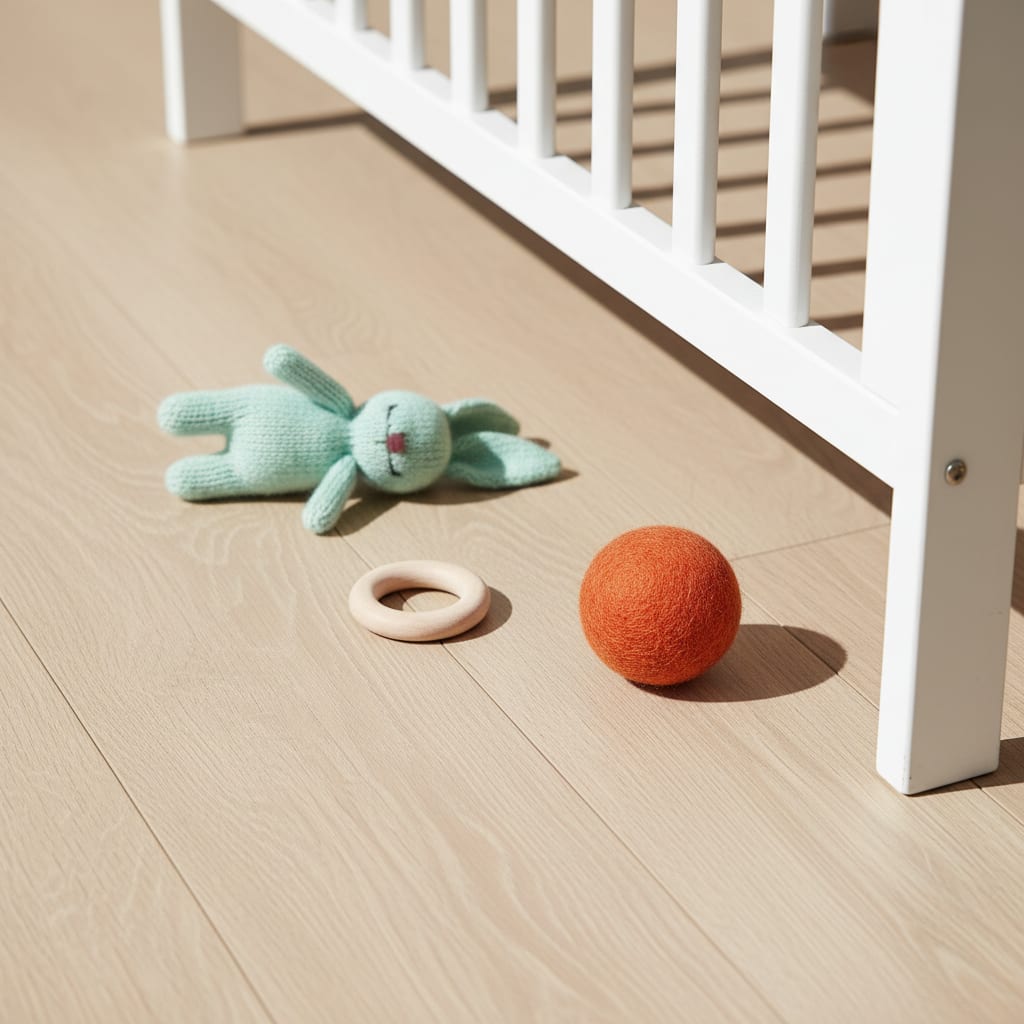
If your toddler throws the lovey and toys out of the crib at bedtime, take most of the game away and keep the rest boring. Keep one small lovey in the crib and nothing else. Decide before lights out how many times you’ll hand it back (once is plenty). Make that return silent and quick. After that, the lovey sleeps on the floor until morning. KidsHealth’s advice for 1- to 2-year-olds says exactly this: “Decide how many drinks of water you’ll allow and how many times you’ll get the toy that’s thrown out of the crib in defiance of bedtime.”
The 11 tips below are in the order you’d use them: first the setup, then the bedtime itself, then the throws that aren’t really about the toy.
First, figure out which throw it is
You’ll handle it better if you know what the throw is for. Most crib throws fall into one of three groups:
- The game. Throw, a grown-up appears, the toy comes back, repeat. They’re giggling. To a toddler that’s a great game: they do one thing and a parent shows up.
- The protest. They’re mad that bedtime happened, and the bunny is the only thing within reach. Crying, not giggling.
- The regret. The toy went over by accident, or on purpose, and now they really want it back. Real distress, usually once.
The game needs boredom, the protest needs a calm limit, and the regret needs one quick fix. The tips below say which is which.
Set it up before bedtime (1–4)
- Shrink what’s in the crib. If there’s nothing to throw, there’s no game. KidsHealth says that from age one, “security items like ‘lovies’ (a small soft blanket or stuffed animal) are OK,” but “don’t put any extra-large soft toys or stuffed animals in the crib,” and don’t leave a lot of toys your child “could pile up and climb onto.” So the crib gets one small lovey. The rest of the stuffed animals go on a shelf to watch.
- Under 12 months, the answer is nothing. If a baby under one is pitching a stuffed toy over the rail, don’t hand it back. Take it out of the crib for good. HealthyChildren, the AAP’s parent site, says to keep soft objects and loose bedding, “pillows and pillow-like toys, quilts, comforters… blankets, toys,” out of a baby’s sleep area. The lovey can wait for the first birthday.
- Buy the lovey twice. Betteroo’s lovey guide suggests buying two identical loveys and rotating them, and it also says “the bed does not need to fill up with toys.” Choose something small with no ribbons or cords, like the Pro Goleem elephant security blanket. Keep the spare in your dresser. If the first one gets thrown into a corner you can’t reach in the dark, the regret throw takes ten seconds to fix.
- Let them throw in daylight, a lot. Throwing isn’t bad behavior at this age. It’s how toddlers learn what objects do. (Toddlertopics has a good explainer on why toddlers throw everything.) Give the urge a place during the day: soft balls into a laundry basket, beanbags at a cushion, a “throw zone” in the living room. My food-throwing tips use the same idea at the table. A toddler who got to throw all afternoon has less need to do it at 7:30.
At bedtime (5–8)
- Hand the lovey over last. Don’t drop the lovey in the crib early and then read two books. Make it the very last step: lay them down, put the lovey in their hands, say goodnight, and leave. If the lovey arrives last, the first throw comes later, and sometimes not at all.
- Pick the number before you need it. Choose how many returns you’ll do. One is a good number, and so is zero. Tell them at the last book: “Bunny gets one trip back tonight.” That’s KidsHealth’s “decide how many” rule, said out loud so it isn’t a surprise. If you make the limit up on the spot, at the third throw, you’ll be negotiating.
- Make the return boring. Walk in, pick it up, put it in the crib, walk out. No words, no eye contact, no “uh-oh!” KidsHealth says to keep night “visits” “brief and boring for your toddler,” because “too much interaction can backfire.” The game only works if the grown-up is fun when they show up, so don’t be fun.
- After the last return, it stays on the floor. Have one script and use the same words every night: “Bunny is sleeping on the floor tonight. You can get him in the morning.” Then leave. The first night or two there’ll be some yelling. That’s normal when a limit is new, and holding it calmly is what makes it stick. KidsHealth says to “get used to setting the rules and sticking to them.”
 Bedtime turned into a game of fetch?
Betteroo builds a bedtime plan for your toddler's age, including what to do when they keep calling you back in.
Take the 2-minute sleep quiz →
When the throw isn’t about the toy (9–11)
- If it’s protest, treat it like stalling. A furious throw is usually “I’m not done with today.” It belongs with the extra-water, one-more-hug requests, not with the game. My bedtime stalling tips cover how to answer the real needs before lights out, so all that’s left is the stall. Answer the lovey under tip 6’s limit and leave the anger alone. You don’t need to fix the feeling. You just shouldn’t feed it.
- At 3am, one quiet fix for a real regret. If they’ve woken and they’re truly upset, with no game in it, slip the spare lovey in from your dresser and leave. That doesn’t break the rule, because the bedtime limit was for the game. KidsHealth still says to reassure a toddler who wakes in the night “quietly and quickly.” If 3am throws turn into a nightly thing, go back to tip 7.
- Watch for stacking. If the toys aren’t going over the rail but getting piled in a corner, the throwing isn’t the issue. Climbing is. KidsHealth warns about toys a child can “pile up and climb onto,” and about anything with “ties or strings” or anything they can reach from standing, like blind pulls and curtains. Clear the crib and the wall around it, then read my crib climber tips.
FAQ: toddlers throwing toys out of the crib
Why does my toddler throw everything out of the crib?
Usually because it’s a great game. They throw it and you come back. HealthyChildren says that through the second year, a child will “swing back and forth constantly between fierce independence and clinging to you,” and bedtime is where both show up at once. Some throws are protest and some are accidents. Tell which one you’re seeing (giggling, angry or upset) and answer that one.
Should I give my toddler the lovey back every time?
No. Pick a set number, usually one, and stick to it, the way KidsHealth suggests for drinks of water and thrown toys. After that, the lovey stays on the floor until morning. The exception is a real middle-of-the-night regret, where a quiet hand-back of the spare is fine (tip 10).
Is it OK to leave toys in my toddler’s crib?
After the first birthday, a small lovey is fine. KidsHealth says a light blanket is OK at 1 to 2 years too, but no extra-large soft toys and nothing with ties or strings. Before 12 months, the AAP says nothing soft goes in the sleep space: no toys, pillows or blankets. Fewer items also means fewer throws and less to stack.
When should I mention it to the pediatrician?
Toy-throwing on its own is ordinary toddler behavior. KidsHealth says to talk with your doctor about “any sleep problems that seem severe to you.” So bring it up if bedtime has become a nightly battle lasting most of the evening, if your toddler seems unable to settle at all, or if something about their sleep or behavior is worrying you.