Moving a Toddler Out of Your Bed: 11 Tips
Move in stages, and start with where you sleep rather than where they sleep. The version that works for most bed-sharing families is: build the new bed and use it in the daytime, then sleep beside it on the floor of their room for a few nights, then move yourself further away every few nights until you’re at the door and then out. It usually takes one to three weeks. Doing it in one night is possible and it is a much harder week. Below are eleven tips for a planned move — this is not the post for the toddler who already sleeps in their own bed and turns up at 3am, which is its own problem.
Bed-sharing with a toddler is a legitimate choice and plenty of families keep it for years. This is for the households that have decided to stop.
1. Pick the date, and pick a boring week
Not the week of a house move, a new sibling, a holiday, the start of daycare or a course of antibiotics. You want a flat, dull, ordinary week where you can afford three bad nights.
Tell them the date and count it down in sleeps. Two-year-olds understand “three more sleeps” better than most adults expect.
2. Build the bed early and let them live in it
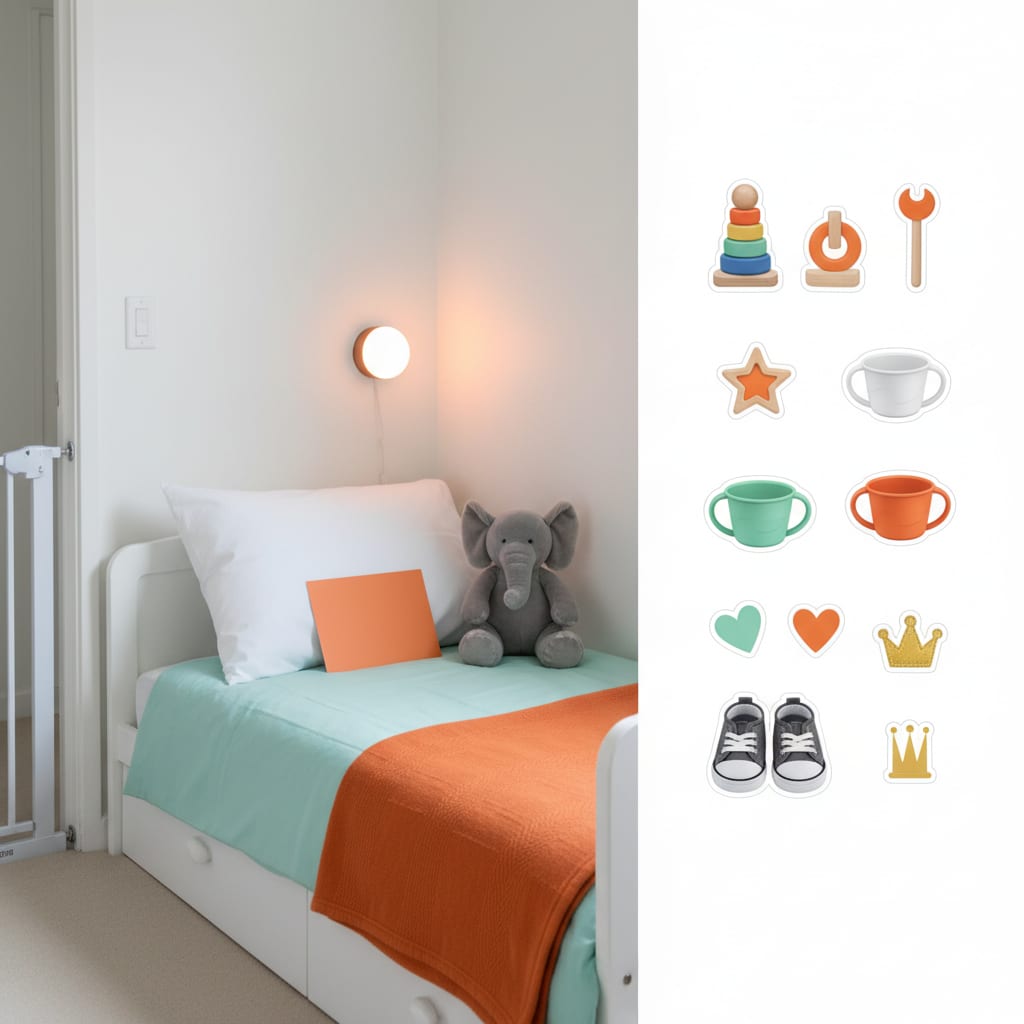
Set the new bed up a week or two before it has to work at night. Books on it in the afternoon, snack on it, naps in it if naps are still happening. The goal is that the first night is not the first time they’ve been in it.
Let them choose something about it — the sheets, which stuffed animal lives there, which side the pillow goes. Toddlers defend things they picked.
3. Do naps in it first
A nap is a shorter, brighter, lower-stakes version of the same event. If naps have gone, use quiet time in the bed instead. Getting three or four successful daytime sleeps in the new bed before you ask for a night one changes the odds a lot.
4. Move the whole routine into their room
Whatever your last twenty minutes look like, do them in the new room from now on — the stories, the songs, the milk, the same order. If the routine has quietly grown to forty minutes of stalling, tighten it before you start; the routine checklist is the shorter version.
5. Sleep on the floor beside them at first
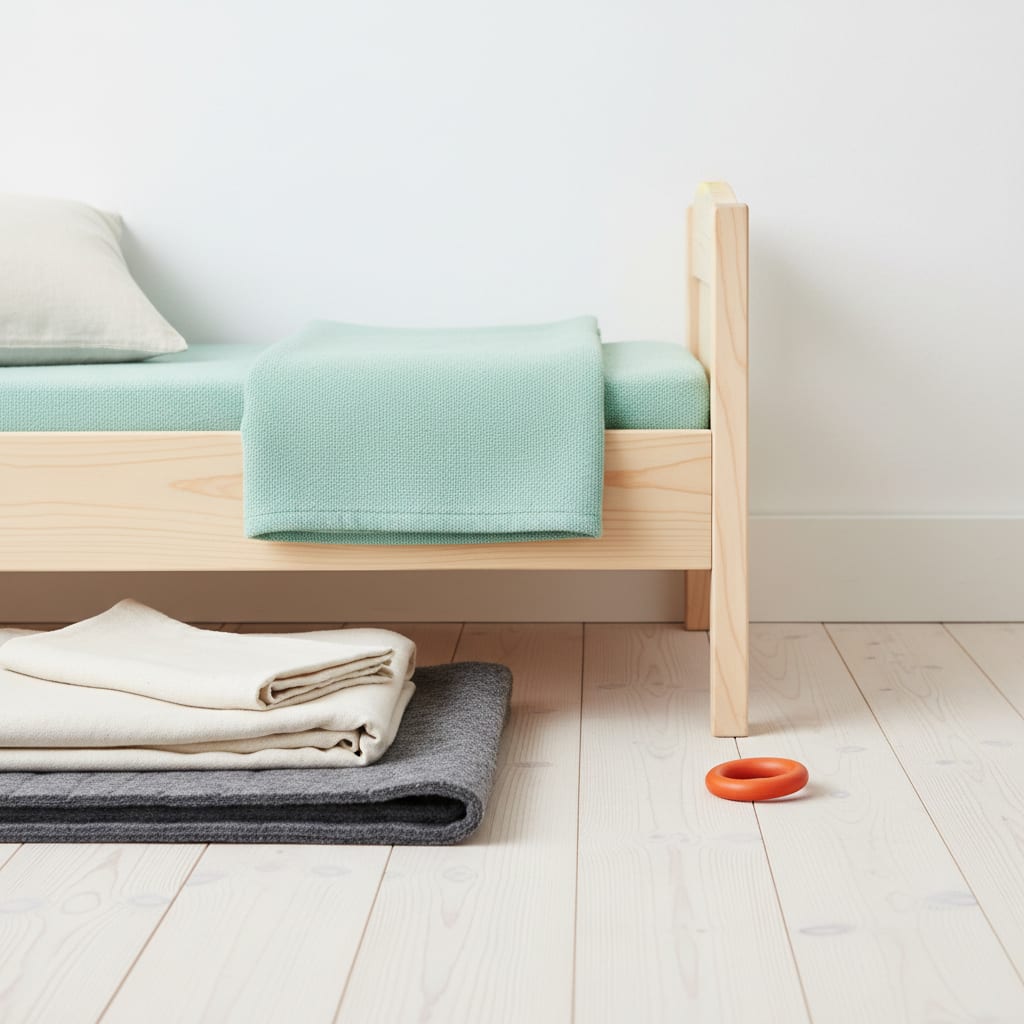
This is the part people skip and then wonder why night three went badly. A mattress on the floor next to the new bed for the first two or three nights keeps the thing they’re actually attached to — you, within reach — while the surface changes.
Yes, it is uncomfortable. It is three nights.
6. Then move yourself, a bit at a time
Every two or three nights, move your position further away: beside the bed, then the middle of the room, then by the door, then the doorway with the door open, then the hallway. Only move when the previous position has produced a settled night.
If a step goes badly twice, go back one step for two nights and try again. Going backwards on purpose is much cheaper than starting over.
7. Make the bed physically feel safe
A child used to an adult mattress with a person on it can find a small bed feel exposed. A rail on the open side helps more than it looks like it should — the Regalo swing-down bed rail is the common one, and it folds down so you can still sit on the edge for stories.
Push the bed against a wall if the room allows it, and keep the room dim rather than dark if that’s what they’re used to.
8. Decide the middle-of-the-night rule in advance
Write it down before bedtime. The usual one: walk them back, tuck them in, one short line, leave. Nemours’ guidance on toddler sleep is blunt about the tone to use — “keep your nighttime ‘visits’ brief and boring for your toddler.”
The rule that matters more is the one for you: what happens when you’re too tired. Decide now whether the fallback is a parent on the floor of their room or the child back in your bed, because whichever you choose at 4am becomes the rule.
9. Expect the second and third nights to be worse
Night one is often surprisingly fine — it’s new. Nights two and three are when they’ve worked out that this is the plan now. That’s the point where families abandon it, one night before it turns.
If you’re still getting repeat visits after a fortnight, the problem has usually moved from the transition to the getting-up habit itself, which is a different set of tricks. Betteroo’s guide to holding the line once they’re in their own room is a decent second read.
10. Check the sleep total before blaming the bed
Between one and two, most children need about 11–14 hours in 24 including naps, per the same Nemours page. A toddler who is short on sleep, or whose nap has crept too late, will fight any bed. If bedtime has been drifting later, fix the timing in the week before the move rather than in the middle of it.
11. Have a plan for illness and travel
They will get sick in week two. Decide in advance what a sick night looks like — most families do the parent-on-the-floor version rather than the family bed, because that’s a step backwards rather than a reset — and what happens the night you get home from grandma’s.
Saying “we go back to the floor mattress for two nights, then straight back to the plan” out loud, in advance, is what stops one bad week undoing a month.
How long it usually takes
One to three weeks for a planned, staged move, with the middle week the worst. Faster if naps went well in the new bed first; slower if the move coincided with anything else. If you’re also moving them out of a crib in the same fortnight, do that part first and separately — the crib-to-bed transition has its own pitfalls and stacking the two is what turns three hard nights into three hard weeks.

FAQ: moving a toddler into their own bed
What age is best to move a toddler out of the family bed?
There isn’t a required age. The practical window most families pick is somewhere between two and three, when a child can understand a plan and follow a rule, and before a fourth birthday makes the habit feel permanent to everyone. Readiness is more about your week than their age.
Should we do it cold turkey?
You can, and some children genuinely do better with a clean break than a drawn-out one. The trade is that a single-step move usually means several loud nights in a row, with no smaller step to fall back to. The staged version costs more evenings and fewer scenes.
They fall asleep fine and then come in at 2am. Now what?
That’s no longer the transition — it’s a night-waking habit, and it needs the walk-back-boring approach rather than more staging. Keep the return trip short, silent and identical every time, and make sure the bed they’re returning to is dim, warm and has something familiar in it.
Do we have to move both children if they share a room?
No, but expect the first week to wake the sibling. If you can, do the noisy fortnight with the sibling sleeping elsewhere, then bring them back once the new pattern holds.