How to Potty Train a Boy: 10 Tips (Sitting First)
Teach him sitting first. Everything else — standing, aiming, the urinal in the diner bathroom — comes months later, and starting with it is the single most common way this goes sideways. Nemours KidsHealth puts it plainly: “it’s usually best for boys to first learn to use the toilet sitting down before learning to pee standing up.” So the plan is one skill at a time, sitting until sitting is boring, then a slow switch. Ten tips in that order, tested on my own two.
Start with the sitting sequence (tips 1–4)
-
Sit for everything, every time, for the first few weeks. Not “sit for poop, stand for pee” — just sit. A toddler who is still working out what the urge even feels like cannot also manage aim, balance and a waistband. Sitting removes two of those three. It also means he never has to interrupt a pee halfway through to sit down for the other thing, which is the moment most boys give up and go back to the diaper.
-
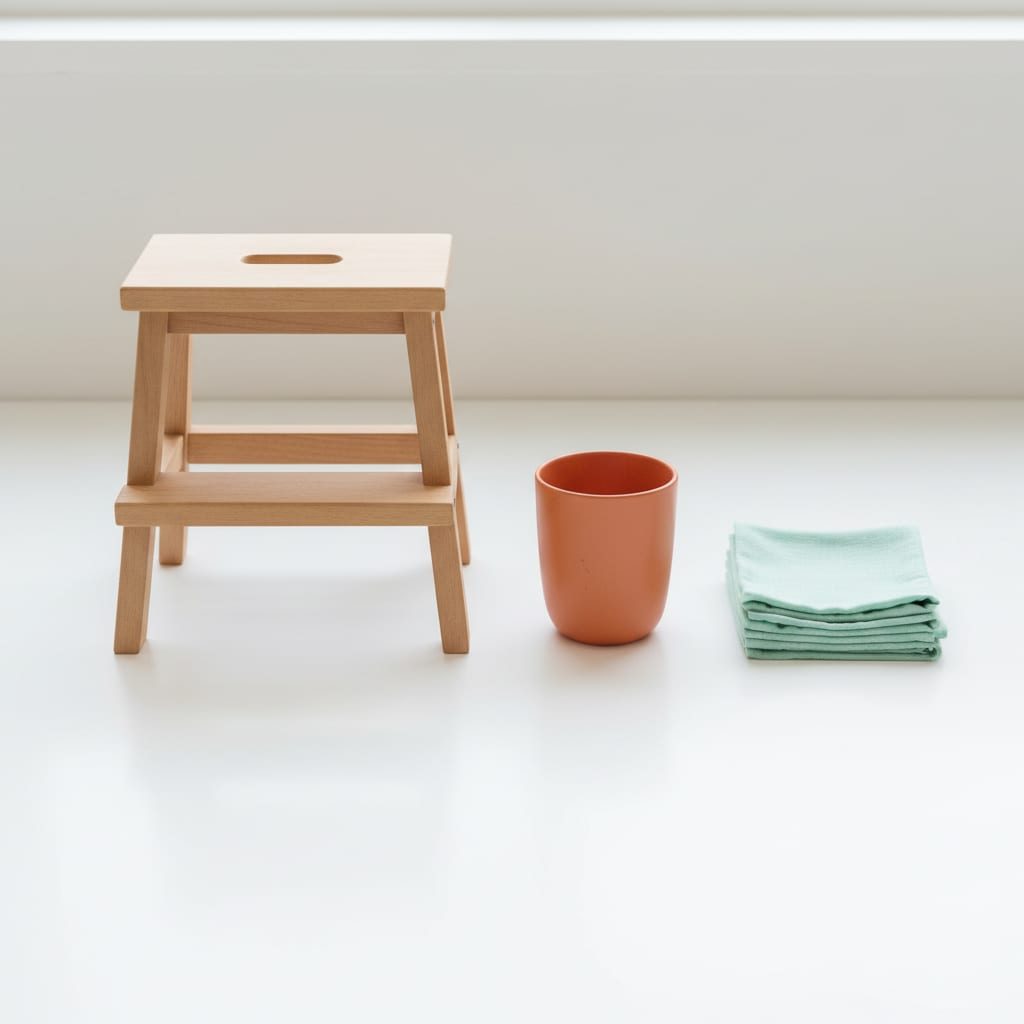
Get his feet on something solid. Feet dangling off the front of a toilet seat is an unstable, slightly frightening position, and it makes bearing down for a bowel movement genuinely harder. A step stool that his whole foot rests on — knees at or above hip height — fixes it. This is the tip that turned our second one around, and it cost eleven dollars.
-
Pick the equipment once and stop switching. Two routes work. A floor potty is lower, less scary and portable; a seat reducer on the adult toilet means no second thing to empty and no transition later. If you go the big-toilet route, the BabyBjörn Toilet Trainer is the one we used — it clamps on, comes off in a second for adults, and doesn’t slide when he leans. Whichever you pick, pick it before day one. Alternating between the two teaches him that neither is really the place.
-
Don’t stall waiting for a man to demonstrate. The usual advice is “have Dad show him,” and it helps if that’s available. If it isn’t — solo parent, deployed partner, all-women household — it changes nothing structural, because you are teaching sitting for now anyway. An older cousin, a friend’s kid, or simply narrating what happens is enough. Waiting six months for a demonstration costs more than the demonstration is worth.
Then aim, then standing (tips 5–7)
-
Teach “point it down” before you teach anything else. The most common accident in the sitting phase is not a miss on the floor — it’s a spray over the front rim while he’s sitting perfectly well. One hand, tuck down, sit back slightly. Say it the same way every time until it stops needing saying. Doing this early is also what makes the later switch to standing feel like one small change instead of a whole new skill.
-
Wait until sitting is boring before you introduce standing. No fixed date — the tell is that he goes on his own, finishes, and doesn’t announce it. If he still needs prompting to go at all, adding a second posture will cost you the first one. The AAP’s stages-of-toilet-training page is a useful reset here: it notes a child “may learn to urinate into a potty quite easily but take several more months to start having bowel movements there.” Different skills, different schedules. Standing is just one more of them.
-
Make the first standing attempts a target game, not a lesson. A few pieces of toilet paper floated on the water, or a cereal loop, gives him something to aim at and something to see happen. Do it in daylight, with the stool in place so he’s tall enough, and do it three or four times — then leave it alone for a week. Turning it into daily practice turns it into pressure, which is the fastest way back to refusing the toilet at all.
Handling the misses (tips 8–10)
-
Script the cleanup before it happens. Flat voice, no commentary, hand him the cloth, carry on. My full run-through of the accident script is in our potty-training tips, and it matters more with standing than with sitting, because the misses are visible, on the floor, and land at exactly the moment he was feeling proud. One sigh from you and the next four attempts are sitting attempts.
-
Re-teach the whole sequence in public restrooms. A urinal he can’t reach, an auto-flush that fires while he’s still on the seat, a door he can’t lock — none of that is in the script he learned at home. Go into the stall together, hold the sensor covered with your hand or a square of paper, and let him sit even if there’s a urinal free. Do it on a quiet weekday first, not on the first long car trip of the summer — a restroom he has already survived once is a very different place the second time.
-
Leave nights entirely alone for now. Daytime and nighttime are not the same project and they don’t finish at the same time. The same AAP page is blunt about it: “Forty percent of children in this country continue to wet the bed while sleeping after they have been fully day-trained,” and “bedwetting continues to be quite common through age five.” Nothing you do in daylight speeds this up. Come back to it when he wakes dry most mornings on his own, and do nights properly when you do.
Is he actually ready?
Boys often start a little later than girls, and “later” is not “behind.” KidsHealth lists the signals worth watching for: he can follow simple instructions, use words about the potty, connect the urge with the toilet, keep a diaper dry for two hours or more, and show interest in underwear — and says “most children begin to show these signs when they’re between 18 and 24 months old.” Showing some of them is not the same as showing them together. Our readiness checklist is the longer version. If you want a second walkthrough of the same sequence from another angle, Betteroo’s rundown for parents of sons covers the equipment side in more detail.
Still not sure whether the resistance is readiness or something else going on at bedtime and beyond? Take the Betteroo quiz — it’s free and it takes about two minutes.
FAQ: potty training a boy
Should a boy learn to pee sitting or standing first?
Sitting. Nemours KidsHealth says it is “usually best for boys to first learn to use the toilet sitting down before learning to pee standing up.” Sitting handles both pee and poop with one posture, so he isn’t interrupting himself mid-stream to switch.
What age do boys usually potty train?
There is no single age, and the readiness signs matter more than the number. KidsHealth notes most children start showing those signs between 18 and 24 months, but showing a sign is not the same as being ready to start.
How do I stop him spraying over the front of the toilet?
Teach one hand pointing down as part of sitting, from the first week. Most front-rim sprays happen while the child is sitting correctly and not tucking, so it is a tucking problem rather than an aiming problem.
When can he start standing up to pee?
When sitting has become automatic — he goes without prompting and doesn’t need an audience. Adding standing while he still needs reminders to go at all tends to cost you the reminders and the standing both.
He was doing fine and now he refuses. What happened?
Very common, and usually temporary. A new sibling, a house move, a scary flush or one bad accident will all do it. Our potty-training regression fixes walk through the restart without losing the ground he already has.