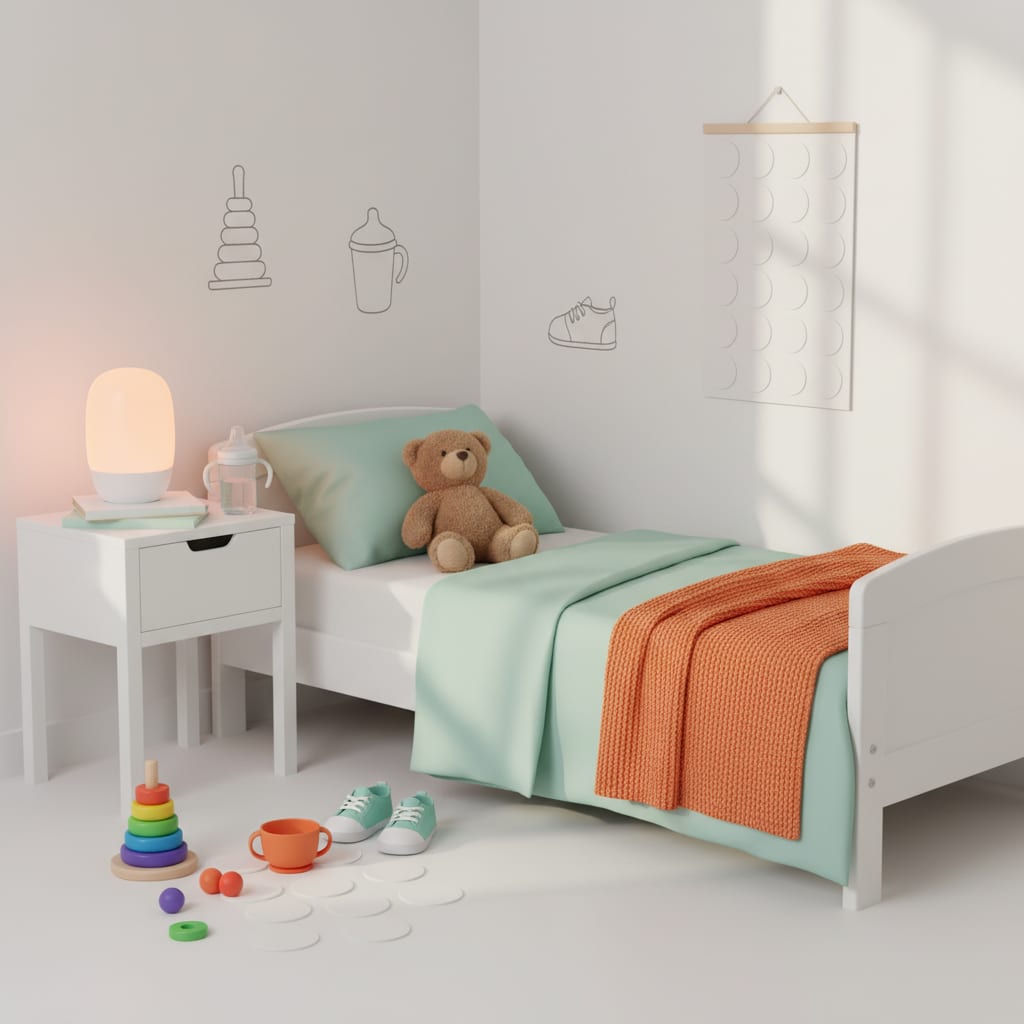
Night Potty Training: 8 Low-Drama Tips (and When to Wait)
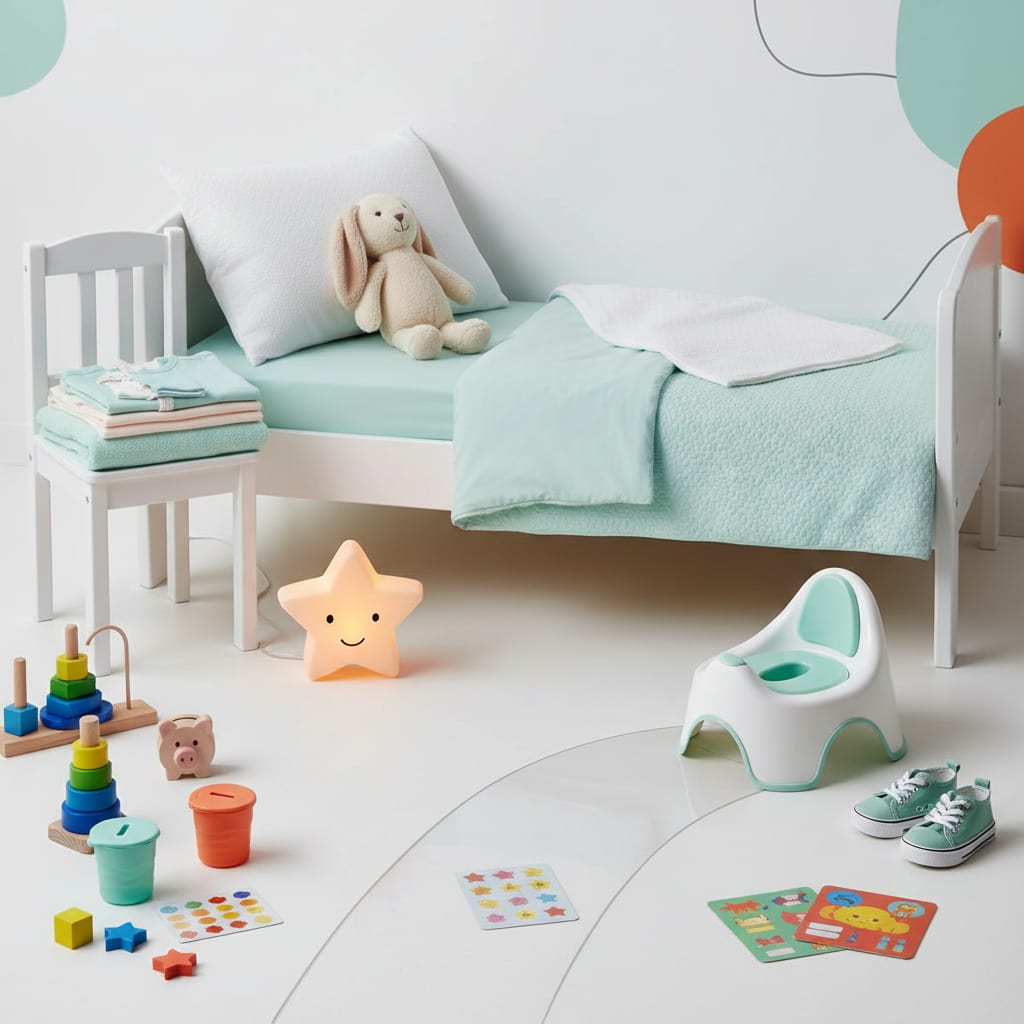
Night potty training runs on one rule: biology is the boss. Daytime training is a skill you can teach; night dryness depends on bladder capacity and hormone timing that mature on their own schedule — often months or years after daytime training, and that’s completely normal. So the low-drama play is: wait for dry-ish mornings to show up on their own, then remove the barriers (pull-up off, path lit, bed armored) rather than trying to drill a skill nobody’s body is ready for. Here are the 8 tips I actually used, tested on my own two — who night-trained over a year apart from each other, because biology doesn’t consult the family calendar.
First, the honest readiness check
The signal worth waiting for is mostly-dry mornings — pull-ups waking up dry or barely damp for a week or two, without you doing anything. That’s the body announcing it’s ready. A day-trained kid in night pull-ups is not “behind,” no matter what the preschool group chat implies. If mornings are reliably soaked, the kind move is to wait a month and re-check — you cannot consistency-parent your way past a bladder that isn’t there yet. Concerns about pain, constipation, or a kid well past the age you’d expect with zero dry nights ever? That’s a pediatrician conversation, not a blog’s.
The 8 low-drama tips
- Count dry mornings for two weeks before changing anything. A quick mental note at wake-up is enough. Mostly dry = green light. Mostly soaked = pull-ups stay, guilt-free, re-check next month. This one tip prevents almost all of the drama.
- Keep pull-ups guilt-free until then — and rebrand them. “Sleep underwear” or “night gear.” The daytime message stays clean, nobody’s demoted, and you’re not burning goodwill on a fight biology has already scheduled to win later.
- Make the pre-bed potty stop part of the routine, not a debate. Wire it into the same slot every night — after teeth, before books — so it’s just what happens, like the rest of the pre-bed needs audit in my bedtime battle tips. A routine slot beats a nightly negotiation every time.
- Go easy on the last-hour fluids — gently. Front-load drinks earlier in the evening and keep the pre-bed sip small rather than banning water outright. A strict no-water rule mostly buys you a thirst-themed bedtime battle; if your kid needs a real drink, give it and move on.
- Armor the bed in layers. Waterproof protector (a fitted one like the SureGuard), fitted sheet, then another protector and sheet on top — the lasagna method. A 2am accident becomes a strip-one-layer, thirty-second fix instead of a full remake with an audience.
- Light the runway. A dim nightlight path from bed to bathroom, or a little potty in the bedroom for the first stretch. Half of night training is making the trip less scary than just… not making the trip.
- Script the 2am accident like the 2pm one. “Beds dry out, bodies are learning. Fresh sheet, back to sleep.” Flat, kind, five words past necessary. It’s the same no-shame script from my daytime quick wins, delivered at a much worse hour — rehearse it, because 2am improvisation trends grumpy.
- Skip the scheduled wake-ups. Hauling a sleeping kid to the potty at 11pm mostly trains you, borrows from everyone’s sleep, and doesn’t teach the body anything it wasn’t already learning. If dryness only happens with lifting, the readiness isn’t there yet — wait, don’t drill.
When waiting IS the plan
If you’ve counted two soaked weeks: stop, without ceremony. Say nothing dramatic, keep the sleep underwear, re-check in a month. This isn’t giving up — it’s refusing to schedule a fight with someone’s kidneys. Kids night-train across a genuinely wide age range, and daytime skills (which you can actually influence — see the readiness checklist if you’re still mid-project there) don’t predict the night timeline much. Your pediatrician can reassure you about your kid’s specific picture far better than any comment section.
FAQ: night potty training
What age should a child be potty trained at night?
The honest answer is a wide range — night dryness commonly arrives anywhere from shortly after day training to years later, and both ends are normal. Watch for mostly-dry mornings instead of watching the calendar, and raise it with your pediatrician if you’re concerned. (Betteroo’s age-by-age explainer walks through the biology behind that range.)
Should I wake my toddler at night to use the potty?
Generally no — scheduled lifting mostly produces a half-asleep kid and a tired parent, without teaching the body much. If dry nights only happen when you lift, the readiness isn’t there yet. Wait for dry mornings to appear on their own, then drop the pull-up.
Should I restrict water before bed for night training?
Gently rebalance rather than restrict: bigger drinks earlier in the evening, a small sip at bedtime if they ask. Hard bans tend to create a thirst battle at lights-out and don’t reliably speed anything up. A genuinely thirsty kid should get water.
How do I handle nighttime accidents without drama?
Layered bedding (protector-sheet-protector-sheet), a rehearsed five-second script, fresh sleep gear within reach, lights kept low. No scolding, no sighing commentary — accidents at night are biology practicing, and the boring response is the fastest route through.