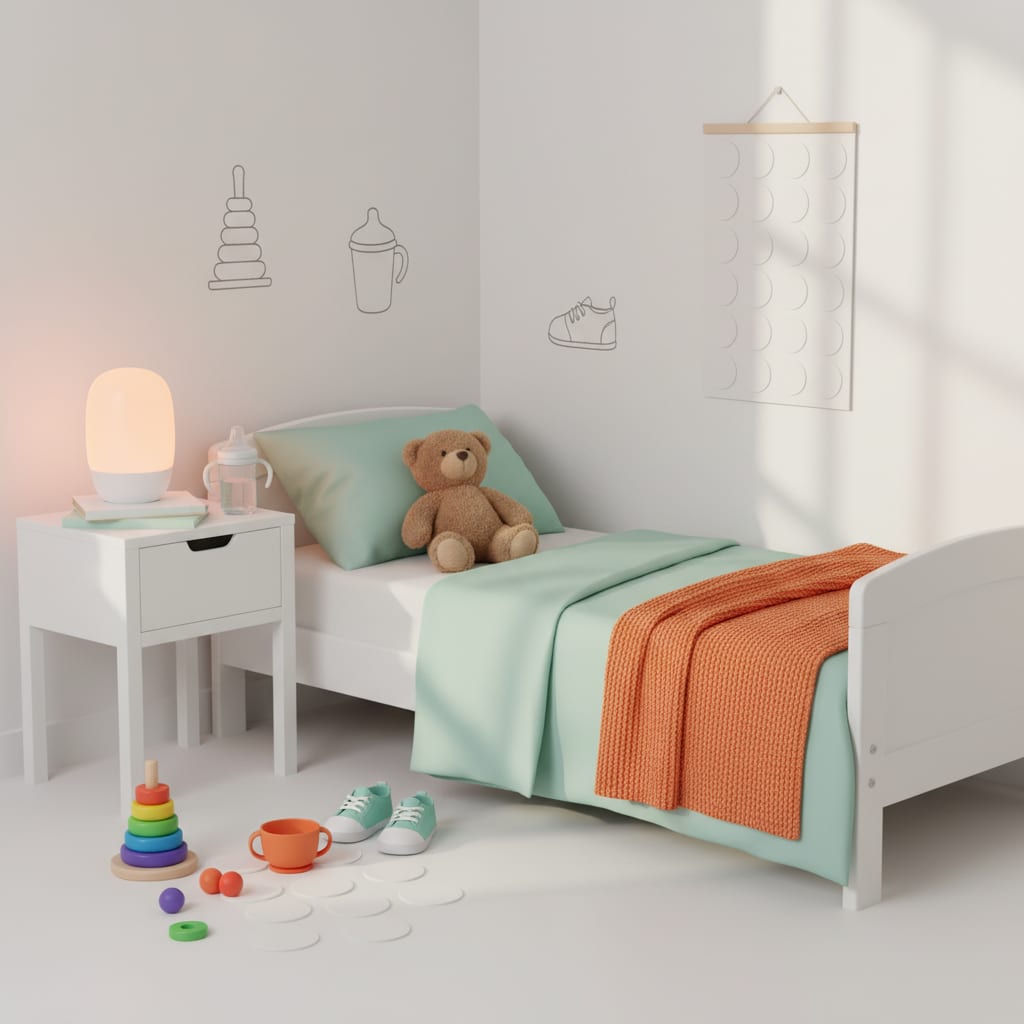
Toddler Turns the Light On at Night? 10 Fixes

Make the switch unusable, then make the dark boring. Those are the two jobs, in that order. A switch guard or a strip of tape over the toggle ends the game tonight; a lamp you unplug and carry out of the room ends the version where they’ve found a second light. Then keep your reaction flat and your visits short, because for a lot of toddlers the light is not the point — the show that happens after the light is the point. Below are ten fixes, cheapest and fastest first.
1. Cover the switch
A switch guard is a plastic plate that screws over the existing switch plate and blocks small fingers while still letting an adult flip it. Something like the ILIVABLE child-proof switch cover is the standard version and takes one screwdriver and about two minutes.
The free version: a strip of duct tape or painter’s tape folded over the toggle in the down position. It looks terrible and it works. Do the tape tonight and order the guard.
2. Take the lamp out of the room
Half the families I’ve watched solve the wall switch discover a bedside lamp the next night. If there is a lamp within reach of the bed, unplug it and take it out of the room for a couple of weeks. A dangling cord near a toddler bed is worth removing on its own account.
Same with anything else that makes light: a tablet, a projector toy with a bright mode, a nightlight with a button that cycles to full brightness.
3. Give them a light they’re allowed to have
If you take away every light, some toddlers will keep hunting for one. Leave them one they can’t turn up: a dim, warm, fixed-brightness nightlight, plugged in low on the wall, no buttons. It answers the fear question and removes the reason to go looking.
Keep it genuinely dim. A nightlight bright enough to read by is a lamp.
4. Know why the bright light matters
This isn’t only about the noise and the fuss. In a small study of preschoolers published in Physiological Reports, an hour of bright light in the evening — around 1,000 lux — suppressed melatonin by about 88%, and levels were still low fifty minutes after the light was switched off. It’s ten children, so hold it loosely; but the direction fits what you can see at home. A toddler who floods their room with light at 2am is not just awake, they’re harder to get back down for the next hour.
The practical version: fix the light, then expect one or two more rough nights before it improves.
5. Keep your reaction completely flat
Walking in exasperated, arguing about the switch, negotiating — that’s a show, and shows get repeated. Nemours’ guidance on toddler sleep puts it well: “keep your nighttime ‘visits’ brief and boring for your toddler.”
Say the same six words every time. “It’s still sleep time. Light off.” Then out.
6. Move the furniture they climbed to get there
If the switch is above their reach and the light is still going on, they climbed something. Look at what’s under the switch: a chair, a toy box, a dresser with drawers that make a staircase. Move it to the other side of the room.
Anchor anything tall that stays. A dresser a toddler can climb at 2am is a tip-over risk, and they’re now doing it alone in the dark.
7. Fix the morning version separately
The 5am light-on is a different problem with a different fix. That one is usually early waking, not defiance — the room got light, the sleep pressure was gone, and the switch was the first entertainment available. Blackout the window before you fight the switch. Nemours’ same page says it plainly: for early risers, “help keep sunlight from waking your toddler by keeping curtains or blinds closed.”
Then give the morning a rule they can see. An ok-to-wake clock that changes colour at a set time gives a two-year-old something to check other than the light switch; Betteroo’s rundown on choosing and setting one up covers the setting most people get wrong, which is starting it at the time you wish they woke rather than the time they actually do.
8. Check whether the dark is the real problem
There’s a version of this where the light going on is fear, not mischief. The tells: it happens at the same point every night, they call for you rather than playing, and they’ll accept a dim light instead of the big one. If that’s yours, the fix is reassurance and a gradual dimming rather than a guard on the switch — the full approach is in what to do when a toddler is afraid of the dark.
9. Shorten the runway before bedtime
A toddler who lies down already wound up has energy left over for experiments. Bring the last twenty minutes down properly: same order every night, low light in the whole house rather than just their room, nothing on a screen. If your routine has drifted into forty minutes of stalling, the reset is in the bedtime routine checklist.
10. Decide what happens the third time
Write your rule down before bedtime, because at 1am you will negotiate. Mine: first time, walk them back, light off, six words. Second time, same. Third time, the door goes to almost-closed and I sit outside it for a few minutes without talking.
Whatever yours is, both adults use the same one. Two different responses on alternate nights is the one thing that reliably makes this last a month instead of a week.
What to expect
Most toddlers stop within about a week once the switch physically stops working and the reaction stops being interesting. The first two nights are usually louder, because you’ve removed something that used to work. If you’re also fighting the getting-out-of-bed part, the stay-in-bed tricks go with this post.

FAQ: toddlers and the light switch
Is it safe to tape over a light switch?
Tape on the toggle or a screw-on switch guard over the plate is fine — both are external and don’t touch the wiring. What isn’t fine is removing the plate, taking out the bulb and leaving an open fitting, or anything that involves opening up the switch itself.
Should I take the bulb out instead?
Only if the fitting is enclosed and the switch is out of reach anyway. An empty socket a toddler can get a finger into is worse than the problem you’re solving. Cover the switch instead.
My toddler turns the light on at 5am. Is that the same thing?
Usually not. That’s early waking with a light switch attached — deal with the waking first: blackout the window, check that bedtime and the nap aren’t leaving them short of sleep pressure, and give them a visible signal for when morning starts. Early waking has its own fixes.
They only do it when they’re scared. Do I still guard the switch?
No. Guarding the switch on a frightened child just takes away their coping tool. Give them a dim light they’re allowed to use, do the reassurance work, and revisit the guard later if the light-on becomes a game rather than a comfort.