Toddler Wants the Curtains Open at Bedtime? 12 Tips
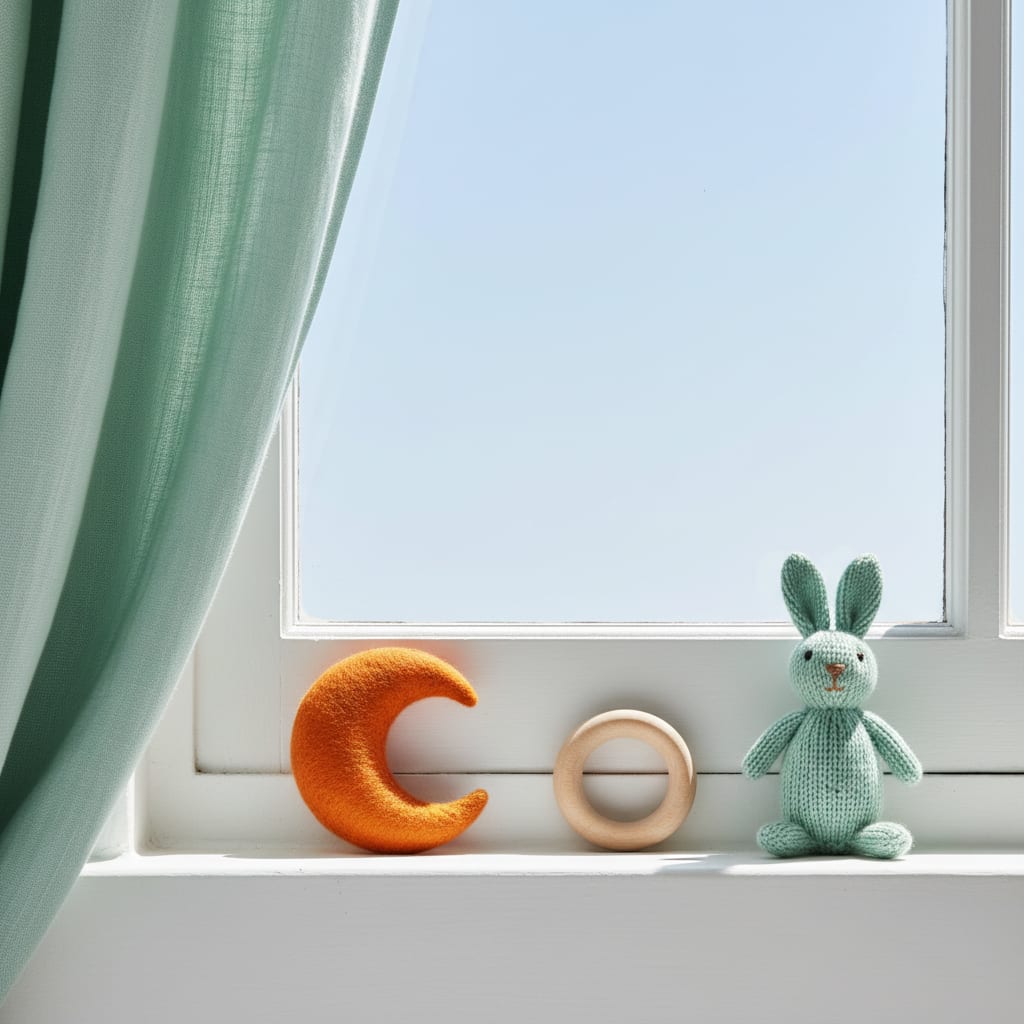
If your toddler insists the curtains stay open at bedtime, don’t start with the curtains. Start with what the open window does for them: light, a view of the world, a little control, or escape from a closed curtain that looks scary. Then check whether it actually costs sleep. If they fall asleep fine and wake at a decent hour, let the curtains stay open and save your energy. If it does cost sleep, fix the reason, not the fabric. Either way, make the window safe, because a toddler who wants the window wants to get to it.
The 12 tips below follow that order.
First, find out what the window is giving them
Ask once, in daylight: “What do you like about the curtains open?” Then watch bedtime for a few nights, because a two-year-old won’t always have the words. Most land in one of four groups:
- Light. The dark feels big and the streetlight or the moon helps. These kids ask for the curtains and the door.
- The view. Cars, the neighbor’s porch light, the moon. These kids end up standing at the window.
- Control. The curtains are one of several demands that change every night: curtains, then water, then a different pajama top.
- The closed curtain is the scary part. Folds, a bulge, a stripe of light up the wall. Closed, it stops being a curtain and becomes a shape.
Decide whether it’s worth a fight (tips 1–2)
-
Run the cost check before you change anything. Do they fall asleep in about their usual time, stay in bed, and wake at an hour that works for your family? If all three are yes, the open curtains are a preference, not a problem. Leave them. You can pick this fight next spring, or never.
-
Know which season you’re in. Now that the clocks have gone back, it’s dark well before bedtime in most of the US, so open curtains at 7pm let in the street, not the sun. The bigger cost comes in spring and summer, when an open window can mean dawn light long before you want anyone up. Nemours KidsHealth’s advice for early risers is direct: “help keep sunlight from waking your toddler by keeping curtains or blinds closed.” If dawn is already waking yours, my early waking fixes start with the window.
If they want the light (tip 3)
- Swap the streetlight for a light you control. Streetlight changes: headlights sweep through it, and porch lights go off when the neighbors go to bed. A dim, warm light that stays the same all night does the job with no surprises. A small amber plug-in like the GE SleepLite night light sits low on the wall and has no buttons to play with. Put it where the AAP’s bedroom checklist says: “Keep night-lights away from drapes or bedding where they could start a fire.” If the light is really about fear, my tips for a toddler afraid of the dark go further.
If they want the view (tips 4–6)
-
Say goodnight to the window. Make the view a step in the routine instead of a fight at the end of it. Stand at the window together, name three things (“the moon, a red car, the porch light”), say “Goodnight, street,” and close the curtains. The view gets its moment, then it’s over, like bath time. If your child likes picture routines, add a “goodnight window” card. Betteroo’s guide to turning a routine into a row of pictures suggests starting with one hard routine and only two to six steps, depending on age.
-
Let them pull the last bit closed. A toddler who closes the curtain didn’t lose the curtain argument. They did a job. Hold the panel and let them walk the last part across with you. Keep it a together job. Nemours tells parents to watch for things a toddler can reach while standing in the crib and lists “curtains, window blind pulls, pictures, or wall hangings.” After lights-out, the curtains should be out of reach.
-
Give the sky a daytime slot. In November the sun sets before dinner in much of the country. Watch the streetlights come on together at sunset. A toddler who has had window time already is less likely to need it at 7:30.
If it’s a power play (tips 7–8)
-
Offer two choices that both work for you. “Open a crack or closed? You pull it or I pull it?” Two yeses, no third option. If you go with the crack, make it identical every night: a hand’s width at one edge, held with a clothespin clipped up high so it’s still that width at 2am. A gap that changes nightly becomes a nightly negotiation.
-
Check for the stalling pattern. If the curtains are one item on a list that grows every night, the curtains aren’t the point. Bedtime is. My bedtime stalling counter-moves will do more than any curtain rule.
If the closed curtain is the scary part (tip 9)
- Make the closed curtain flat and boring. Close it all the way so it hangs in straight folds, with nothing tucked behind it and no gap for headlights to sweep the ceiling. Then lie on their pillow, with the light at bedtime level, and look. From that angle a fold and a shadow can become a person. Move whatever makes the shape.
Make the window safe, whatever you decide (tips 10–11)
-
Move the bed, and anything climbable, away from the window. A toddler who wants to see out will find a way up. The AAP’s bedroom checklist says not to place “a crib—or any other child’s bed—near a window,” to prevent falls and to keep children from getting caught in blind or drapery cords. Its home safety page adds: “Never put chairs, sofas, low tables or anything else a child might climb on in front of a window,” and “A screen is not strong enough to prevent a fall.” If you open the window, open it from the top where you can, the page says, or fit operable window guards that only an adult or older child can open.
-
Get the cords out of the picture. The same checklist notes that the Consumer Product Safety Commission recommends cordless window coverings if possible. If yours have cords, the AAP’s home safety page says to attach them to floor mounts that hold them taut or wrap them around wall brackets out of reach, use safety stop devices, and cut looped cords and add safety tassels. Do this tonight.
Closing them later, honestly (tip 12)
- Say it out loud: “Open now, closed when I go to bed.” Then do exactly that, every night. A known rule beats a surprise at 2am. Skip this for the child whose curtain is about fear: waking to an unexpected dark room makes the fear worse. If you go this route, a cordless blackout shade behind the curtains, like the AOSKY cordless roller shade, comes down after they’re asleep with no cord to manage. Betteroo’s rundown of which blackout setups actually close the gaps makes a useful point: light leaks around the edges of a window more than through the fabric, and not every child needs a pitch-black room.
 Curtains, water, one more song every night?
When bedtime keeps stretching, the timing is often part of it. Betteroo builds a bedtime plan for your toddler's age, so the window stops being the main event.
Take the 2-minute sleep quiz →
FAQ: the toddler who wants the curtains open
Is it bad for a toddler to sleep with the curtains open?
Not on its own. If they sleep well and wake at a reasonable hour, it’s just a preference. The things to fix are early waking from dawn light, a bed or climbable furniture near the window, and any blind or curtain cords within reach.
Should I close the curtains after my toddler falls asleep?
Only if you told them you would. “Open now, closed when I go to bed” works for a lot of kids because it’s predictable. If the open curtain is about fear, leave it open.
Why does my toddler want to look out the window at bedtime?
Usually because the world outside is still interesting and their day doesn’t feel finished. Give the window a set moment in the routine, like saying goodnight to the street, so the view is part of winding down.