How to Calm a Toddler: 12 Things That Actually Work
The fastest way to calm a toddler is to lower the volume of everything around them and then give them one simple thing to do with their body: come down to their eye level, stop talking, and offer a hand, a squeeze, or a drink of water. Words come after the storm, not during it. Below are twelve things that work, sorted by what you’re actually dealing with — because a wired toddler, a hurt toddler and an exhausted one look identical from three feet away and need completely different handling.
First, work out which kind of upset this is
Nearly every calming attempt that fails, fails because it was aimed at the wrong problem. Four rough categories cover most of it:
- Flooded — full meltdown, past the point of hearing you. Nothing verbal will land.
- Wired — bouncing, shrieking, crashing into furniture, laughing too hard. Looks like fun, ends in tears.
- Depleted — hungry, tired, coming down with something. Small, whiny, everything is a catastrophe.
- Thwarted — they wanted the blue cup. Genuine frustration with a genuine cause.
Ten seconds of guessing before you act beats two minutes of the wrong technique. If what you’ve got is a true flooded meltdown, the in-the-moment tantrum moves go into more detail than I will here, and the public version covers the audience problem.
The four moves that work on almost anything (1–4)
-
Get low and get quiet. Kneel or sit so your head is below theirs, and drop your voice under the level of theirs. A toddler will unconsciously track down toward the volume in the room. Standing over a small screaming person and raising your voice to be heard does the exact opposite, reliably.
-
Cut the input. Turn off the music, close the door, move to the hallway, take the toy off the table. Overloaded kids can’t calm in a loud room no matter how kind you’re being, and a plain, boring space does half the work for free.
-
Offer touch without requiring it. Open arms, a hand on the back, or a spot next to them on the floor — offered, not imposed. Some toddlers need contact to come down; some need three feet of space and will fight you for it. Offer, wait, let them choose.
-
Give the body one job. A cup of cold water. Blowing on your fingers like candles. Pushing hard against your palms. Squeezing a cushion. Physical tasks calm faster than instructions because they don’t need any language processing, which is exactly the system that’s offline.
Bringing down a wired, overstimulated toddler (5–7)
-
Add pressure, not more stimulation. Big slow squeezes, a heavy blanket over the legs, a bear hug from behind if they like that. The instinct to distract a wired toddler with something more exciting keeps them climbing.
-
Shrink the space. Under the table, behind the sofa, inside a blanket fort, in a laundry basket. Enclosed spaces settle overstimulated kids surprisingly fast — most of my no-mess activity ideas work as landing zones for exactly this.
-
Go outside for four minutes. Not a walk, not an outing. The step, the yard, the corridor. The temperature change and the open sky reset something that no amount of indoor negotiating touches. It works in the rain too.
The upsets that aren’t tantrums (8–10)
-
For depleted: feed them before you talk to them. A toddler who is genuinely hungry or tired cannot be reasoned into calm and shouldn’t have to be. Cracker, water, sit down. Diagnose afterwards.
-
For hurt feelings: describe, don’t fix. “You wanted the blue cup and I gave you the green one. That was really disappointing.” Naming it accurately is the whole intervention — most toddlers deflate the moment they feel understood, and rush past that step and you’ll be repeating it for ten minutes.
-
For transitions: warn with an event, not a time. “Five more minutes” is meaningless at two. “Two more slides, then shoes” is a countable, visible thing, and it removes most transition upsets before they start.
Two things to build when nobody is upset (11–12)
-
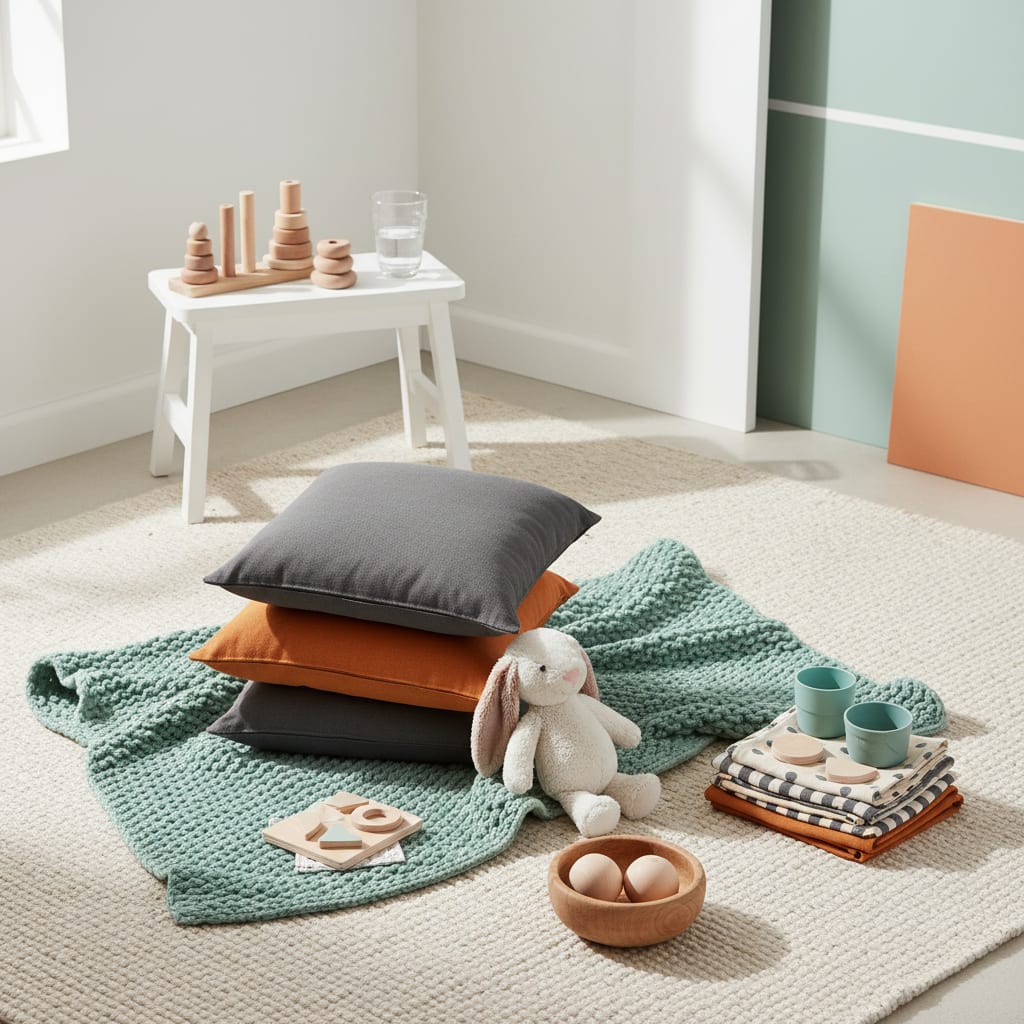
Set up one calm corner and use it yourself. Cushions, a soft blanket, one or two quiet things, no screens. Sit in it when you need a minute, so it never becomes the punishment chair. Then it’s available on a bad afternoon as a suggestion instead of an order.
-
Practise the calming move on good days. Blow-out-the-candles breathing during bath time, big squeezes while you’re being silly. Something rehearsed only when everyone is happy is retrievable when nobody is, and something introduced mid-meltdown is just a strange new demand.
What makes it take longer
A few reliable amplifiers, all of which I have personally done. Asking questions (“what’s wrong? are you tired? do you want juice?”) demands language from a brain that’s not currently doing language. Bargaining mid-storm teaches that the storm is the negotiating position. Threatening a consequence you won’t carry out. And an audience — even a sympathetic one — keeps a two-year-old going long past the natural end.
The other one worth knowing: at this age, a toddler’s feelings routinely outrun their words by a wide margin, which is why so much of it comes out sideways. Betteroo’s summary of what’s typical at two is a useful reality check when it feels like yours is the only one.

FAQ: calming a toddler
How do you calm a toddler down quickly?
Get below their eye level, stop talking, cut the noise and light in the room, and give their body one simple thing to do — a drink of water, a squeeze, blowing on your fingers. Physical tasks land when words can’t.
Why does my toddler get so upset over nothing?
Because it isn’t nothing to them, and because the feeling arrives with no brakes attached. Impulse control develops slowly across the toddler years, so a small disappointment can produce a very large reaction that’s entirely genuine.
Should I hug my toddler during a tantrum?
Offer, don’t impose. Plenty of toddlers settle fastest with firm contact; plenty escalate if they’re held when they don’t want to be. Put your arms out, stay close, and let them come to you.
What if nothing calms them?
Then your job shifts from calming to keeping everyone safe and waiting it out — quiet room, soft floor, no talking, stay nearby. Most storms burn out in a few minutes once nobody is feeding them.
When should I mention this to a pediatrician?
If meltdowns are extremely frequent, very long, involve them hurting themselves, or you’re seeing no gradual improvement as language grows, it’s worth raising at your next visit. Trust your read on it rather than any online threshold.