Toddler Sleep Talking Waking the Other Kids? 10 Fixes
Leave the talker alone and work on the listener. That’s the whole strategy, and it is the opposite of what most of us try first. The American Academy of Pediatrics is blunt about the talking itself: “Do not try to wake children when they are sleepwalking or sleep talking. Gently lead them back to bed, and they will probably settle down on their own.” So the child making the noise is fine and will not remember any of it. The child being woken by it is the one with the actual problem. Ten fixes below, in that order.
What’s going on, briefly
Sleep talking has a name — somniloquy — and it is extremely common. The American Academy of Sleep Medicine’s patient guidance says it “is reported in 50% of young children,” and describes exactly your situation: “The talking can occur many times and might be quite loud. This can disrupt the sleep of a bed partner or roommate.” Children’s Health’s parasomnia overview adds that it “often goes away by the early teen years.”
One useful disagreement between those two sources. The AAP groups sleep talking with night terrors and sleepwalking as things that “happen when children are in a deep sleep” — which is the first stretch of the night, often before you’ve gone to bed. The AASM says it “may occur in any stage of sleep.” Both can be true of different kids, and which one yours is decides half of what follows: a talker whose episodes all land in the first ninety minutes is a scheduling problem you can design around, and one who goes off at 3am is not. Spend three nights noting the times before you rearrange anything. For the developmental version of why a sleeping toddler makes noise at all — and its noisier cousin — my sister site covers teeth grinding at night; this post is the what-to-do.
Protect the child who wakes (1–4)
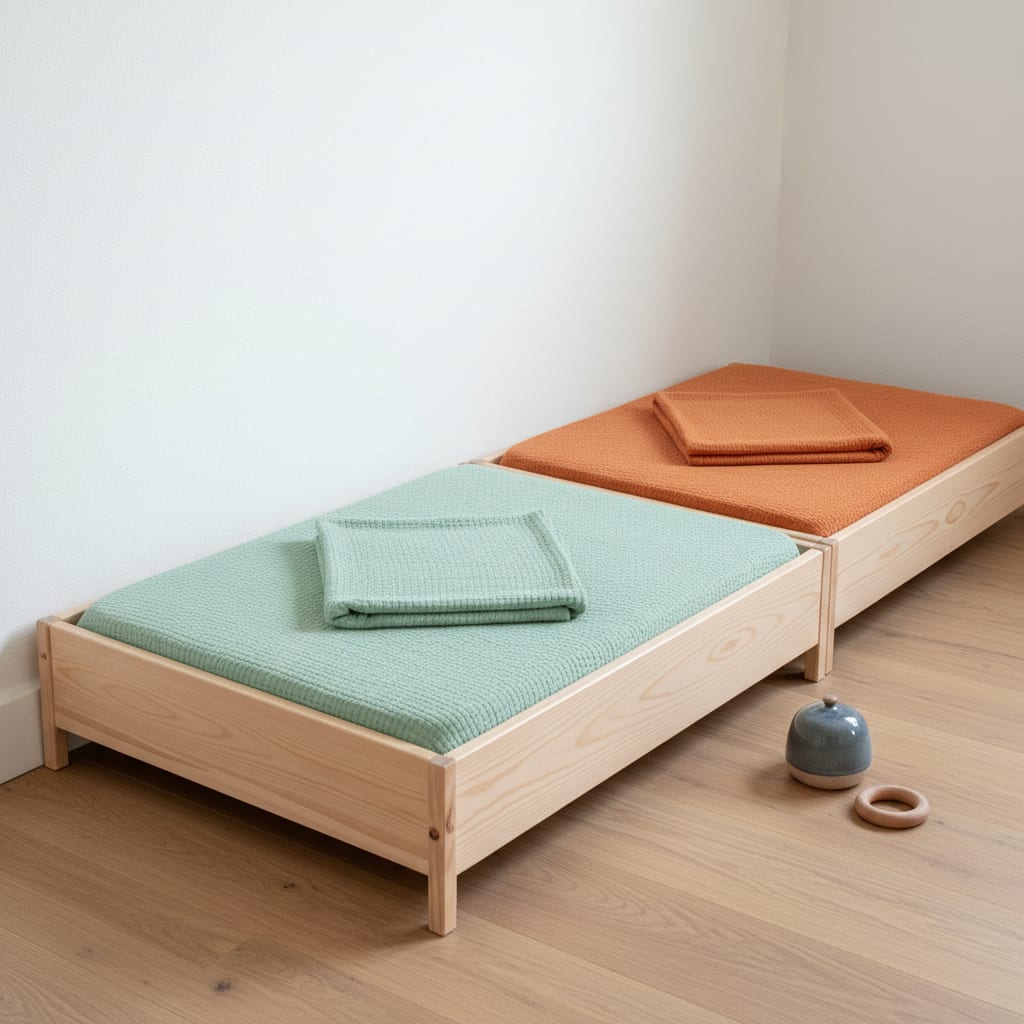
- Move the beds apart before you move a child out. Most shared toddler rooms are set up head-to-head across a short wall, which puts two sets of ears about four feet apart. Head-to-foot along the same wall, or heads at opposite corners, buys real distance for zero money and no upheaval. Do this before you start talking about separate bedrooms.
- Give the listener the sound, not the room. One steady sound source, positioned between the two beds or beside the sleeper who wakes — not on the talker’s side, where it does nothing. A Yogasleep Dohm is the boring mechanical version and runs all night without cycling; a fan aimed at a wall is free and works. Betteroo’s explainer on what steady background sound actually does covers volume and placement, which matter more than the machine.
- Run one sound source, not two. Two machines in one small room beat against each other and produce a wobble that is more noticeable than either alone — and families end up turning both up, which just raises the floor the talking has to clear. One unit, one setting, on before both children are in bed.
- Close the gap under the door before you buy anything else. A hollow door with a two-inch undercut leaks the hallway TV, the dishwasher and the landing light straight into the room, and a child already woken at 11pm by their sibling then has a second reason not to go back off. A draught excluder costs less than a sound machine.
Reduce how often it happens (5–7)
- Treat overtiredness as the first suspect. Parasomnias cluster on the nights after a missed nap, a late bedtime or a long day out. You will not stop the talking, but you can stop the worst weeks of it. If nights are generally rough rather than just noisy, run the sleep-through-the-night diagnostics before anything on this list.
- Hold the bedtime steady, including at weekends. An hour of drift on a Saturday shows up as a louder Sunday night. The bedtime routine checklist is the mechanism; the point here is that consistency is doing a job it doesn’t get credit for.
- Note what the episodes follow, for two weeks. Illness and fever nights. A new medicine. A house guest, a first week of daycare, a trip. You are not looking for a cause to cure — you are looking for the two or three predictable trigger nights a year when it would be worth the older sibling sleeping elsewhere on purpose.
Get through the night itself (8–10)
- Stagger bedtime by twenty minutes if the episodes land early. If the talking reliably happens ninety minutes after lights out and both children go down at 7, the sibling is being woken at 8:30 while still in light sleep. Putting the sleep talker down twenty minutes first means the first episode arrives when the other child is already deep. This one is unglamorous and it works.
- Wake the listener, never the talker. If the other child is sitting up crying at 11pm, settle them where they are — hand on the back, no lights, no conversation — and leave the talker completely alone. Every attempt to rouse a child mid-episode buys you a confused, distressed toddler and a longer disturbance. Betteroo’s guide to whether waking a sleeping child ever helps is worth reading if you’re tempted.
- Turn the monitor off in the room you sleep in. Once you know what the noise is, a live feed of it wakes exactly one person who cannot help: you. A tired parent handles a 3am wake badly, and the talking does not need supervision. Keep the monitor if the room has a genuine safety reason for one — a climber, or a child who also walks — and in that case my sleepwalking tips cover the safety pass that matters more than the audio.
When it’s worth a doctor’s appointment
The AASM notes that “although sleep talking by itself is benign, it may be a symptom of another sleep disorder,” and says to talk to a medical provider if the episodes “increase in frequency, emerge at an older age, or are accompanied by other symptoms such as limb movements or daytime sleepiness.” Children’s Health puts the parent-facing version simply: “If your child has frequent parasomnias — or they are negatively impacting his waking life — it may be time to see a doctor.” Loud snoring, gasping or long pauses in breathing alongside the talking are worth mentioning at the next appointment regardless. The talking on its own, in an otherwise well toddler who is fine all day, is not.

FAQ: the noisy sleeper in a shared room
Should I separate them into different rooms?
Not as the first move. Beds repositioned, one sound source and a staggered bedtime solve a lot of these, and separating siblings who like sharing costs you something real. If you’ve run tips 1 to 9 for three weeks and the woken child is visibly struggling in the daytime, then yes — and treat it as a change you can reverse in six months, because the talking usually fades.
Does my toddler know they’re doing it?
No, and there is no point telling them. Mentioning it at breakfast usually produces either anxiety about going to sleep or a proud performance at bedtime, and neither helps. If the older sibling asks, “she was talking in her sleep, it’s very normal, she doesn’t know” is the whole answer.
Is it the same thing as a night terror?
No. A night terror involves screaming, sweating, a terrified look and no recognition of you — and it’s an episode you also do not wake a child from. Sleep talking is conversational, mumbled or gibberish, and the child is otherwise still. If yours sits bolt upright and screams, that’s a different playbook.
Why is it suddenly worse this month?
Look at the last fortnight rather than the child. New daycare, a cold, a late-running holiday schedule and a dropped nap all raise the frequency, and they tend to arrive in clusters. It usually settles back within a couple of weeks of the routine settling back.
Will it stop?
Almost certainly. The parasomnia overview from Children’s Health says sleep talking “often goes away by the early teen years,” and the AASM notes that “in many cases, treatment is not needed” — which is a fair description of what most families end up doing: making the room work, and waiting it out.