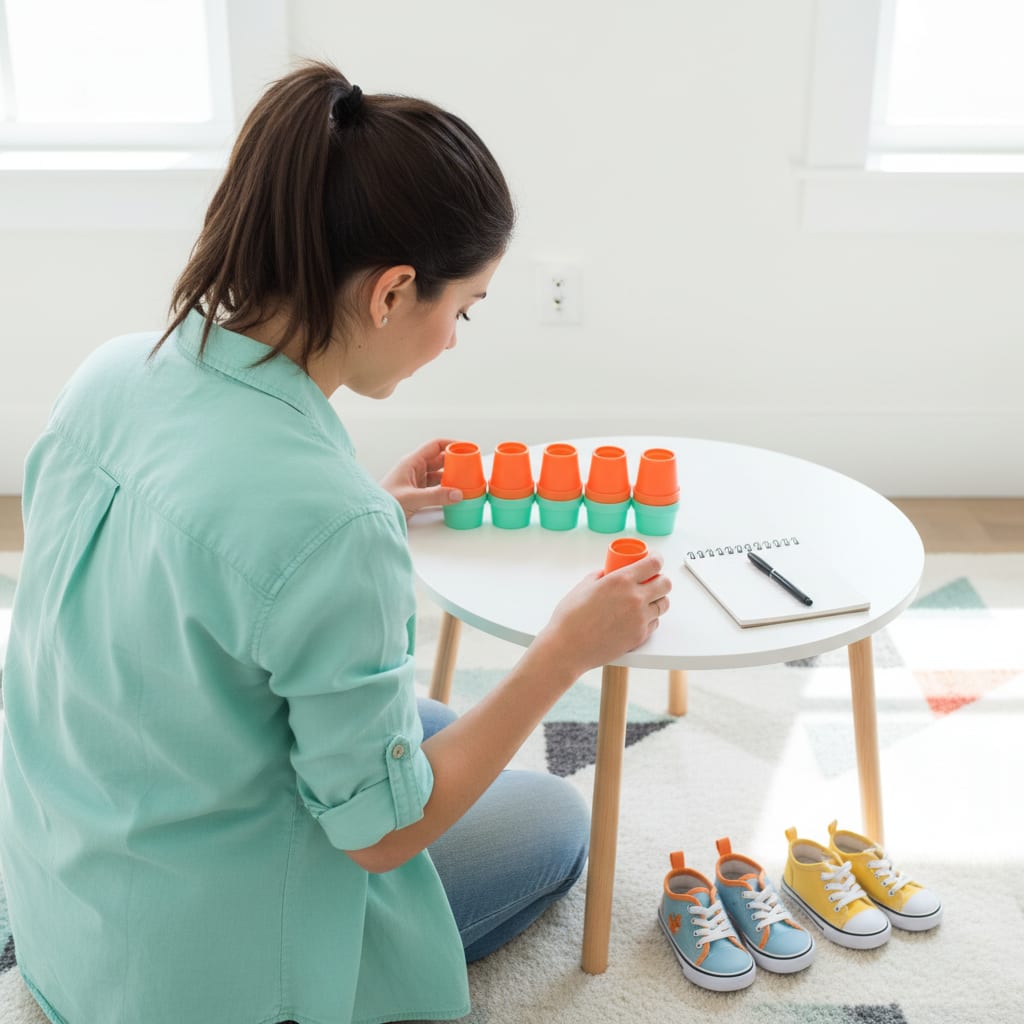

When your toddler melts down at bedtime over the wrong cup or the wrong pajamas, the fix is mostly done earlier in the day. Two- and three-year-olds hold onto small sameness hard, and bedtime, when they’re tired, is when it snaps. Buy a duplicate of the favorite cup, keep two of the favorite pajamas in rotation, and say the bedtime order out loud every night. In the moment, name the want in a few words, offer two choices you can live with, and don’t argue the logic. Hold steady on the few things that really matter. The 10 tips below go from prevention to the meltdown itself.
What to do once a full tantrum is under way, crying on the floor and all, is in my toddler tantrum guide. This post is about the rigid preference that sets it off, and how to stop it reaching that point.
Why the wrong cup feels like the end of the world
It isn’t spoiled behavior. The AAP’s HealthyChildren page on emotional development at two lists “objects to major changes in routine” among a two-year-old’s emotional milestones. It also says that at this age a child doesn’t have much control over their emotional impulses. Nemours KidsHealth’s tantrums page adds that toddlers want independence and control over their environment, more than they can actually handle, and that tantrums often happen when kids are tired, hungry or uncomfortable.
Put that together at 7 p.m. A tired two-year-old, at the end of a day of being told what to do, finds the one thing they can control (the green cup, the dinosaur pajamas) has gone wrong. That’s why it lands so hard, and why it’s worse at bedtime than at breakfast.
Before bedtime: take away the trigger (tips 1–4)
-
Buy two of the favorite cup. If one cup is The Cup, there should be two identical ones in the house so one is always clean. A two-pack, like the Munchkin Miracle 360 sippy cups, solves the “it’s in the dishwasher” meltdown before it starts. Same color, same lid. Swap them quietly.
-
Two of the favorite pajamas, in rotation. Same idea for clothes. If the dinosaur pajamas are the only acceptable pajamas, buy a second pair (or a close match) and wash them in turns. If that isn’t possible, make laundry day visible: “Dinosaurs are in the washer. They’ll be back tomorrow.”
-
Say the bedtime order out loud, every night, in the same words. “Bath, pajamas, teeth, two books, song, bed.” Rigid toddlers cope better when they know what’s coming next. The order matters more than what’s in it. My bedtime routine checklist has a 7-step version if yours needs tightening.
-
Warn them early when something has to change. Grandma is doing bedtime, you’re at a hotel, the bath is skipped. Tell them before dinner, not at the bathroom door: “Tonight Grandma reads the books. Then I come and sing.” A change they saw coming is much easier than one sprung at bedtime.
In the moment: calm the preference (tips 5–8)
-
Name the want in five words or fewer. “You wanted the green cup.” Then stop. Don’t explain why it’s not available. The longer version of this move is in my guide to calming a toddler down. The short version is that feeling understood comes before any solution.
-
Offer two choices you’re happy with. KidsHealth suggests giving toddlers control over little things with small choices, such as “Do you want to brush your teeth before or after taking a bath?” For a rigid preference: “Blue cup or the yellow cup?” “Stripes or stars pajamas?” A choice gives them back some of the control the missing item took away.
-
Don’t argue the logic. “It’s the same water in a different cup” is true and useless. A two-year-old isn’t missing the facts; they’re missing the sameness. Arguing just makes bedtime longer.
-
Use “first, then” and keep moving. “First pajamas, then you choose the book.” Moving to the next step gives a stuck toddler somewhere to go. Stand still and debate, and the stalling starts.
Hold the line where it counts (tips 9–10)
-
Let them win the cheap ones. Pajama top on backwards. Same pajamas three nights running. The cup that doesn’t match the plate. If it’s safe and costs you nothing, let it go. My getting-dressed tips use the same rule for mornings. Save your “no” for the small list that matters.
-
Stay steady on the non-negotiables, kindly. Bedtime still happens. Teeth still get brushed. If the perfect cup can’t be found, it can’t be found. Say it once, calmly: “Green cup is asleep in the dishwasher. Here’s the blue one.” Then wait. Don’t make a second, fancier offer every time the crying gets louder, or they learn that louder works.
Betteroo’s rundown of what age three tends to look like makes a fair point for this age: routines, sequences and “first this, then that” language work with a three-year-old’s brain, not against it. That’s tips 3 and 8 in one sentence.
 Bedtime meltdowns every night?
A tired toddler is a rigid toddler. Betteroo builds a nap and bedtime plan around your child's age so evenings start less frazzled.
Take the 2-minute sleep quiz →
When to mention it to the pediatrician
Most cup and pajama meltdowns are ordinary toddler stuff, and KidsHealth says tantrums usually happen between the ages of 1 and 3. KidsHealth suggests talking to your doctor if:
- tantrums happen more often, are more intense, or last longer
- your child often hurts themselves or others during them
- your child seems very disagreeable, argues a lot and hardly ever cooperates
- you keep giving in to avoid your child acting out, or you often feel angry or out of control when you respond
If the rigidity is spreading to more and more of the day, or the distress seems much bigger than other children’s, it’s worth raising at the next checkup. Trust your sense of your own child.
FAQ: rigid preferences and bedtime meltdowns
Why does my toddler insist on the same cup every time?
Many two-year-olds dislike changes to their routine. The AAP lists “objects to major changes in routine” as a typical emotional milestone at two. A favorite cup is one small thing in a toddler’s day that they get to control, and losing it feels big.
Should I just give in to the favorite cup?
If the cup is clean and available, yes. There’s no lesson in refusing it. The problem is only when it isn’t available. That’s why a duplicate, and a calm “it’s in the dishwasher,” work better than a battle.
Is it okay to let my toddler wear the same pajamas every night?
Yes, as long as they’re clean and suit the room’s temperature. Buy a second pair, or wash them during the day.
Does this phase pass?
Usually it eases. KidsHealth notes that as kids mature, they gain self-control, and tantrums tend to stop on their own. Duplicates, early warnings and calm scripts get you through the meantime.