Toddler Stitches at Bedtime: 12 Tips for the First Nights
The first nights after a toddler gets stitches are mostly about three things: a pain plan before bed, keeping the cut dry and untouched overnight, and a quick check every morning. The Royal Children’s Hospital Melbourne says a stitched wound “will be a bit sore and swollen for two or three days,” so expect those nights to be the hard ones. Give more comfort than usual, swap the bath for a wipe-down, cover the spot so small hands and the sheet leave it alone, and know the signs that mean a call tonight rather than a check tomorrow.
This post is for a sore knee or chin that has already been stitched. If the cut came from a fall and your toddler also hit their head, the warning signs are in my falls-out-of-bed tips, and those come first.
Before you leave the clinic (1–2)
- Ask which kind of stitches they are. There are two types. Absorbable stitches dissolve on their own. Non-absorbable ones have to come out at an appointment. The Royal Children’s Hospital (RCH) says a health professional will tell you which type your child has, and the answer decides your water rules (tip 5) and whether you need a removal date. Put the answers in your phone before you leave, because you won’t remember them at 9pm.
- Ask about covering it and about ointment. KidsHealth’s take-home sheet for a stitched cut says to follow your provider’s instructions on using an ointment and on covering the area with a bandage. Those are judgment calls for the person who saw the wound, so ask them while you’re still in the room. The RCH also says not to rub creams over wound glue, because it can soften and come off.
The first bedtime (3–6)
- Have a pain plan before the routine starts. KidsHealth says you can give acetaminophen or ibuprofen and to “follow the package directions for how much to give and how often,” and it says not to give ibuprofen to babies under 6 months. If you’re not sure which one or when, ask the clinic or your pediatrician before bedtime, not in the middle of the night. If your toddler fights the syringe, my medicine tips cover getting a dose in without a wrestling match.
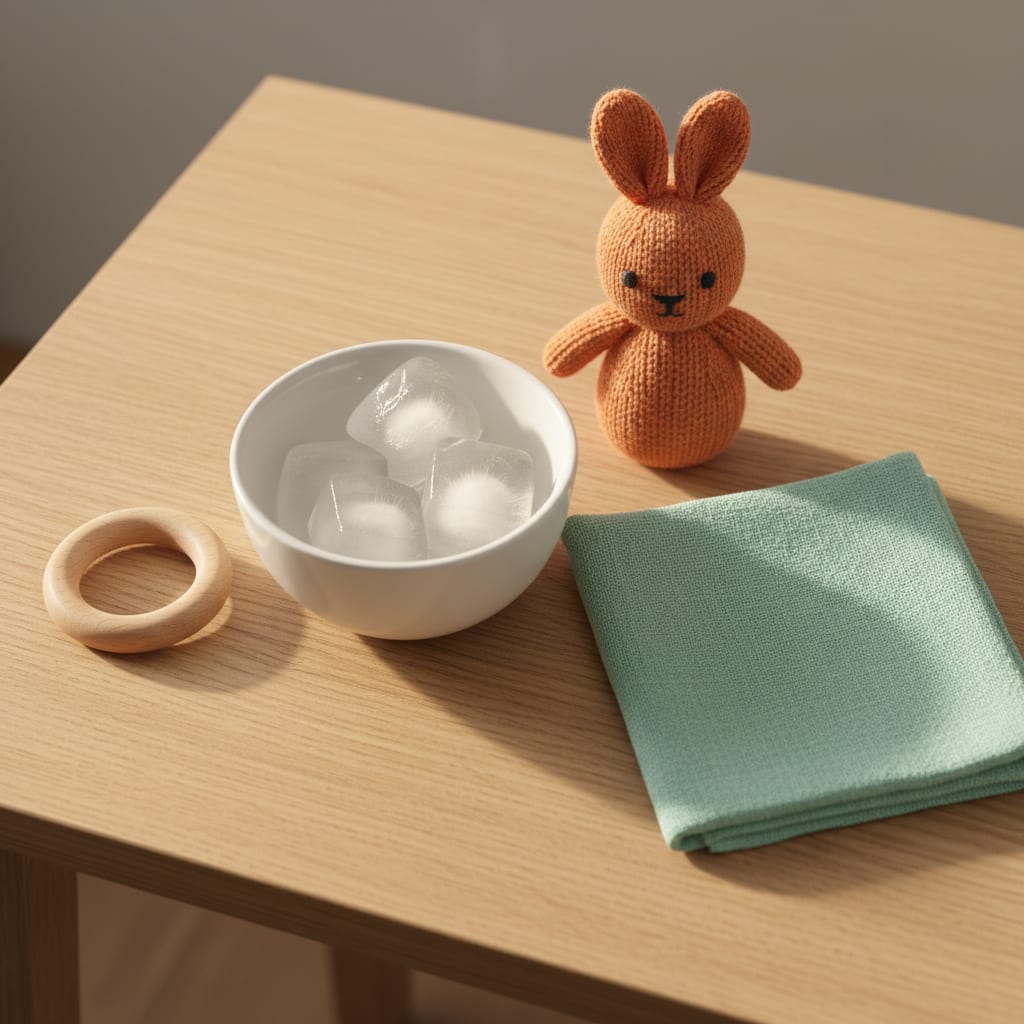
- Put a cold pack into the wind-down. KidsHealth suggests a cold pack “wrapped in a clean cloth for 15–20 minutes at a time to lessen swelling and help with pain.” Cold on a sore knee during the last book makes a calm, cuddly part of the routine. A small, soft kids’ pack like the TheraPearl Children’s Pals is easier to hold against a chin or knee than a bag of frozen peas. Wrap it in a cloth either way.
- Swap the bath for a wipe-down. KidsHealth says to keep the cut dry for the first 24 hours, with a sponge bath if needed. After that, a shower is fine, but no soaking in a bath or swimming until the provider says it’s OK. The RCH goes further: keep absorbable stitches dry for five days and non-absorbable stitches dry until they come out, and put plastic over the wound when your child bathes or showers. So run the routine in its usual order and replace the bath with a warm washcloth on everything except the cut.
- Skip the bedtime bounce. The RCH says children should avoid active play while the wound heals, because it “will also stop the stitches or glue from splitting open.” For a knee, that means no jumping on the bed, no climbing the crib rail and no wrestling with a sibling before lights out. Save the wild stuff for after the stitches are out.
Hands off the stitches overnight (7–9)
- Cover the spot so they can’t reach it. KidsHealth says your child shouldn’t pick or scratch at the scab, and that “for younger children, you might need to cover the area with a bandage or clothing to prevent touching.” A knee is easy: soft, long pajama pants are a barrier that tiny fingers can’t get past in their sleep. A chin is harder, so ask your provider about a dressing (tip 2).
- Plan for the itch. The RCH says “it is normal for wounds to be itchy as they heal.” For younger children it suggests mittens, and if your child can’t stop scratching, a loose, non-stick dressing that you change regularly so the wound can air out. A plain non-stick pad like Telfa is the kind it describes. Check with your provider before covering anything they wanted left open.
- Let the sticky strips fall off on their own. Some stitches get thin white tapes over them, called steri-strips or butterfly bandages. KidsHealth says to let them fall off by themselves, usually within a few days. A toddler will peel a loose edge at 2am, so tuck it under the pajama leg, or trim the lifted edge as the RCH suggests.
The clingy nights (10)
- Give the extra comfort, but say it’s temporary. A sore, scared toddler often wants you all night, and that’s fine for the first couple of nights. Sit with them in their room, or have a special night in your bed if that’s how your family does it. Say out loud that it’s because of the knee. Betteroo’s guide to walking a child back to their own bed once the special nights end uses exactly that line, “Tonight is a special night because you’re sick.” When the pain fades, run the three-night reset from my sick toddler sleep tips so the extra comfort doesn’t become the new normal.

The morning check (11–12)
- Look at it in daylight every morning. KidsHealth says to check the cut every day to make sure the red area isn’t getting bigger, it isn’t more swollen, and nothing is oozing. “The cut should look a little better every day.” Some mild redness right around the wound is normal, and the RCH says a little blood or clear fluid “is common and usually not a problem.” Compare with yesterday, not with how you think it should look.
- Know the calls before you need them. KidsHealth says to call your provider for signs of infection: fever, redness and swelling, worsening pain, red streaks near the cut, or yellowish or greenish pus. Call too if the cut bleeds but stops after 10 minutes of pressure with clean gauze. The RCH adds a wound that smells, and pain that doesn’t improve with pain relief. Go to the ER, per KidsHealth, if the cut opens up, or if it bleeds heavily and won’t stop after 10 minutes of firm pressure. The RCH says to see a doctor if a stitch falls out and the wound is open or bleeding.
FAQ: toddler stitches and sleep
Can my toddler sleep on a knee or chin with stitches?
Yes. None of the care sheets cited here names a sleeping position to avoid. What matters at night is that the stitches stay dry, covered from small fingers and free from rubbing, and that your toddler isn’t bouncing or climbing in bed while the wound heals.
When can my toddler have a bath after stitches?
Not in the first 24 hours. After that, KidsHealth allows a shower but no soaking until your provider says so, and the RCH keeps absorbable stitches dry for five days and non-absorbable ones dry until removal. Follow whatever your provider told you for this wound.
How long do stitches stay in a toddler?
It depends on the wound. The RCH says non-absorbable stitches are often ready to come out after one to two weeks, and absorbable stitches start to break down after a week or two. KidsHealth says removal is usually quick, with mild discomfort “like a small pinch or pulling sensation.”
Can my toddler go to daycare with stitches?
Usually, if they feel well enough, says KidsHealth. The RCH suggests telling the staff about the wound and avoiding rough play while it heals.
Will my toddler have a scar?
Most cuts leave some scar, and most fade over time. KidsHealth says keeping the cut clean, getting stitches out on schedule and using sunscreen on the healed area all help, and the RCH says most scars take about 12 months to settle.