Toddler Won't Brush Teeth? 10 Tips That End the Fight
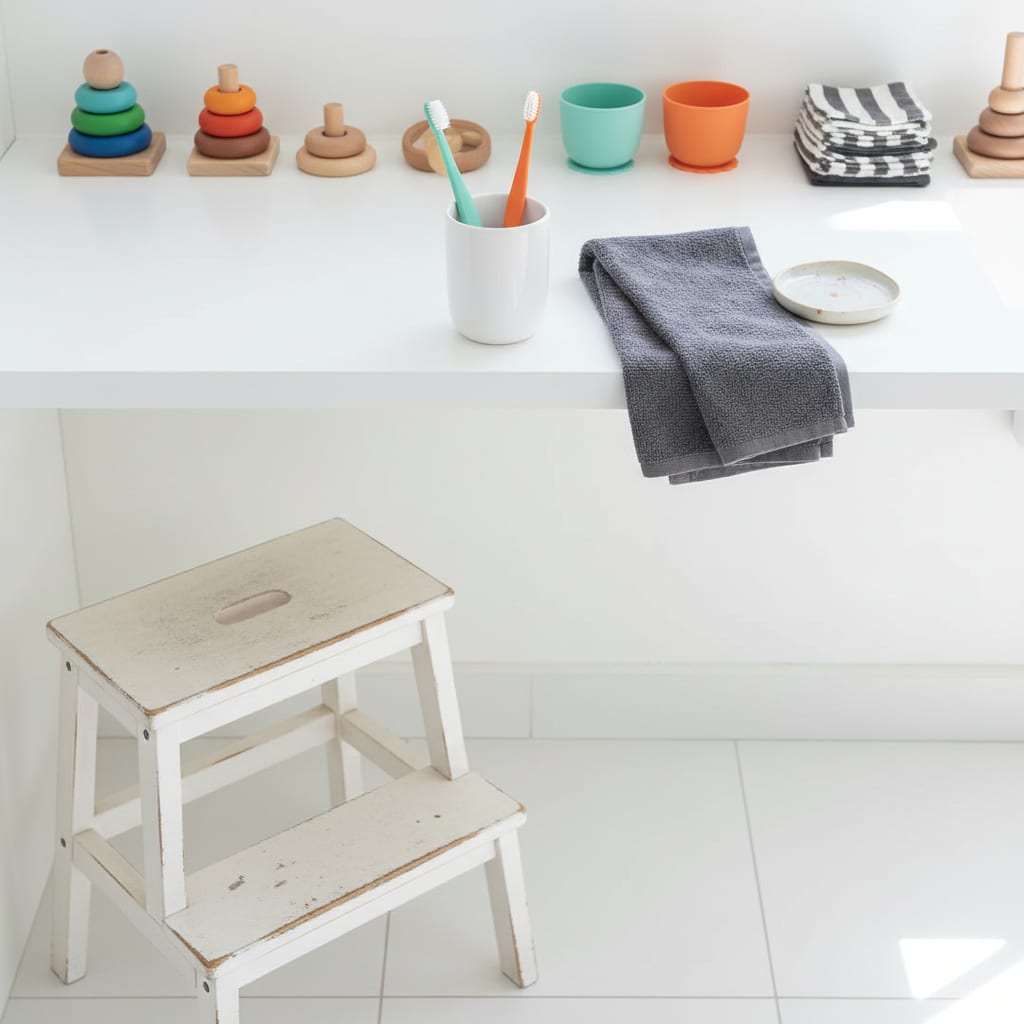
If your toddler fights toothbrushing every night, change the setup before you try to change the toddler: move it earlier in the bedtime routine, do it somewhere other than the bathroom, brush for ten honest seconds instead of a two-minute standoff, and let them hold a brush of their own while you use yours. Teeth that get cleaned briefly every day beat teeth that get cleaned thoroughly on the two nights a week nobody melts down. Here are ten tips in the order I’d try them.
Change the setup before you change the child (tips 1–3)
-
Move brushing earlier in the evening. Most families brush at the very end of the routine, when the toddler is at their least cooperative and you’re at your least patient. Brush straight after dinner instead, or right after the bath. The teeth don’t care about the order, and a kid with forty minutes of goodwill left is a completely different negotiation.
-
Get out of the bathroom. Bathrooms are echoey, bright and cold, and they’re where the toddler already knows the fight happens. Brush on the sofa, on the kitchen floor, in front of a window, upside down on your lap. Changing the room alone ends this for a decent number of kids, because it deletes the accumulated association.
-
Two brushes, one job each. Give them a brush to hold and chew while you use yours. They’re not going to clean anything with theirs and that’s fine — its purpose is to occupy the hands that would otherwise be pushing yours away. A soft silicone one like the Baby Banana toddler brush works well for this because it’s chewable and hard to lose an argument with; any second brush will do.
Ten honest seconds beats a two-minute standoff (tips 4–6)
-
Set the bar at what you can actually get. Ten seconds of real contact with real teeth is a win at this age. Aim for that, celebrate it, and stop. A parent trying to hit two minutes with a toddler who has committed to eight is going to lose, and the loss teaches them that resisting works.
-
Count out loud and end when the number ends. Counting to ten, or singing something with a fixed length, makes it finite and audible. The counting is the honest part of the deal: they can hear that it’s ending, so they don’t have to fight to make it end. Never extend the count because you got a good angle — that’s how the count stops working.
-
Do the same teeth in the same order. Bottom left, bottom right, top left, top right, front. Predictability lowers resistance in almost everything at this age, and it also means that when you get cut off at twenty percent, you know exactly where you’d got to and can start there tomorrow.
Games that reach the back teeth (tips 7–8)
-
Hunt for something ridiculous. “I think there’s a pea back there. Is there a pea? There’s definitely a pea.” Toddlers open their mouths wider for a search than for hygiene, and the back molars — the ones that actually collect food — are the ones you can only reach when they’re properly open. Vary the item; the joke wears out in about a week.
-
Let them brush yours. Genuinely hand over a brush and let them do your teeth while you do theirs. It’s messy and undignified and it works better than almost anything else, because the whole activity stops being something done to them. Mine also brushed a very patient plush rabbit for about six months, which counted.
For the toddler who clamps shut (tips 9–10)
-
Use a position, not force. Knee-to-knee — you and another adult sitting facing each other, the child lying back with their head in your lap — is what dentists use, and it gets a clear view with a calm child. Solo, sitting on the floor with them lying back against your crossed legs does the same job. What you’re avoiding is anything that feels like being pinned, because that turns a bad week into a bad year.
-
When it’s a full refusal, hold the line without holding the child. No brushing means the routine pauses — you sit, calmly, and wait, and nothing else happens until it’s done. No stories, no bargaining, no adding a reward on the spot. If it tips over into a genuine meltdown, drop it, do a wipe with a damp cloth over the front teeth, and try again tomorrow; the in-the-moment tantrum moves apply here as much as anywhere. Losing one night is nothing. Turning teeth into the nightly battleground costs you months.
The details worth getting right
The amount of toothpaste is the one thing here I’d not guess at. The AAP’s guidance for parents is a smear about the size of a grain of rice from the first tooth until age three, and a pea-sized amount from three onward — a genuinely small quantity, much less than the picture on most packaging suggests.
Beyond that: brush twice a day if you can and once if you can’t, do the last brush after the last milk or snack rather than before it, and let a dentist see them early rather than waiting for a problem. Flavour is worth experimenting with, too — a surprising number of toothbrushing refusals turn out to be mint refusals, and the fruit versions solve it in a night.
One honest note on placement: brushing sits inside bedtime, so it inherits whatever bedtime is already doing. If the whole evening is a series of delays, the brush is a symptom — the counter-moves for bedtime stalling are the better fix. And a routine that runs in a fixed order gives brushing a slot it doesn’t have to be re-argued into every night, which is most of what the seven-step bedtime checklist is for.

FAQ: toddler toothbrushing battles
How do I brush the teeth of a toddler who refuses?
Shorten it to ten seconds, move it earlier and out of the bathroom, give them a second brush to hold, and use a reclined position rather than force. Consistency at ten seconds a night beats occasional thorough sessions.
Is it okay if my toddler only lets me brush for a few seconds?
Yes — daily contact matters more than duration at this age, and most toddlers stretch it out on their own over the following months. Getting to the back molars, where food collects, matters more than total time.
What if my toddler won’t let me use toothpaste?
Brush with a wet brush for a while rather than skipping brushing. Then try a different flavour — mint is genuinely unpleasant to a lot of small children, and switching to a fruit flavour resolves the refusal surprisingly often.
Should I hold my toddler down to brush their teeth?
Restraining a struggling child is worth avoiding — it tends to buy one night and cost many. A reclined, supported position gets the same access without the fight. If brushing has become impossible, raise it with your dentist rather than escalating at home.
When should a toddler start seeing a dentist?
Early — the usual advice is around the first birthday or within six months of the first tooth. An early visit is mostly about getting them comfortable in the chair, which pays off later.