Beach Day With a Toddler: 13 Tips That Save the Trip
A beach day with a toddler works when you treat it as a two-and-a-half hour trip that happens to be at the beach, not a full day out. Arrive early, set up shade before anything else, plan to leave while it’s still going well, and accept that the sand is coming home with you regardless. Below are thirteen tips in the order you’ll need them. The one that outranks the rest: at the water’s edge a toddler is a within-arm’s-reach job, every second, with one named adult on watch who isn’t also reading, packing or refereeing anyone else.
Timing the day around sun and nap (tips 1–3)
-
Go early, not all day. Out the door by eight or nine, home by lunch. The morning is cooler, the sun is lower, the parking is possible and — critically — you’re leaving before the nap window rather than fighting through it. Late afternoon is the other decent slot if your beach faces the right way.
-
Decide in advance whether the nap is happening there or in the car. Both work. What doesn’t work is discovering at 12:40pm that you have no plan and a toddler who is done. A shaded nap on a towel is lovely when it happens; a car nap on the way home is the reliable version.
-
Plan the exit at the moment you arrive. Pick the thing that ends the trip — “after we bury Dad’s feet, we get an ice pop and go” — and say it out loud early. Toddlers handle endings far better when the ending was announced before the fun started.
What earns space in the bag (tips 4–7)
-
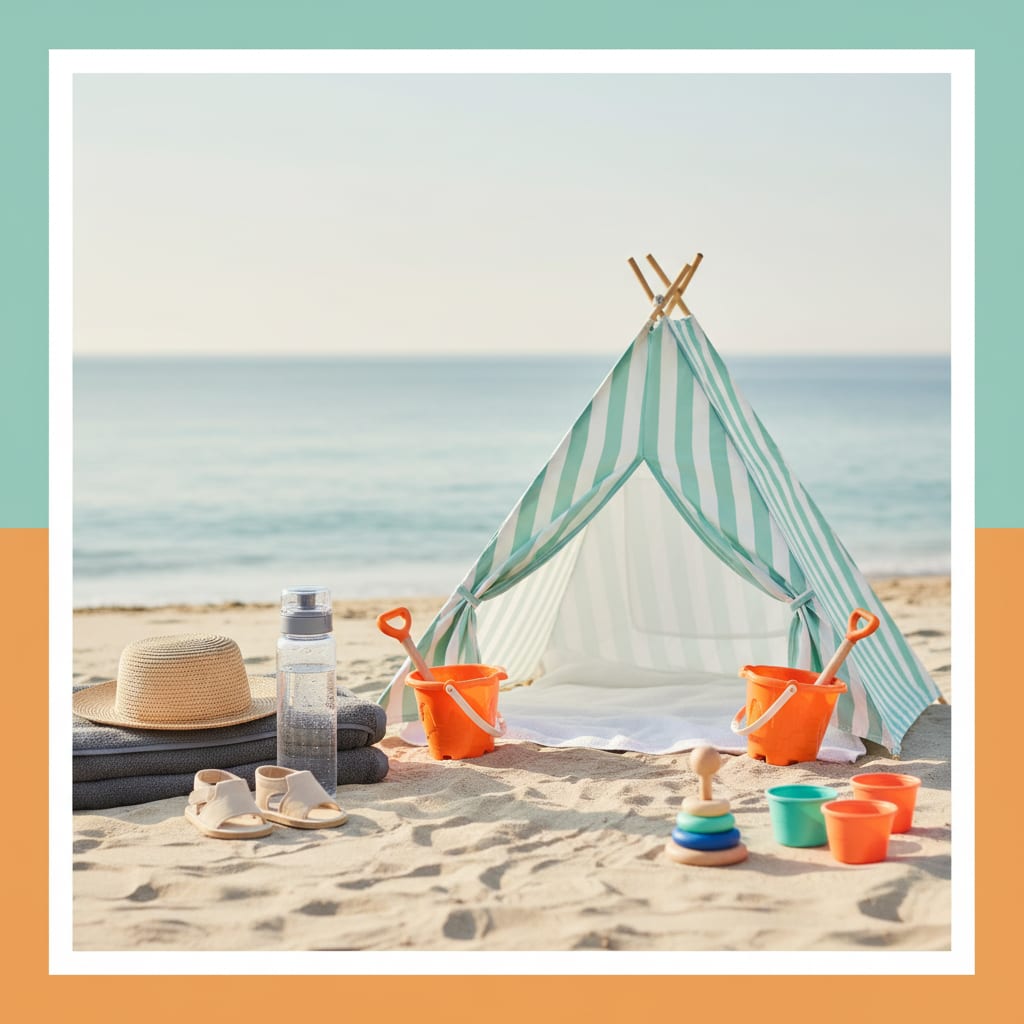
Shade is the first thing you carry and the first thing you set up. An umbrella works if the sand is firm; a pop-up shelter with a floor works everywhere and doubles as the nap spot and the changing room. Something like the Pacific Play Tents Lil Nursery is a small UV-treated pop-up made for exactly this age, and it packs down to a disc. Shade plus a hat plus a long-sleeve rash top does more for a toddler than any amount of reapplying sunscreen in the wind.
-
Bring twice the water you think and one salty snack. Heat plus running plus salt air empties a toddler fast. A cold water bottle wrapped in a towel stays cold for hours. Salty crackers are the snack that goes down when everything else is refused.
-
Pack the dry-clothes bag separately and put it somewhere sealed. Everything else in the bag will get sand in it. The going-home outfit must not, or the drive is misery. A zip bag inside the main bag is enough.
-
Skip most of the beach toys. Two buckets, two spades, one cup. That’s it. The mesh bag of eleven plastic things is heavy, it gets buried, and the actual entertainment at this age is water, sand, and being buried up to the knees. My day bag checklist is the everyday base to build this on — beach day just adds shade, water and a change of clothes.
On the sand (tips 8–11)
-
Set up one clear “camp” and point at it. A towel, the shelter, a bright bag. Say it every time you move: this is our spot. It won’t stop a wander, but it gives you and a lifeguard something to describe.
-
Dress them in one bright colour and put a hat on them. Neon is easier to track in a crowd than anything else you own. Some families write a phone number on a wristband; it costs nothing and it’s a genuinely good idea on a busy beach.
-
Accept the sand-eating and manage it. Nearly every toddler tries it. A mouthful of sand isn’t an emergency — offer water, don’t make it a drama, and redirect to filling a bucket instead. The intense interest usually burns out within a couple of visits.
-
Do the wet-to-dry transition on your terms. Cold, wet and windy is where a good morning turns. Watch for the first shiver or blue lips, and go straight to a dry towel and a warm top before they escalate. A hooded towel makes this a five-second job.
Getting home without a car-park meltdown (tips 12–13)
-
Sand comes off with baby powder or a dry towel, not water. Cornstarch-based powder brushes dry sand off skin remarkably well; rinsing with water just makes a paste. Do feet last, on the towel, right before shoes go on.
-
Leave one novelty in the car for the drive. The way home is the hardest part of a beach day — tired, salty, over-stimulated, strapped in. A snack and one thing they haven’t seen buys you the drive. If the trip involves a night away, my tips for toddler sleep away from home cover the part that decides whether tomorrow is fun.
Water, sun and the things worth being rigid about
One adult is on water watch, hands-free, at all times — not the adult unpacking lunch, and not “everybody generally.” Swap the role explicitly and out loud when you change over. Toddlers can get into difficulty in very shallow water, waves knock them down, and it happens silently rather than loudly. A puddle jumper or life vest is useful but it is not a substitute for a person within reach.
For sun, the guidance worth following is the boring version: shade in the middle of the day, a wide hat, long-sleeve UV swimwear, and sunscreen on whatever’s left, reapplied after swimming. Check your own product’s label for the right age and amount rather than trusting a number you read somewhere, and talk to your pediatrician about sunscreen for the very youngest children.
And if the beach is out of reach this week, the contained version of the same fun works in a back yard — my water play ideas are the same instinct with a tenth of the packing.

FAQ: beach day with a toddler
How long should a beach day with a toddler be?
Two to three hours is the sweet spot for ages one to three, and going early is better than going long. Most beach-day disasters are just a nap window and a sunburn arriving at the same time in the early afternoon.
What do I need to take to the beach with a toddler?
Shade, more water than you think, a salty snack, a hat and UV swim top, sunscreen, two buckets and two spades, a hooded towel, a sealed bag of dry clothes, baby powder for sand removal, and one novelty saved for the drive home. Everything else is optional.
How do I get sand off a toddler?
Dry first. Brush cornstarch-based baby powder over sandy skin and the sand slides off; water turns it into a paste that sticks. Do it on the towel, feet last, immediately before shoes and the walk to the car.
Is it safe to take a one year old to the beach?
Generally yes, with shade, sun cover and constant hands-free supervision near water. Very young children overheat and burn faster than older ones, so the early-morning, short-visit version matters more, and sunscreen guidance for the youngest babies is worth checking with your pediatrician first.
How do I stop my toddler eating sand?
Offer water, stay calm about it, and give their hands a job — filling a bucket, burying a spade, pouring between cups. Making it a big reaction tends to make it a game. Most toddlers try it a handful of times and lose interest quickly.