14 Water Play Ideas That Contain the Splash
Water play is the cheapest forty minutes you can buy with a toddler, and the only reason people avoid it is cleanup. The fix is to decide where the water is allowed to go before you pour any — a bin on a towel, a tray on the grass, a tub in the bathtub — and then stop policing anything that happens inside that boundary. Below are fourteen setups sorted from most contained to least, built almost entirely from things already in your kitchen. One rule comes before all of them and it isn’t negotiable: toddlers can drown in an inch or two of water, so nobody plays with water outside arm’s reach of an adult, and every bin gets emptied the second play ends.
Indoor setups that stay in one bin (ideas 1–5)
-
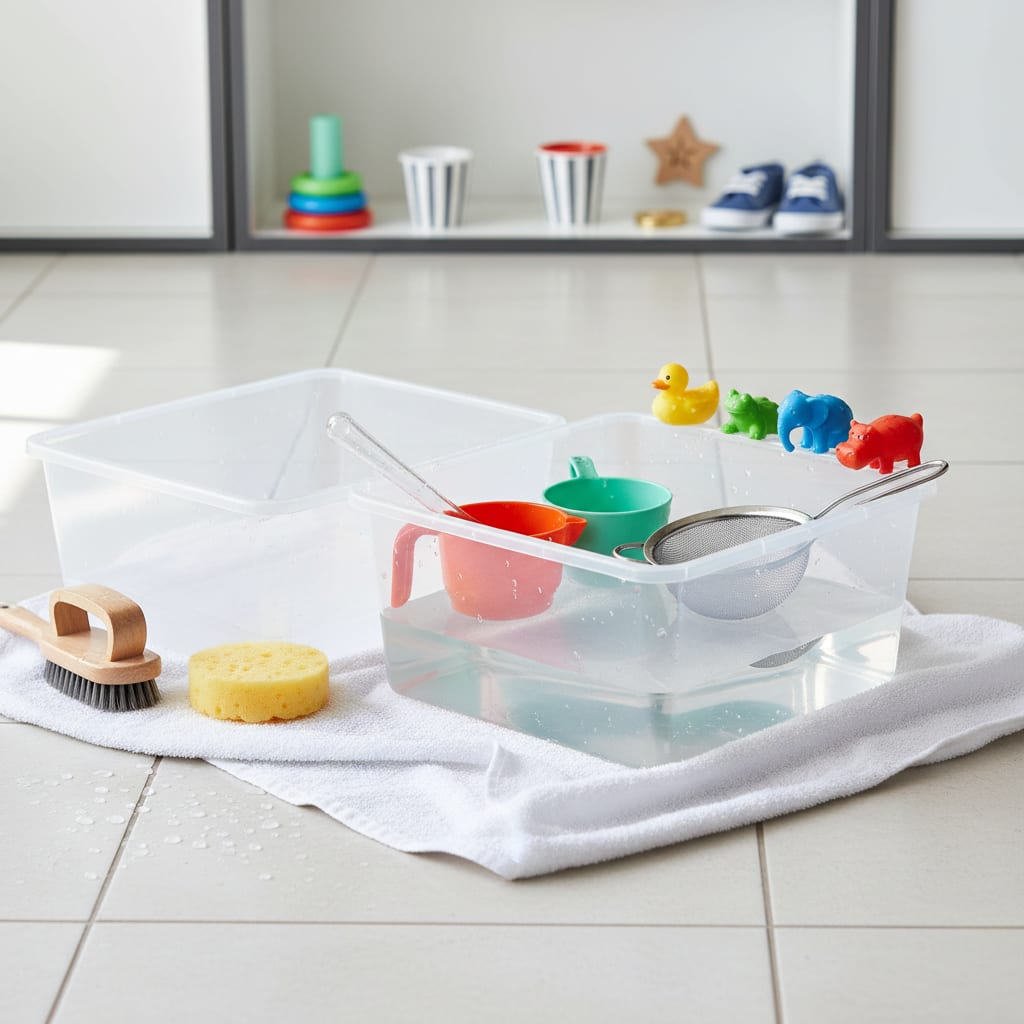
Put an old bath towel down first. Towel on the kitchen floor, shallow plastic bin on top, two inches of warm water, a handful of kitchen tools. The towel is the entire trick — it absorbs the splash-out and then goes straight in the wash. Use warm water, not cold; it roughly doubles how long they stay.
-
Give them a job: washing the plastic animals. One bin of soapy water, one tub of clean water, an old toothbrush and a small hand towel. They scrub, rinse, dry, line them up. This is the longest-running water activity I’ve ever set up for either of mine, and the reason is the job structure — there’s a start and an end, not just splashing.
-
Build a pouring station. Measuring cups, a funnel, a turkey baster, a small pitcher, nothing else. No instructions given. Moving water between containers is genuinely absorbing at this age, and it’s the same mechanism as a dry bin — my pantry sensory bin ideas run on exactly that principle with no water involved at all.
-
Freeze toys into a bowl overnight. Small plastic animals in a bowl of water in the freezer, then set the block in a bin with a cup of warm water and a spoon. They melt them out. It’s about half an hour on a hot afternoon, and the mess is a towel.
-
Do dishes at the sink from a sturdy step. Half an inch of water in one basin, unbreakable cups and spoons, one squirt of soap. Only worth doing with a wide, non-tipping step stool and you standing beside them, because a wobbly stool at a sink is a real fall. Sleeves rolled, apron or bare torso, and accept the front of their pants is getting wet.
Backyard stations for a hot afternoon (ideas 6–10)
-
Run a two-bucket car wash. One soapy bucket, one rinse bucket, a sponge, and every ride-on toy and plastic truck you own lined up on the grass. Toddlers take this astonishingly seriously.
-
Hand over a paintbrush and a bucket of plain water. They “paint” the fence, the patio, the shed, the back step. It costs nothing, it dries invisibly, and it is reliably the longest activity on this list for a two-year-old.
-
Set up a sponge transfer race. Two buckets a few feet apart, one full and one empty, three big sponges. Soak, run, squeeze, repeat. It burns real energy, which is the whole point of a hot afternoon.
-
Consider a proper water table if this is a daily thing. If you’re hauling bins out every afternoon all summer, a fixed table earns its keep — something like the Step2 Rain Showers Splash Pond keeps the water at standing height, which means far less of it ends up on the child. Everything on this list works fine without one.
-
Freeze a bucket of water with a few toys in it. Same idea as the bowl, scaled up and left on the grass with a spray bottle of warm water and a plastic hammer. This is the one to deploy when you need forty-five minutes rather than twenty.
Bath and rainy-day versions (ideas 11–14)
-
Whip up a bubble mountain. A squirt of the bubble bath you already use plus a hand whisk makes a genuinely impressive pile of foam. Beards, hats, scooping it into cups — it’s a full activity, not a two-minute novelty.
-
Hand them a colander in the tub. Fill, lift, watch it rain. Add a slotted spoon and a plastic cup with a hole poked in the bottom and you have three different kinds of rain to compare.
-
Do the doll wash in the bathtub. Waterproof dolls, a washcloth, a cup for rinsing, a dry towel on the mat for the “dried off” line-up. It’s idea 2 with a different cast, and it means one of you gets a clean toddler out of it too.
-
Save water play for the worst weather. A bin of warm water on a towel in the middle of the living room is the single best rainy-day card I hold, and it doesn’t require going outside at all. My other rainy day activities for toddlers are the rest of the deck, and the genuinely dry ones live in my no-mess toddler activities.
Cleanup rules that make you willing to repeat it
Set the bin down on something absorbent, always. Dress for it — swim diaper and nothing else in the yard, bare feet and rolled sleeves indoors. Keep a dry towel outside the play zone so the walk from bin to bathroom isn’t a wet trail through the house. Empty every container the moment you’re done, including the ones that look empty, and store the bin upside down. And end it while it’s still going well; the whining starts about four minutes after the fun peaks, and the parent who packs up at minute thirty gets asked to do it again tomorrow.

FAQ: toddler water play
What age can toddlers start water play?
Around the time they can sit steadily and hold a cup, so roughly a year, with everything shallow and supervised at arm’s length. The activities that need a job structure — washing, sorting, transferring — usually land better from about eighteen months, when following a small sequence starts to feel satisfying rather than confusing.
How much water should I put in a toddler water bin?
An inch or two is plenty, and less than you think is needed. Toddlers care about the pouring, not the volume. Shallow water also means the inevitable tip-over is a towel problem instead of a mop problem — and it keeps the amount of standing water in the house as small as possible.
How do I stop water play flooding my kitchen?
Towel underneath, shallow water, warm water so they stay put instead of running, and a hard boundary you enforce cheerfully — the water stays over the towel. Expect a puddle anyway. If a puddle would genuinely ruin your day, do it in the bathtub or outside instead.
Is a water table worth it for a toddler?
Only if you’ll use it most days through the summer. Plastic bins do nearly the same job for a few dollars, and they store flat. The real advantage of a table is height: water at waist level splashes onto the ground rather than down the front of a child, so there’s less changing involved.
How long does water play actually hold a toddler’s attention?
Twenty to forty minutes is typical, and the ones with a task — wash these, move this here — hold longest. Rotate the tools rather than the concept. The same bin with a turkey baster one day and a colander the next reads as a brand-new activity.