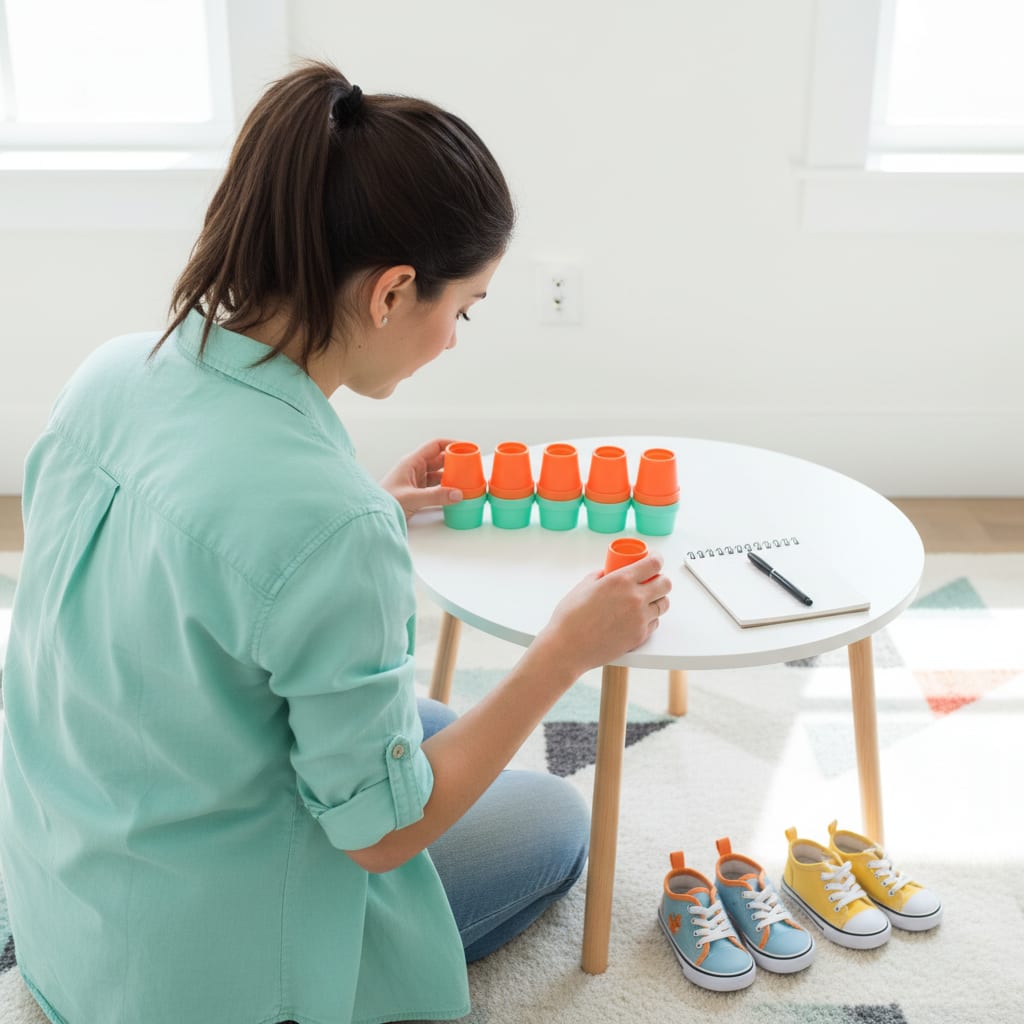
To teach a toddler to blow their nose, teach the breath first and the tissue second. Most toddlers blow out of their mouth or sniff in when you say “blow,” because they’ve never pushed air out of their nose on purpose. Practice when they’re well: mouth closed, a big breath, then puff out through the nose to fog a mirror or move a cotton ball. Then add the tissue, one nostril at a time, and finish with hand washing. Expect weeks of practice, not one afternoon. The 8 tips below go in that order.
This is a skill post. For the nights a cold is wrecking sleep, my sick toddler sleep tips cover the bedtime side, and a barking cough has its own page on croup at night.
Teach the breath before the tissue (tips 1–3)
-
Practice on a healthy day. A toddler with a stuffed, sore nose isn’t in the mood for a lesson, and a blocked nose can’t push air out anyway. Teach it in the weeks between colds, as a game, so the skill is ready when the next one arrives.
-
Show the difference between mouth and nose. Blow out an imaginary candle with your mouth. Then close your lips tight, make a “mmm” face, and puff air out through your nose. Let them feel your nose breath on their hand. Then let them try it on yours. Most toddlers have never noticed they can do this.
-
Make the nose breath move something. A small cotton ball or a scrap of tissue on the table, blown along with nose air only. A mirror they can fog up with a nose puff. A feather. Seeing it work is what makes it click. Keep a hand on their chin if they keep opening their mouth, and make it silly, not a correction.
Add the tissue (tips 4–6)
-
Use a soft tissue and hold it with them. Let them hold the tissue to their nose, with your hand over theirs at first. A soft lotion tissue, like Puffs Plus Lotion, is kinder to a nose that’s already red from wiping. Fold it so they have a thick pad to blow into, not one thin layer.
-
One side at a time. Press one nostril closed with a finger and ask for a gentle puff out of the other. Then switch. A toddler blowing both sides at once usually ends up blowing out of their mouth. Keep it gentle; a big honk isn’t the goal.
-
Copy you, every single time. When you blow your own nose, do it slowly and narrate it: “Close one side, puff, now the other side, now in the trash, now wash hands.” Toddlers learn this by watching far more than by being told. Siblings make great demonstrators, too.
Finish the job (tips 7–8)
-
Tissue in the trash, then hands washed. Nemours KidsHealth lists hand washing after nose blowing as one of the important times to wash, and says to throw the tissue out after using it. Make the bin and the sink part of the routine from day one, so the habit comes with the skill. Little ones can sing a short song while they scrub.
-
Praise the try, not the result. A dry puff into a tissue is a win the first week. So is wiping instead of sniffing. Don’t do a big reaction when they get it wrong, and don’t insist on another go when they’re fed up. Leave it and try again tomorrow. There’s no deadline for this skill, and toddlers get it at very different ages.
When the nose is really blocked
Blowing only works when air can get through. When it can’t, these help in the meantime. The first two are from KidsHealth’s cold page:
- Saline drops in the nostrils to loosen congestion before blowing. A plain saline spray like Little Remedies saline spray and drops works as either.
- A cool-mist humidifier in the room. KidsHealth suggests one to increase air moisture. The Crane cool mist humidifier is a common pick; clean it as the instructions say.
- Plenty to drink. KidsHealth says to make sure a sick child drinks plenty of fluids. If water is a battle, try my tips for getting a toddler to drink water.
KidsHealth also notes that many experts see no reason to give over-the-counter cold medicine to children under 6, so check with your pediatrician before using any.
When to call the doctor
A runny nose on its own usually isn’t a reason to call. The AAP’s page on children and colds says a typical cold should slowly get better after 7 to 10 days. It lists these reasons to call the pediatrician for a child older than 3 months:
- Nostrils widening with each breath, skin pulling in around the ribs, fast breathing or any trouble breathing
- Lips or nails turning blue
- Nasal mucus that lasts longer than 10 to 14 days
- A daytime cough lasting more than 10 days
- Ear pain, or ongoing fussiness or crying
- A temperature over 102°F
- Being too sleepy or cranky
If you’re worried, call. You don’t need to tick a box.
FAQ: teaching a toddler to blow their nose
At what age can a toddler blow their nose?
There’s no set age. It depends on whether your child can close their mouth and push air out of their nose on purpose. Practice the breath with a mirror or cotton ball first; the tissue part comes easily after that.
Why does my toddler sniff in instead of blowing out?
Because “blow” usually means mouth-blowing to a toddler, and sniffing is the only nose action they know. Teach the out-breath on its own first, with their lips closed, before you add the tissue.
How do I clear my toddler’s nose if they can’t blow it yet?
KidsHealth suggests saline drops in the nostrils to relieve congestion and a cool-mist humidifier in the room. Gently wipe what comes out with a soft tissue.
Should my toddler blow both sides at once?
One side at a time is easier to learn. Press one nostril closed, puff gently out of the other, then switch.