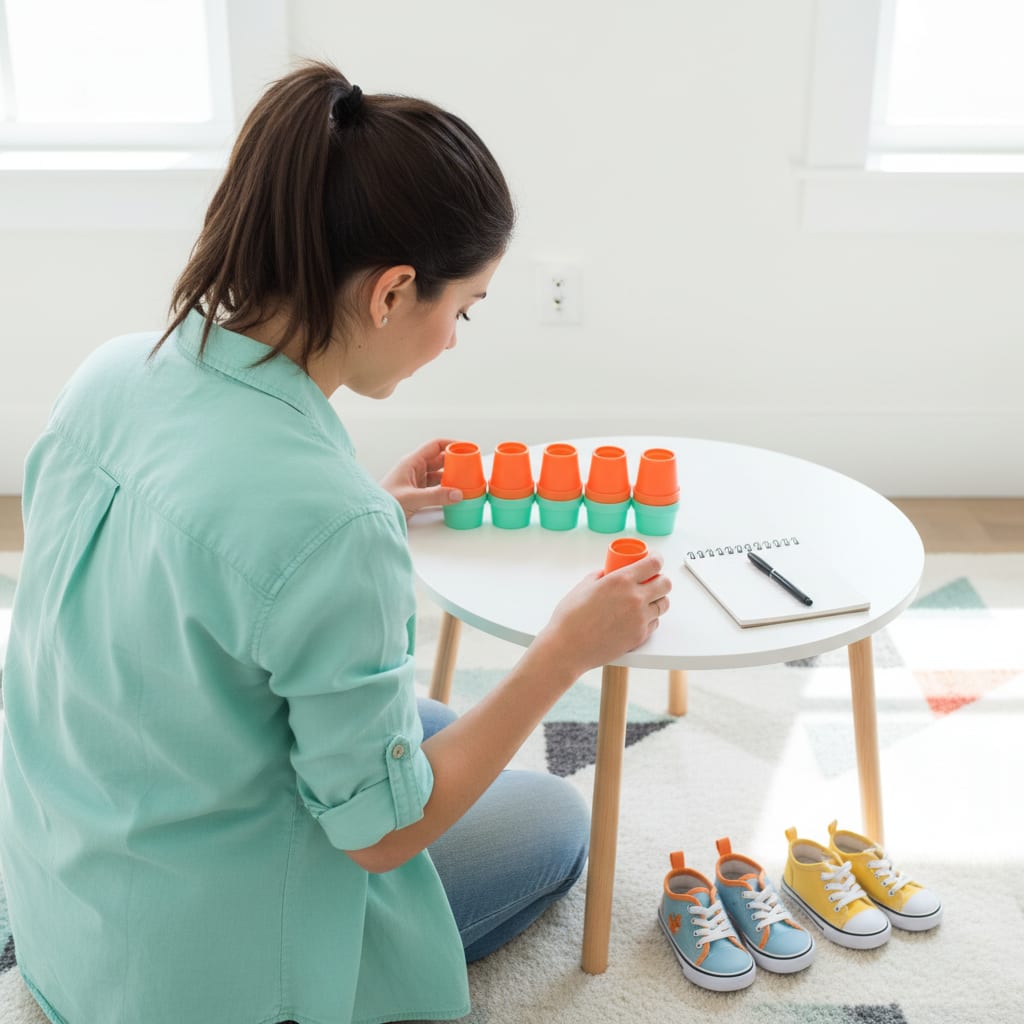
To get a toddler to drink more water, make water the easy option and stop asking them to drink it. Drink it yourself where they can see, give them a cup they chose, keep that cup within reach all day, and serve water at every meal and snack. Then cut back the drinks that compete with it: juice, and milk sipped between meals. Most toddlers who “won’t drink water” will drink it once it’s simply there and nobody is watching. The 10 tips below can all start today.
How much are we talking about?
Less than you may think. The AAP’s page on choosing water for healthy hydration says children ages 1 to 3 “need about 4 cups of fluids per day, including water or milk,” and that amounts vary by child, activity and heat. So the milk at breakfast counts toward the total. For the AAP’s water range by age and how milk fits around it, our sister site toddlertopics has the numbers in how much milk a toddler needs. This post is about the refusing.
Make water normal (tips 1–4)
-
Drink it yourself, in front of them. The AAP calls being a good role model “a great way to help make water part of your children’s routine.” Pour yourself a glass when you pour theirs. A toddler who sees you with coffee all morning and a soda at lunch has no reason to think water is what people drink.
-
Let them choose the cup. Two cups on the counter, they pick. The AAP’s list of ways to make water more appealing includes this one: “Delight kids with special water bottles or cups.” The cup doesn’t need to be fancy. It needs to be theirs, and it should be used for water only, so the cup itself tells them what’s inside.
-
Offer a straw, and practice the open cup. Plenty of toddlers drink more from a straw than from a spout. A weighted-straw cup like the Munchkin Any Angle lets them drink with the cup tipped any way. At the table, add a small open cup with an inch of water in it. Spilling is part of learning to use it. If you’re still moving off bottles, my tips for the switch to cups cover that part.
-
Put the water where the toddler is. A cup on the kitchen counter is a cup they can’t reach. Keep it at their height, in the same spot, all day: a low shelf, a corner of the play table, the cup holder in the stroller. Refill it in the morning and after the nap. Most of the drinking happens in passing, when they notice it.
Build it into the day (tips 5–7)
-
Serve water with every meal and snack. The AAP’s summary is short: “Serve water with meals and snacks.” Put the cup down with the plate, every time, and say nothing about it. Food makes them thirsty and the cup is right there.
-
Tie sips to things that already happen. Pick three fixed moments and offer water at each one: after waking, after outdoor play, and when they get into the car seat. “Water first, then we go.” Three reliable offers do more than thirty reminders.
-
Let food do some of the work. Fruit and vegetables with a lot of water in them count toward the day’s fluids. The AAP names cucumber, zucchini, celery and tomato among vegetables, and watermelon, cantaloupe, strawberries and blueberries among fruits. Cut them to a safe size for your child’s age. On a day when the cup stays full, a bowl of watermelon is a good backup, and it fits any of my toddler snack ideas.
Deal with the competition (tips 8–9)
-
Cut the juice down, slowly. The AAP is blunt about juice: “once children are offered juice, it can be difficult to get them to drink plain water.” Its limit for ages 1 to 3 is “no more than 4 oz per day,” and no sugar-sweetened drinks at all under two. If juice is already a habit, add a little more water to the cup every few days until it’s mostly water, then all water. Keep juice out of the water cup.
-
Move milk to mealtimes. A toddler who carries milk around all morning isn’t thirsty for water and often isn’t hungry for lunch. Milk comes with meals. Water is the drink in between. It’s the same swap as tip 5 in the bottle post, and it’s often the change that makes the biggest difference, because it gives thirst a chance to show up.
Keep the pressure off (tip 10)
- Offer, then drop it. “Here’s your water” is an offer. “Drink your water. Two more sips. You haven’t had any all day” is a fight, and toddlers win fights about what goes into their mouths. Don’t bribe, don’t count sips, don’t follow them around with the cup. Put it down, walk away, and praise nothing. If you want a nudge that isn’t pressure, make it play: clink cups and say “cheers,” or let them pour from a small pitcher into their own cup, in the bath or at the sink. It’s the same hands-off rule that runs through my picky eater tips.
Flavor without sugar
If plain water is a hard no, change it a little before you give up. The AAP suggests infusing water “with lemons, berries, cucumber or mint for some added flavor.” A few crushed strawberries in a pitcher in the fridge will do it. Strain the pieces out for younger toddlers. You can also blend fruit and freeze it in molds: the AAP’s page suggests making “your own popsicles with pureed fruit.” Skip flavored waters and drinks sweetened with stevia or artificial sweeteners. The AAP’s advice is that “it is best to avoid these drinks.”
Water at bedtime
Getting more water in during the day pays off at night. A toddler who has had drinks all day isn’t really thirsty at lights-out, so “I need water” becomes a small request with a small answer: one little cup by the bed, filled before the routine starts, and that’s the water. If the requests keep multiplying, that’s stalling, and my bedtime stalling counter-moves cover it.
 "I need water" five times a night?
When the requests start after lights-out, the bedtime itself may be off. Betteroo builds a nap and bedtime plan for your toddler's age.
Take the 2-minute sleep quiz →
When to call the pediatrician
Low water intake on an ordinary day is rarely an emergency. Dehydration is different, and it’s most likely when a toddler is sick, or in hot weather. The AAP lists these signs in children past infancy: dry lips or a sticky mouth, less urination or dark-colored urine, being sleepy and irritable, and flushed skin. Urine, the page says, “should be very light yellow, almost clear.” Its advice is plain: “If you have any concerns about dehydration or a heat-related illness, don’t hesitate to call your pediatrician.” If your child becomes extremely lethargic or unresponsive, the AAP says to head to the emergency room or call 911.
Call, too, if your toddler suddenly refuses all drinks, or seems to be in pain when swallowing.
FAQ: getting a toddler to drink water
Why won’t my toddler drink water?
Usually because something sweeter is on offer, or because milk between meals has already filled them up. Sometimes it’s the cup. Try a straw, cut back juice, and move milk to mealtimes before you decide they dislike water.
Does milk count toward a toddler’s fluids?
Yes. The AAP’s figure of about 4 cups of fluids a day for ages 1 to 3 includes both water and milk. Water is the between-meals drink.
Should I make my toddler finish their water?
No. Offer it at meals, snacks and a few fixed points in the day, and leave the cup in reach. Pressure usually leads to less drinking, not more.