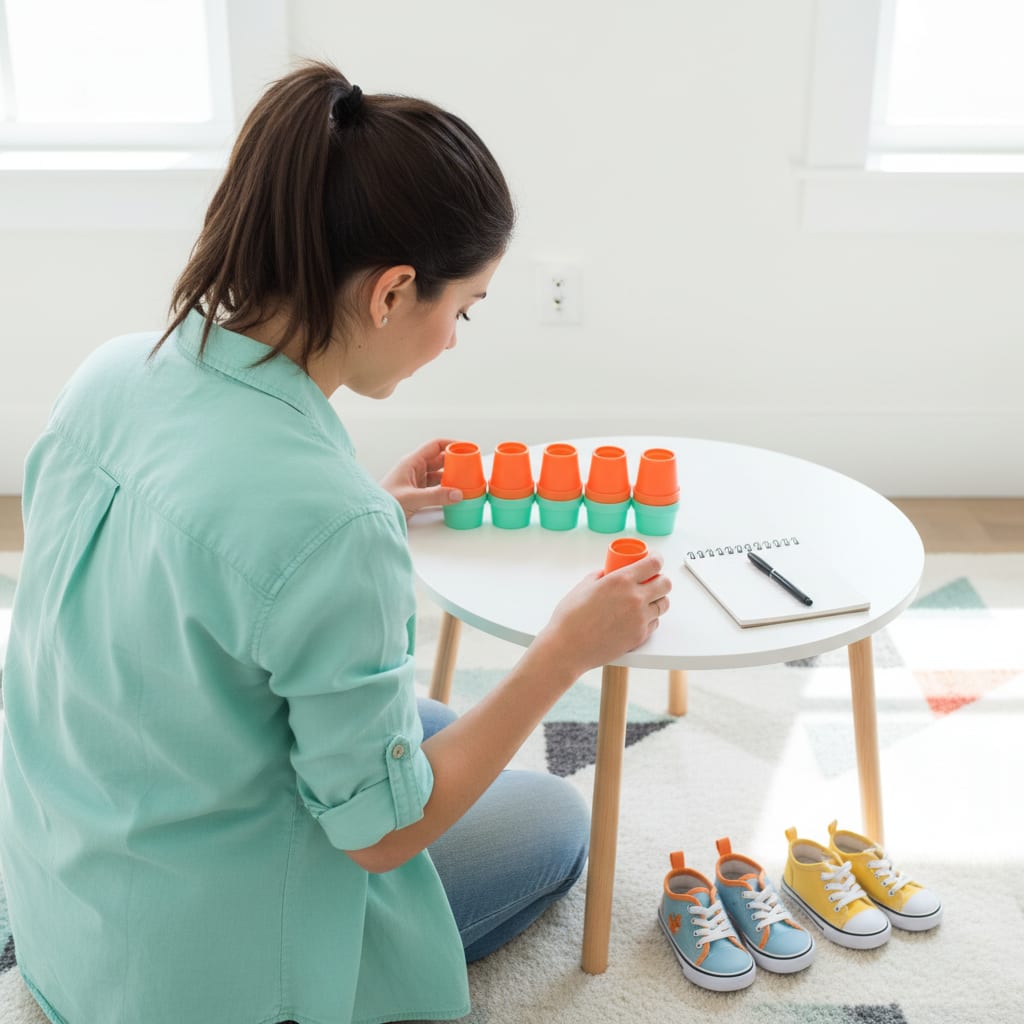
The best music activities for toddlers need no lessons and almost no gear: your voice, something to shake or bang, and room to move. Sing the same short songs every day, add actions, play stop-and-go games like freeze dance, give them a pot and a wooden spoon, and use a song to get through the hard parts of the day like cleanup and bedtime. Toddlers won’t sit for a music class, so keep each one to a few minutes and let them wander in and out. The 15 ideas below are sorted by what you have: just your voice, things to shake and bang, room to move, and a quiet song for the end of the day.
You don’t need to sing well. Head Start’s page on music in child development puts it plainly: “your voice is the sound infants and toddlers want to hear!”
Why it’s worth five minutes a day
Singing and moving to music do a lot at once. HealthPartners pediatrician Andrea Singh writes on the HealthPartners blog that singing, with the rhythm and rhyme that come with it, helps shape a child’s social skills, vocabulary and ability to regulate emotions. She also says music is a useful tool to help young children move from one activity to another. That last point is the one that pays off fastest at home.
Head Start adds that finger-play songs give children practice moving their hands and fingers, and that moving to music builds muscle strength, coordination and a sense of where their body is in space. So a song is also a fine motor and gross motor activity, without any setup.
Just your voice (ideas 1–5)
-
Same three songs, every day. Pick a morning song, a car song and a bedtime song, and sing them over and over. Toddlers love repetition, and a song they know well is one they’ll start joining in on, first with a word at the end of a line, then whole lines.
-
Add the actions. “Head, Shoulders, Knees and Toes,” “If You’re Happy and You Know It,” “The Wheels on the Bus.” Head Start notes that songs like “Head, Shoulders, Knees and Toes” teach body parts when you add the actions. Do them big and slow so a one-year-old can copy.
-
Finger-play songs. “Where Is Thumbkin?”, “Itsy Bitsy Spider,” “Five Little Ducks.” HealthPartners suggests using your five fingers to show the five ducks and hiding one each time a duck doesn’t come back. These are the best songs for waiting rooms, checkout lines and the car seat, where you can’t do much else. For more hand work, my fine motor activities list has 20 more ideas.
-
Silly words to a song they know. HealthPartners suggests changing a familiar song in silly ways: “The itsy-bitsy elephant climbed up the water spout!” Let your toddler pick the animal. A two-and-a-half-year-old who gets to make the joke will ask for this one daily.
-
Echo and call-and-response. Sing a line, they sing it back. Or you name an animal in “Old MacDonald” and they make the sound. Betteroo has a list of 40 call-and-response songs sorted by age. Its advice for toddlers is to keep the response tiny: one word, one sound or one motion.
Things to shake and bang (ideas 6–9)
-
Kitchen drum kit. An upside-down pot, a plastic bowl, a baking tray and a wooden spoon each. Bang loud, then quiet. Bang fast, then slow. It’s noisy for ten minutes and then it’s over, which is what you want.
-
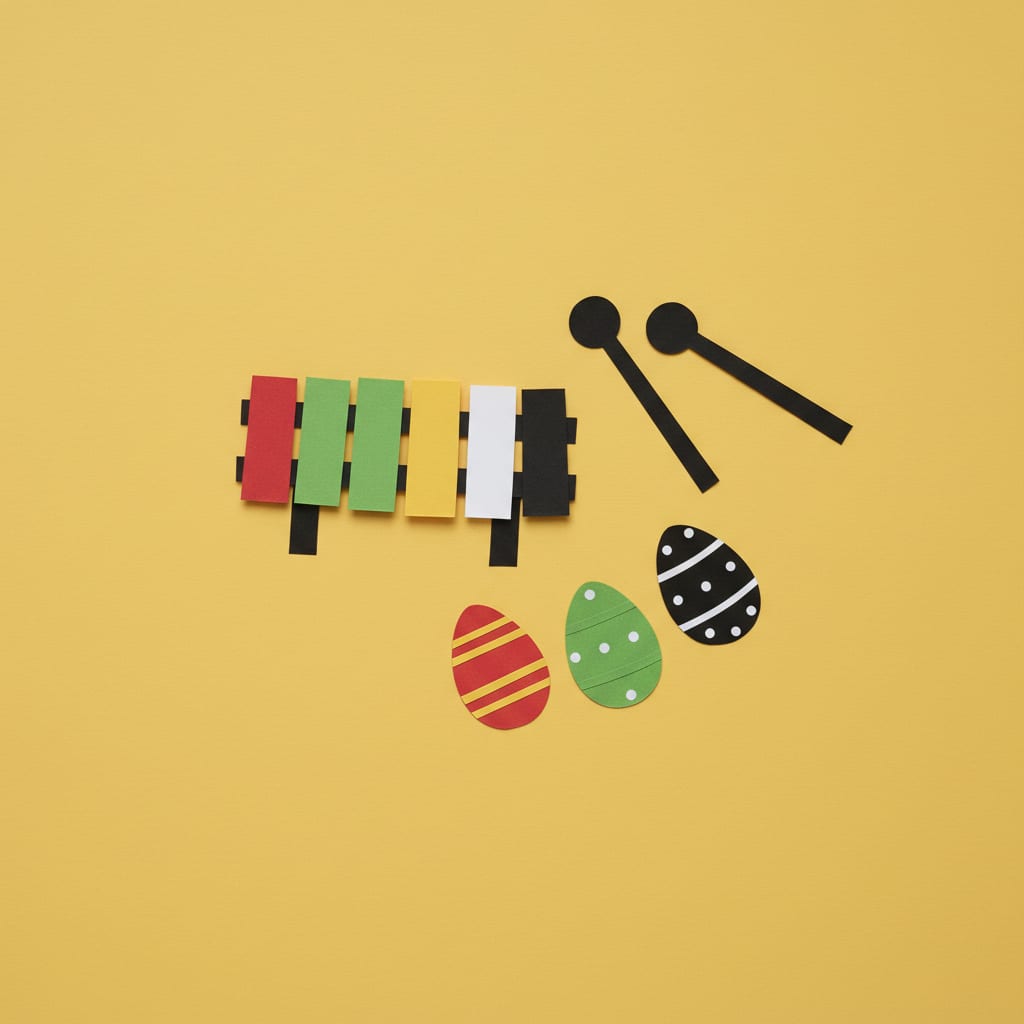
Shaker eggs. Small, easy for little hands to hold, and much quieter than a drum. A set of wooden ones, like these JoFAN shaker eggs, means you get one too. Shake along to any song with a steady beat. Skip homemade rice-in-a-bottle shakers unless the lid is glued and taped shut: a lid that comes off turns into a bowl of rice on the rug, and loose small pieces don’t belong near a toddler’s mouth.
-
A first xylophone. Hitting a bar and hearing a note change is a real “aha” around 18 months. A pull-along one like the Fisher-Price Classic Xylophone (labelled 18 months and up) doubles as a walking toy. Play two notes, wait, and let them play two back.
-
Loud, quiet, stop. Everyone bangs or shakes while you sing. When you stop, they stop. When you whisper, they play quietly. It’s a listening game disguised as noise.
Room to move (ideas 10–13)
-
Freeze dance. Play music, dance, pause it, freeze. Under two, freeze can just mean “fall down.” Over two, they can hold a statue for a second or two. It’s also the best two-minute burn on a stuck-inside afternoon. My gross motor activities post has more indoor movement ideas.
-
“We sing and we sing and we stop.” HealthPartners suggests singing “We sing and we sing and we stop” to any tune, three times, then swapping in words like “dance” or “wiggle” and wiggling until you sing “Stop!” It helps with impulse control, and you can play it anywhere.
-
Move like the music. Put on instrumental music and act out what it sounds like: stomp like an elephant to something heavy, tiptoe to something light, float like a cloud to something slow. Head Start suggests bouncing to polka, swaying to lullabies and clapping along with chants.
-
Marching parade. Something to bang, a line around the kitchen island or the couch, and a march. Change direction when the song changes. Add a scarf to wave if you have one.
Songs that get you through the day (ideas 14–15)
-
A song for every hard transition. HealthPartners gives “Zip, zip your zipper up to your chin! Don’t you let the cold air in!” for getting a coat on. The same trick works for cleanup, the car seat and hand washing. Sing the same song for the same job every time and it becomes the signal that the job is happening.
-
One quiet song to end the day. Head Start says the gentle sound of a lullaby can comfort a toddler who is overwhelmed. Pick one calm song and sing it at the same point in the bedtime routine every night: in the chair, lights low, after books. The song becomes the “this is the end” cue. My bedtime routine checklist shows where it fits.
 Freeze dance at bedtime?
A toddler still bouncing at 8 p.m. may need a different nap and bedtime. Betteroo builds a sleep plan around your child's age.
Take the 2-minute sleep quiz →
Tips that make any of these work
- Follow their lead. Head Start notes that gathering babies and young toddlers into a “circle time” isn’t a good fit for their age. Start singing and let them join in or keep playing. They’re often still listening.
- Turn it off sometimes. Background music all day blends in. Music works best as something you do together, then stop.
- Use your home language. HealthPartners encourages singing to your child in your native language. The songs you grew up with count.
- Watch the volume. Banging is fine. Toy speakers held to the ear, or loud music in a small room for a long time, are worth turning down.
FAQ: music activities for toddlers
What are good music activities for a 1-year-old?
Keep it simple: songs with actions, a shaker egg, banging a pot with a spoon, and bouncing to music on your lap. At one, they’re copying your movements more than following a game. My activities for 2-year-olds list picks up from there.
Do I need to buy instruments?
No. Your voice, pots, spoons and plastic containers cover most of these ideas. A shaker egg or a simple xylophone is a nice extra, not a requirement.
How long should a music activity last?
A few minutes is plenty. Two to five minutes of singing or dancing, several times a day, works better with toddlers than one long session.
What if I can’t sing?
Sing anyway. Head Start says your voice is the sound infants and toddlers want to hear, and HealthPartners says your voice has a calming influence on a baby when you slow your words down and sing them with rhythm. Talking a rhyme in a sing-song voice works too.