Toddler Scared of the Potty? 9 Gentle Fixes
A toddler who’s scared of the potty almost never needs more encouragement — they need the scary part removed. Work out which part it actually is (the height, the flush, the hole, the falling-in feeling, or the strange sensation of letting go), fix that one thing, and drop all pressure while you do it. Fear plus pressure produces holding, and holding produces constipation, which makes everything genuinely hurt. Below are the 9 fixes in the order I run them, tested on my own two — one of whom spent a solid month convinced the toilet was a portal.
First, find out which fear it is
Most potty fear is one of five specific things, and they have different fixes. The flush (loud, sudden, irreversible). The height and the hole (feet dangling over a cold ceramic void — genuinely unnerving if you’re two feet tall). Falling in. The sensation — some kids are unsettled by feeling something leave their body, especially poop, which can read as losing a piece of themselves. And a bad memory: a cold seat, a splash, a slam, a scolding, or one painful hard poop that taught them the whole business hurts.
Ask, but don’t cross-examine. Two casual questions at a neutral moment (“what’s the yucky part?”) get you further than a bathroom interrogation. If you can’t tell, assume the physical fixes first — they’re free and they’re often the whole answer.
The 9 fixes
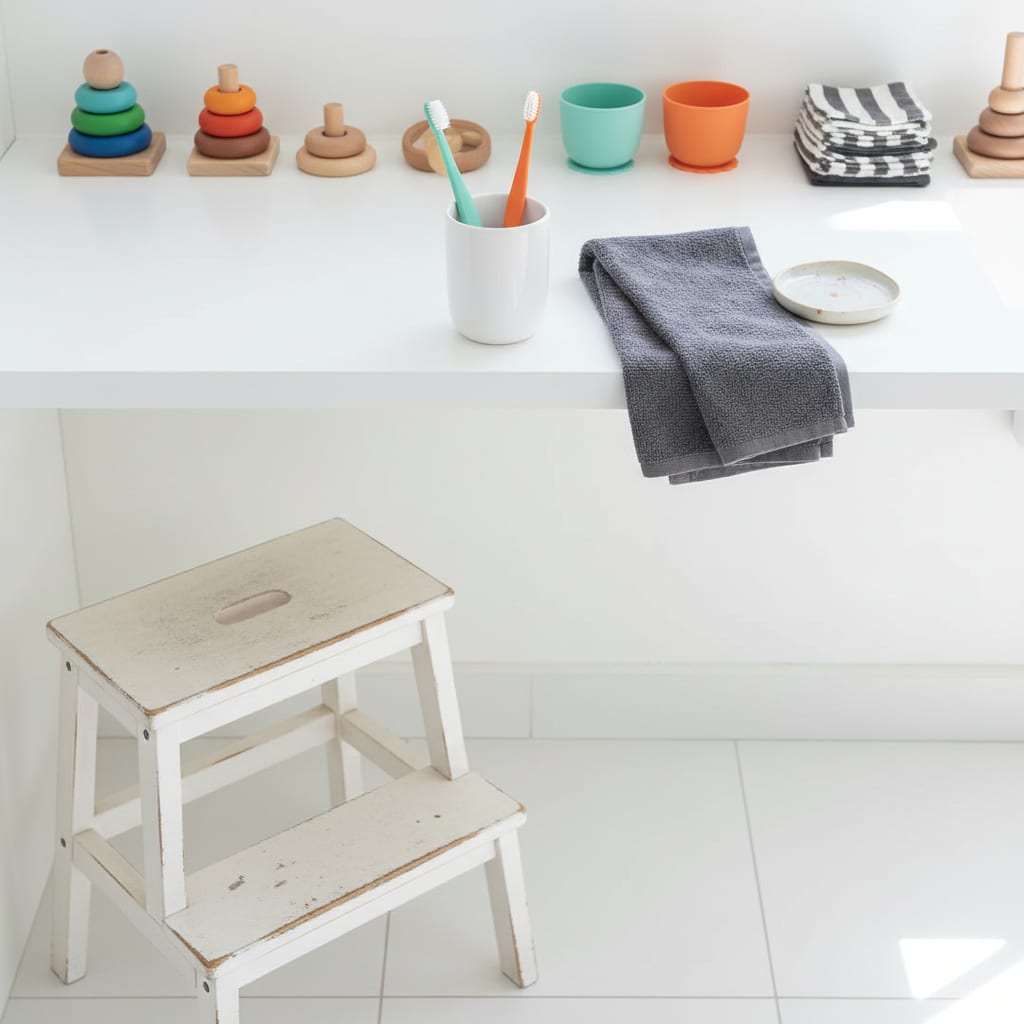
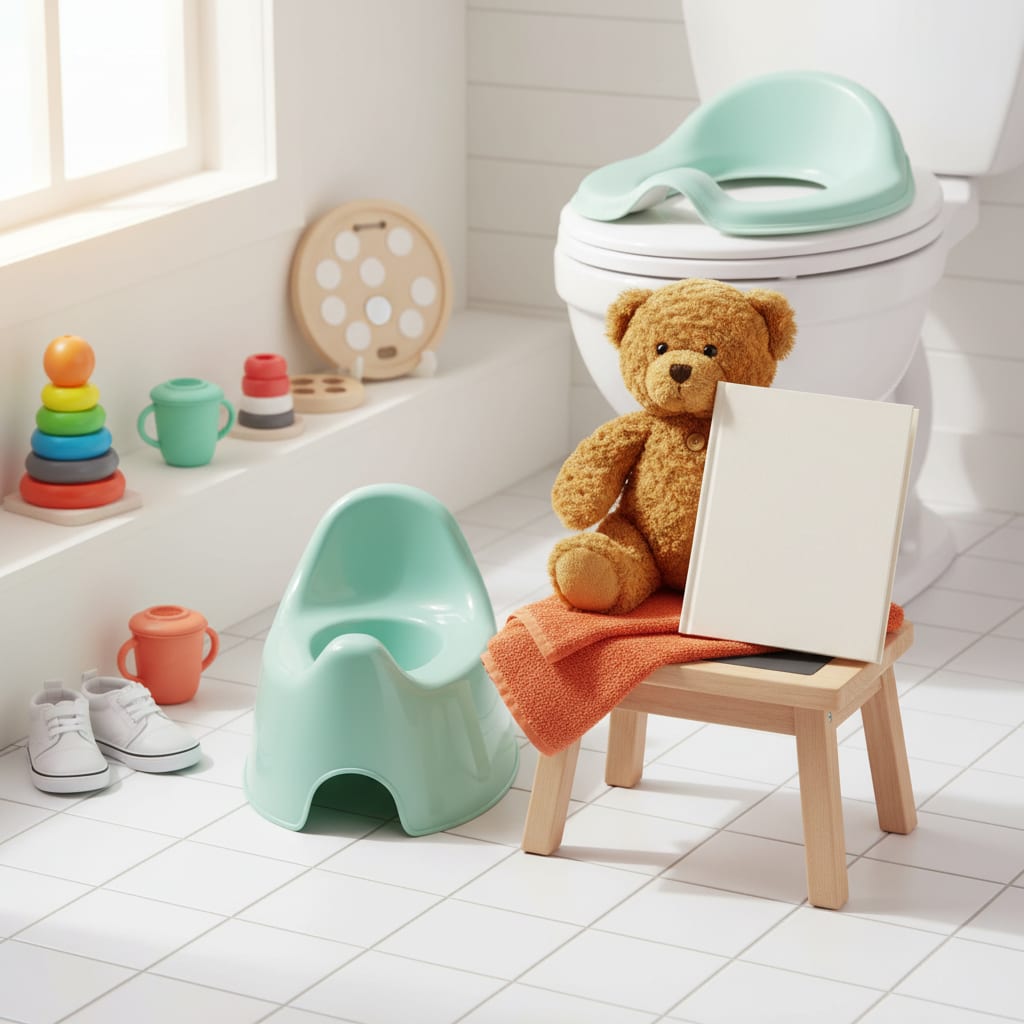
- Give their feet a floor. This is the fix that solves the most cases and gets skipped the most. Dangling feet make a kid feel unstable and make pushing nearly impossible. A floor potty like the BabyBjörn Smart Potty puts them flat-footed and low, which is why so many kids who refuse the big toilet will happily use one. On the big toilet, a sturdy stool under the feet is non-negotiable.
- Make the seat secure, not slippery. If they’ve settled on the grown-up toilet but tense the whole time, the fear is usually falling in. A snug seat reducer such as the BabyBjörn Toilet Trainer closes the gap and stops the wobble. Sit with a hand on their back the first few times so “secure” is something they feel, not something you promise.
- Kill the flush — temporarily. Don’t flush while they’re in the room. Don’t flush at all, if that’s what it takes: cover the sensor with a sticky note, or let them leave and flush from the hallway with the door closed. Then rebuild it in stages — flush from the doorway, then from inside, then let them press it. A flush a kid controls stops being an ambush.
- Move the potty to where they already are. Fear shrinks with familiarity, and bathrooms are cold, echoey and boring. Park the potty in the playroom or the corner of the living room for a week or two, fully clothed sitting allowed, zero expectations. It looks like a step backwards. It’s a step sideways, and it works.
- Let them practice with clothes on. Sit on it dressed. Sit on it to read a book. Sit on it to eat a snack, if you’re that far gone. You’re teaching “this object is neutral furniture” before you ever ask it to do a job. Nobody ever got braver from being asked to be brave.
- Drop the pressure to visibly zero. Stop asking. Stop hovering. Stop the fifteenth “do you need to go?” of the morning — it reads as pressure and it invites a reflex no. Go back to diapers or pull-ups without commentary if you need to; a calm pause beats a two-week standoff every time. Fear plus insistence is how a wobble becomes a withholding habit.
- Give poop its own runway. Poop fear is its own animal and deserves its own patience. If they’ll only poop in a diaper, grant it — calmly, no negotiation — then shrink the distance in stages over days or weeks: diaper standing anywhere, then diaper in the bathroom, then diaper while sitting on the closed lid, then diaper while sitting on the potty. Each step gets celebrated like the finish line, because to them it is one.
- Borrow bravery from books and stuffed animals. A potty picture book read at bedtime, or the bear “going first” while your kid supervises, does the explaining for you without making it about them. Being the expert who helps the bear is a much better role than being the kid who’s scared.
- Rebuild with tiny wins and name them out loud. “You sat down all by yourself” is a win. “You told me after” is a win. “You came into the bathroom” is a win. Small, specific, instant acknowledgment rebuilds the nerve faster than any prize — and if you want a menu of low-key ways to mark those wins, my potty reward ideas list a dozen that don’t escalate into bribery.
Things to skip
Skip the pressure classics: no sitting them on it against their will, no timers ticking while they cry, no taking away toys until they go, no comparing them to a cousin. Those buy a compliance moment and cost you weeks.
And skip the standoff logic entirely. “I’m not giving in, they’ll go when they’re desperate” is how kids learn to hold for eight hours, and holding is the mechanism behind most potty-training misery. You are not being played. You are being told the potty is scary.
When it’s a pediatrician conversation
Call your pediatrician — promptly, not eventually — if your child is withholding poop or pee for long stretches, if bowel movements are hard, painful or come with crying or blood, if they’re leaking small amounts constantly, if a belly is distended, or if the fear looks like real distress rather than reluctance and isn’t easing after a few weeks of gentle work. Constipation is behind an enormous share of potty fear, and it’s a loop: hard poop hurts, so they hold, so the next one is harder. No behavior fix in the world unwinds that — it needs actual medical guidance, and it’s a routine thing for a doctor to sort out.
If the fear arrived suddenly in a kid who was doing fine, treat it as a wobble rather than a new personality: my potty training regression fixes cover the triggers worth checking. And if you’re not sure your kid was ever really ready — if you started because a birthday or a preschool letter said so — the honest move is a graceful pause and a re-read of the readiness signs. There is no prize for early, and a scared kid who restarts at a genuinely ready moment usually trains faster than one who’s been ground down for a month. Betteroo’s guide to why night dryness runs on its own timeline is worth a read too if the night half is adding to the pressure — that part isn’t a training problem at all.
FAQ: toddler potty fear
Why is my toddler suddenly scared of the potty?
Usually one specific event: a loud flush, a cold splash, a fall-in scare, a scolding, or one painful hard poop. Kids generalize fast — one bad experience becomes “the potty is bad.” Find the event if you can, fix that element, and give it a couple of low-pressure weeks.
Should I go back to diapers if my toddler is scared?
Often yes, and it isn’t a failure. A calm pause with zero commentary ends the power struggle and lets the fear settle. Keep the potty visible and available, keep talking about it lightly, and re-offer in a week or two. Standoffs cause holding; pauses don’t.
My toddler will pee but won’t poop on the potty. What do I do?
Extremely common. Grant the diaper for poop, without a fight, then shrink the gap in small steps over days — diaper in the bathroom, then on the closed lid, then sitting on the potty in the diaper. Watch for hard or painful stools and raise those with your pediatrician promptly.
How long does potty fear last?
With pressure removed and the physical fixes in place — feet supported, seat secure, flush controlled — most fear eases within a few weeks. What extends it is insistence, punishment for accidents, and untreated constipation. No progress after several gentle weeks is a reason to check in with your doctor.