Toddler Waking at Night to Pee? 9 Fixes That Help

If your newly trained toddler has started waking you at 1am to go, the goal isn’t to stop the wake — it’s to make the trip so short and so dull that they fall back asleep inside two minutes and, eventually, stop needing you for it. Nobody warns you about this stage. You spend weeks getting a toddler out of diapers, everyone celebrates, and then you discover you’ve traded a diaper change you slept through for a full-house wake-up with a light switch in it. Below are nine fixes: three for the room, three for the trip itself, and three for cutting the number of trips down.
Why this starts right after training
A toddler in a diaper who needs to pee at 2am simply pees. A toddler in underwear has to wake up, work out what the feeling is, decide it matters, and either call you or navigate a dark house. That’s four steps where there used to be none, and the middle two are genuinely hard for a two-year-old at 2am.
It’s a good sign, oddly — it means they’re registering the signal while asleep, which is exactly the skill night dryness is built on. It’s also temporary for most kids. The job is to support the wake without making it a social occasion, because a toddler who gets a chat and a hallway light at 2am has been given a reason to keep doing it. If you’re still deciding whether to drop night diapers at all, my night potty training tips cover the readiness half; this post is for after you’ve already jumped.
Set the room up so the trip takes 90 seconds
-
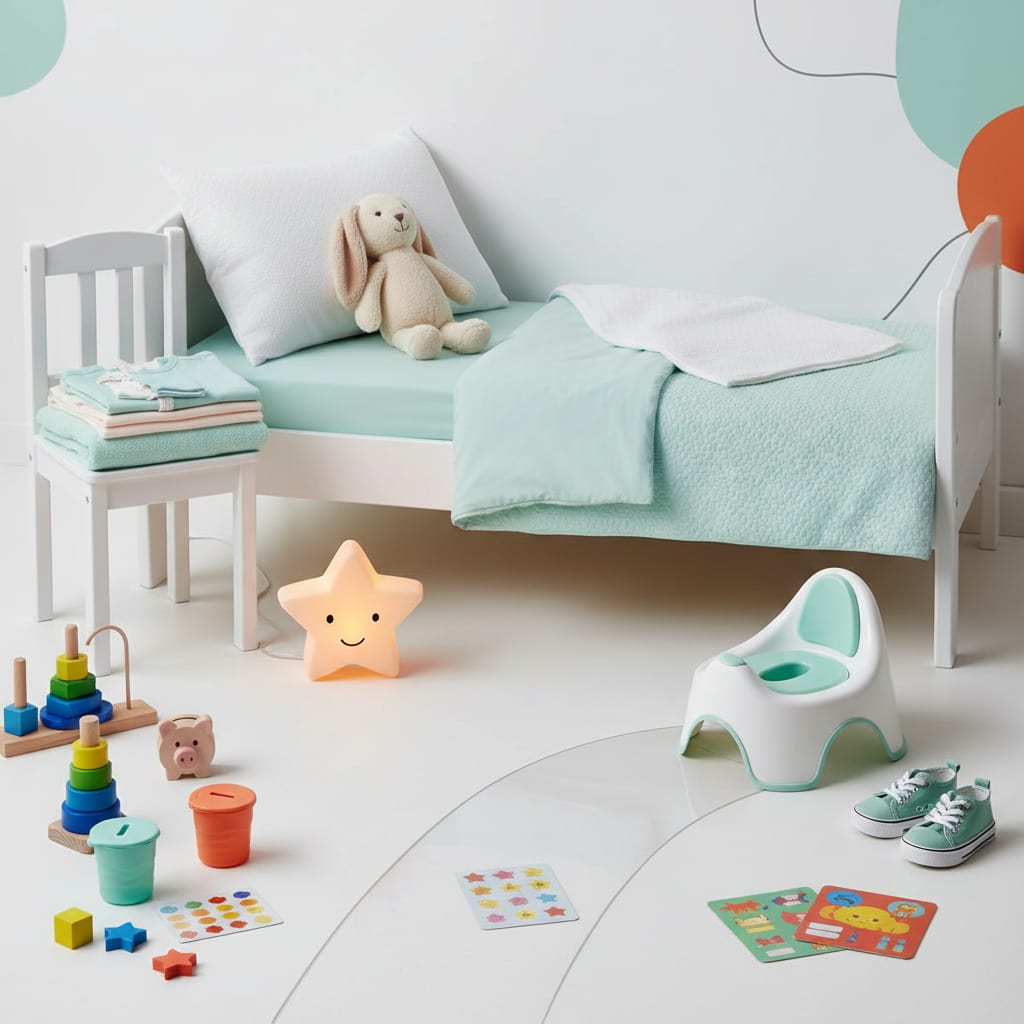
Put the potty in their room, not the bathroom. This is the single change that fixes most of it. A potty at the foot of the bed turns a dark forty-foot journey past a staircase into four steps. Something like the BabyBjörn Smart Potty is low, stable and quiet to lift — the two-piece kind with a removable insert matters far more at 2am than it does at 2pm.
-
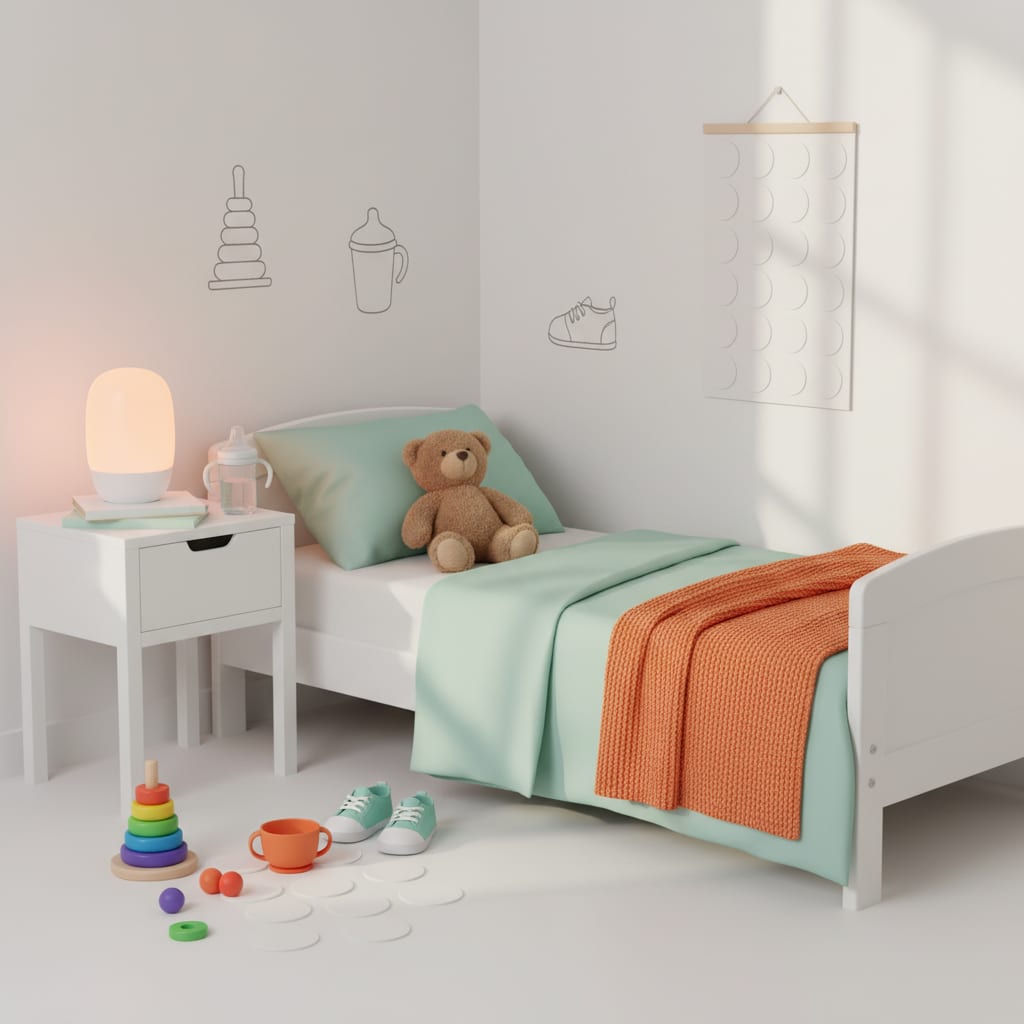
Light the route with the dimmest thing you own. A low plug-in nightlight in their room and one in the hall, both warm-toned and dim, left on all night. Never the overhead light: a bright light at 2am is what turns a 90-second trip into a forty-minute one, because it tells a toddler’s body that the night is over.
-
Waterproof everything before you need it. A full waterproof protector on the mattress — a fitted one like the SureGuard rather than a loose pad that slides — plus a second sheet and protector already layered underneath the first. Strip the top two layers in the dark and the bed is made, which is the difference between a five-minute change and a twenty-five-minute one.
The trip itself, scripted
-
Say almost nothing. “I’ll wait here.” That’s it. No praise for waking up, no conversation about what they dreamed, no offer of water. Warmth in your body language, nothing in your mouth. Praise at 2am is genuinely counterproductive — it makes the wake worth repeating.
-
Stay standing, and stay near the door. Sitting down on their bed is how you end up there for an hour. Be present enough that they aren’t scared, positioned enough that leaving is the obvious next move.
-
Skip the full hand-wash routine. A wipe from the pack you keep by the potty does the job at 2am. A trip to a bright bathroom sink to do the whole song is four extra minutes of waking-up, every time.
Cutting the number of trips
-
Move the last drink earlier, don’t remove it. Front-load fluids across the day and taper in the last hour or two before bed rather than cutting them off entirely — a thirsty toddler wakes for a drink, which is a worse trade. Skip milk and juice in the evening in particular; water only from dinner onwards.
-
Add a “before books” potty visit to the routine. Not instead of the last one — as well. Two visits in the wind-down, one at the start and one right before lights out, empties them far better than a single hopeful attempt at the door.
-
Hand the trip over one step at a time. Week one you walk them. Week two you say “you can do it, I’m right here” from your bed. Week three you don’t get up. Most toddlers take the offer faster than you’d think, because a potty four steps from the pillow was never really a two-person job. The moment they do it alone once, mention it at breakfast — daytime praise for a night skill, which is where praise belongs.
When the wake isn’t really about the potty
Two patterns to watch for. The first is the toddler who asks for the potty and then wants to stay up — the potty has become the acceptable reason to leave the bed. If they go a token amount and then start negotiating, you’re in stay-in-bed territory rather than bladder territory, and my stay-in-bed tricks are the closer match. The second is the toddler who wakes, doesn’t ask for anything, and simply arrives at your side — that’s the 3am visitor pattern, and the potty is incidental.
If daytime accidents have restarted alongside the night waking, treat it as one event rather than two; the potty training regression fixes reset both at once, and it’s usually a change somewhere else in the house doing it.
Worth a call to your pediatrician rather than a routine change: a sudden jump in how often they’re going alongside noticeably more thirst, pain or crying when they pee, or a toddler who was reliably dry at night for months and abruptly isn’t. None of those respond to a script, because none of them are about habit.
For the wider picture on where night dryness fits in the training arc — and why it lags daytime by a long way for most kids — Betteroo’s potty training walkthrough is the version I’d hand a friend.

FAQ: toddler night potty wake-ups
Should I wake my toddler to use the potty at night?
Lifting a sleeping toddler to the potty works for some families as a short-term bridge, but it doesn’t teach them to wake on their own signal, and it wakes a child who was sleeping fine. If you try it, treat it as a temporary measure rather than the plan.
How do I stop my toddler waking me up to pee?
Move the potty into their bedroom, light the route dimly, say almost nothing, and hand the trip over in stages across a few weeks. Most toddlers stop needing an adult once the trip is genuinely four steps long and nothing interesting happens during it.
Is it normal for a potty-trained toddler to wake at night?
Very. Night dryness runs on a different timetable to daytime control, and the in-between stage — awake enough to notice, not confident enough to go alone — is where most newly trained toddlers spend a few weeks or months. It usually resolves without anything clever.
Should I put my toddler back in night diapers?
If the wakes are wrecking everyone’s sleep, going back to a diaper or pull-up at night for a while is a reasonable call, not a failure — night dryness isn’t something you can train faster by insisting. Keep daytime underwear either way, and try again in a month or two.
How do I handle a wet bed at 2am without waking everyone up?
Layer the bed in advance: protector, sheet, second protector, second sheet. Strip the top two layers, drop them in a basket outside the door, and you’re done in about a minute with no laundry decisions and no bright lights involved.