Toddler Won't Sit at the Table? 10 Tips That Work
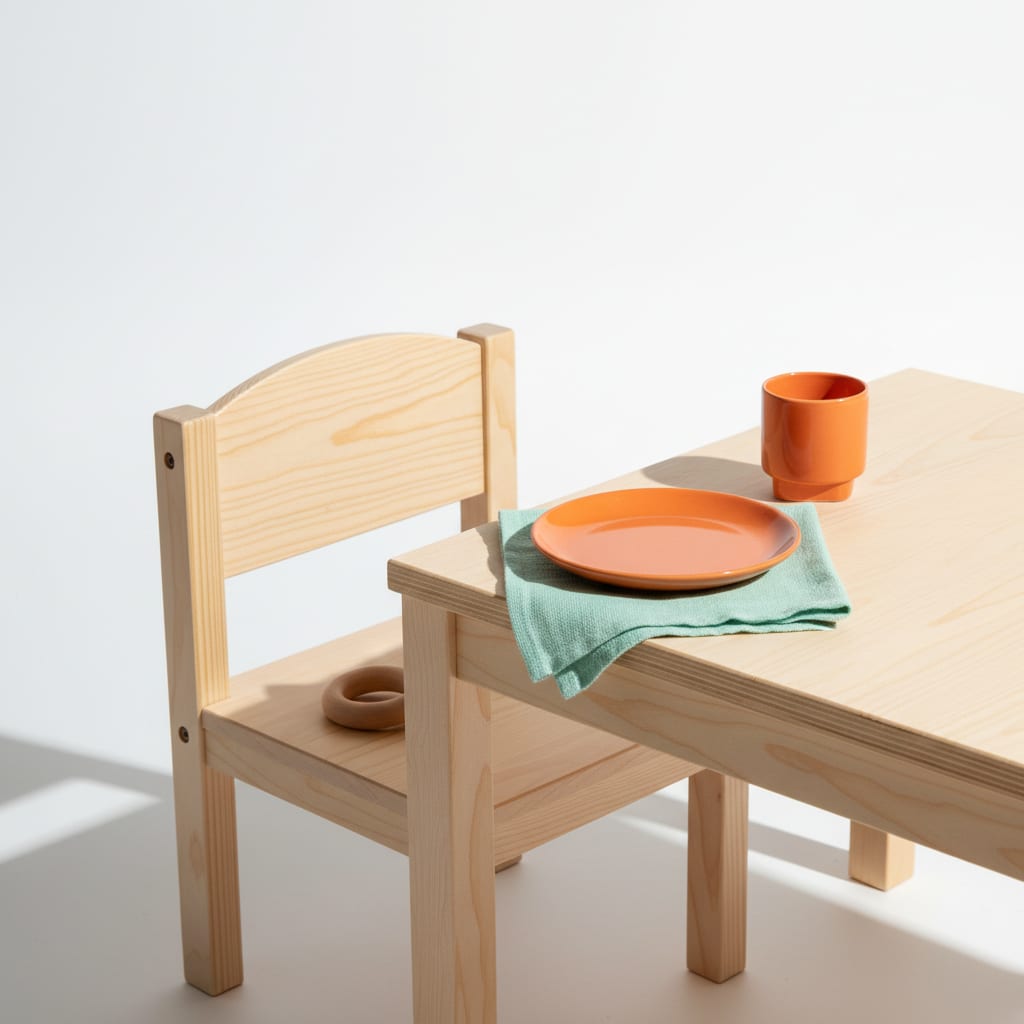
Shorten the meal and fix the chair, in that order. Most “my toddler won’t sit still to eat” problems are two ordinary things wearing a behaviour costume: we are asking for twenty-five minutes from a child who has about twelve in them, in a seat where their legs dangle. Fix those and the running mostly stops on its own. What follows is ten tips for how to get a toddler to sit at the table, starting with the two that need no discipline at all.
How long a toddler can actually sit
Before you change anything, get honest about the number. A one-year-old will give you five to ten minutes of genuine sitting. A two-year-old, ten to fifteen. A three-year-old can stretch to twenty on a good day with something interesting happening. Those are the ceilings, not the targets, and they drop when the child is tired, when the food is unfamiliar, and when the meal is late.
The American Academy of Pediatrics frames the whole thing usefully for two-year-olds: “Try not to fixate on amounts of food they are eating. Avoid making mealtimes a battle. Pay attention to adopting healthy eating habits — including sitting as a family at mealtime.” Note the order. The habit of sitting together is the goal; the quantity eaten is not. Their structure for this age is “three healthy meals a day, plus one or two snacks,” which matters here because a child grazing at 4:30 has no reason to sit at 5:30.
Fix the seat first (1–3)
- Give their feet something to push against. This is the single biggest one and it costs nothing. A toddler whose legs hang off a booster has no base — so they brace with their whole trunk, and bracing looks exactly like wriggling. Feet flat on a footrest, knees roughly level with hips, bottom all the way back. If the high chair’s footrest is set for a smaller child, move it down. If you are using a booster on a dining chair, an upturned crate or a stack of books under their feet does the job tonight.
- Raise the child, not the plate. If their chin is at table height they cannot see the food, cannot reach it without standing, and standing is the first step of leaving. The elbow should clear the tabletop comfortably. Most escapes from a booster are a reaching problem, not a defiance problem.
- Put the chair against something. A chair in open floor with a clear run in three directions is an invitation. Along a wall, or in the corner formed by the table and a wall, removes two of the exits without a single word from you. Same trick that makes a restaurant booth easier than a restaurant table — the seat position decides half the meal.
Make the boundary real (4–7)
- Serve everyone at once, including yourself. A toddler sitting alone while adults orbit the kitchen has no reason to stay. Sit down with a plate, even a small one, even if you eat again later. This is the tip that most reliably buys ten extra minutes, and it is the one families skip.
- One warning, then the plate goes. “You can sit down and eat, or we’re finished.” If they get down after that, the meal ends — plate up, no snack until the next scheduled one. Say it once, calmly, and follow it. Nothing here works if leaving the table costs nothing.
- No re-seating negotiations. Do not chase, do not carry them back three times, do not spoon food into a child standing beside the chair. Every one of those teaches that the table is optional and the food follows them around the room. Tip 5 is the rule; this is the discipline of not undermining it.
- Get the wiggles out before you sit down. Ten minutes of something physical before the meal — stairs, a dance, carrying the placemats — genuinely changes what the next fifteen look like. A toddler who has been in a car seat or a stroller all afternoon is not being naughty at 5:45; they are full of unspent energy and a dining chair is the wrong place to put it.
The runner who keeps coming back (8–10)
- Give them a job at the table. Passing the bread, handing out spoons, being in charge of the water jug. A role is a reason to stay that is not “because I said so,” and it works far better on this age group than any praise you can offer.
- Front-load the thing they like. If the food they will eat lands ten minutes in, the first ten minutes are boring and they leave before it arrives. Put something familiar on the plate from the start alongside the new thing — the same logic behind what actually works with a picky eater, applied to bottoms on seats rather than food in mouths.
- End it before they do. If you can tell from the second bite that this is a twelve-minute meal, run a twelve-minute meal. Finishing while they are still sitting — “great sitting, we’re done” — leaves the memory of a meal that worked. Letting it grind on until they bolt leaves the memory of a meal they escaped, and tomorrow they will try escaping sooner.

What this is not
If your toddler sits fine and then throws the food, that’s a different post — the catapult phase has its own fixes. If they sit happily and eat nothing, you want the dinner-refusal tricks instead. And if the problem is that you have run out of things to put on the plate, start with dinners that survive a toddler. This post is only about the body leaving the chair. For how much a toddler this age actually needs across a day, Betteroo’s guide on portions at this age is a calmer read than most.
FAQ: the toddler who won’t stay put at meals
How long should a toddler sit at the table?
Roughly five to ten minutes at one, ten to fifteen at two, up to twenty at three. Anything beyond that is a bonus, not a standard. If you are regularly asking for double those numbers, the meal length is the problem and no amount of consistency will fix it.
Should I make my toddler sit until everyone is finished?
Not at this age. Being excused when they are done is reasonable; what you are protecting is that they ask, and that they do not treat the table as a place to touch down between laps of the kitchen. “Say ‘finished please’ and I’ll get you down” is a workable version of the rule for two-and-up.
My toddler eats fine standing up — is that so bad?
Two reasons to keep working on it. Eating while moving raises choking risk, which the AAP flags for this age because toddlers “are still learning to chew and swallow efficiently and may gulp food down when in a hurry to get on with playing.” And a child who eats on the move never learns to notice they are full, because nothing about the meal has a shape. Keep the food at the table, even when the sitting is short.
Is it worth getting a chair with a proper footrest?
If your current setup has nothing under their feet and you cannot improvise it, yes — a chair with an adjustable footplate, like the Stokke Tripp Trapp, is the fix that changes the most for the least effort. But try the crate or the books first for a week. Plenty of families find they had a seating problem and not a chair problem.